
Each student will choose a project topic from the list below.
Each student shall work on the project individually.
Students will give presentations of their projects at the end of the semester.
Go to Resources page for various software/programs available.
Selected project topics and presentation schedule.
Project presentation date: 22, 24 April 2009.

   
Project Topics
 
Segmentation of Brain in MR Volume Image
  Segmentation of the brain in MR volume image is very important for the diagnosis of brain disorders and diseases. Below are two sample slices in the MR volume image:


The objective of this project is to segment the brain in MR volume image and reconstruct a 3D surface model of the brain.

Project Requirements:
  • Develop an algorithm for segmenting the brain from the MR volume image and reconstruct a 3D surface model of the brain.
  • Visualize the segmented 3D surface model of the brain using a 3D model viewer such as MeshLab.
Suggestions:
  • Start by segmenting a layer of the MR volume (i.e., one slice) at a time.
  • Then, proceed to segment the MR volume either slice by slice in 2D or in 3D.
Grading Criteria:
  • The algorithm should be as automated as possible. The fewer user inputs required, the higher is the grade.
  • The more accurate is the segmentation result, the higher is the grade.
  • Entry Level: Segment the overall envelop of the brain without segmenting the cortical foldings.
  • Intermediate Level: Segment the overall envelop of the brain and some of the cortical foldings.
  • Advanced Level: Segment the brain and all the major cortical foldings.
  • Ultimate Level: Segment the brain into left and right hemispheres, and all the major cortical foldings.
Notes:
  • Approch instructor for head MR images if you wish to do this project.
Extraction of Medial Axis of Spine in X-ray Images
  Some patients suffer from the problem of scoliosis, i.e., side-way bending of the spine:


The objective of this project is to extract the medial axis of the spine for further analysis.

Project Requirements:

  • Develop an algorithm to extract the medial axis of the spine in x-ray images.

Suggestion:

  • Start by manually selecting landmark points and fitting a curve through the landmark points.

Grading Criteria:

  • The algorithm should be as automated as possible. The fewer user inputs required, the higher is the grade.
  • The more accurate is the extraction result, the higher is the grade.
  • Entry Level: Manually select landmark points in the spine and fit a curve through the landmark points.
  • Intermediate Level: Reduce the number of manual landmark points required to a small number, say, 2 to 3.
  • Advanced Level: Reduce the number of manual landmark points to 1.
  • Ultimate Level: Fully automatic. Does not require the user to input any landmark point.

Notes:

  • Approch instructor for spine x-ray images if you wish to do this project.
     
Segmentation of Myocardium in Animal Cine MRI
 

Segmentation of heart in animal cine MRI (3D + time) is very important in the quantitative analysis of cardiac dynamics. Below are two sample slices of the animal cine MRI:


Sample segmentation results are as follows:


red contour: endocardium of the left ventricle
blue contour: epicardium of the left ventricle
myocardium: both endocardium and epicardium
green contour: myocardium of right ventricle

Project Requirements:

  • Develop an algorithm to segment the myocardium of the left ventricle of animal cine MRI.

Suggestions:

  • Start by segmenting a layer of the MR volume (i.e., one slice) at a time.
  • Then, proceed to segment the MR volume either slice by slice in 2D or in 3D.

Grading Criteria:

  • The algorithm should be as automated as possible. The fewer user inputs required, the higher is the grade.
  • The more accurate is the segmentation result, the higher is the grade.
  • Entry Level: 2D segmentation of the endocardium and epicardium in a MR slice by user initialization of contours close to the desired boundaries.
  • Intermediate Level: 2D segmentation of the endocardium and epicardium in a MR slice by simple user initialization of contours that need not be close to the desired boundaries.
  • Advanced Level: 2D segmentation of the endocardium and epicardium in the whole MR volume without user initialization.
  • Ultimate Level: 3D segmentation and tracking of the endocardium and epicardium in the whole cine MR volume without user initialization.
     
Stabilization of the Heart in Cardiac Perfusion MRI
 

A patient's heart moves and changes shape during cardiac perfusion MR imaging. To study the function of the heart in perfusion MRI, it is necessary to digitally stabilize the heart. Moreover, the intensity of the heart chamber changes as the blood with contrast agent flows into and out of the heart chamber.


The objective of this project is to stabilize the heart so that it does not appear move or change shape over time.

Project Requirements:

  • Develop an algorithm to stabilize the heart in a perfusion MRI so that it does not appear to move or change shape over time.
  • Visualize the stabilization results in video.

Suggestion:

  • Start by performing rigid or linear registration to stabilize the heart's motion.

Grading Criteria:

  • The algorithm should be as automated as possible. The fewer user inputs required, the higher is the grade.
  • The more accurate is the stabilization result, the higher is the grade.
  • Entry Level: Stabilize the heart's motion by rigid or linear registration over a short duration in which the heart's intensity does not change significantly.
  • Intermediate Level: Stabilize the heart's motion by rigid or linear registration over the whole sequence in which the heart's intensity changes significantly.
  • Advanced Level: Stabilize the heart's motion and shape by non-rigid registration over a short duration in which the heart's intensity does not change significantly.
  • Ultimate Level: Stabilize the heart's motion and shape by non-rigid registration over the whole sequence in which the heart's intensity changes significantly.
     
Tracking and Segmentation of Animal in Video
 

Tracking object bounaries is very useful steps in video analysis. Below are two sample frames in the video.


The objective of this project is to rack and segment the boundaries of a moving animal in video.

Project Requirements:

  • Develop an algorithm to track and segment the boundaries of the animal in video.
  • Visualize the segmentation results in video.

Suggestion:

  • Start by tracking and segmenting a slowly walking animal with a simple shape, e.g., a dog, and restrict to side view only.

Grading Criteria:

  • The algorithm should be as automated as possible. The fewer user inputs required, the higher is the grade.
  • The more accurate is the tracking and segmentation, the higher is the grade.
  • Entry Level: Track and segment a slowly walking animal with a simple shape in side view.
  • Intermediate Level: Track and segment a running animal with a simple shape in side view.
  • Advanced Level: Track and segment a running animal with a complex shape in side view.
  • Ultimate Level: Track and segment a running animal with a complex shape in any view.

Notes:

  • You can use any animal video.
Transfer of 3D Motion Style
 

Motion kinds of motion has different motion style, such as walking, running, kungfu, dancing, etc.
The objective of this project is to analysis the style in a 3D source motion and transfer it to a 3D target motion.

Project Requirements:

  • Define the motion style that is relevant.
  • The algorithm should model the style of the source motion, extract the style information, and transfer it to the target motion.
  • Visualize the source motion and the target motion before and after the transfer.

Suggestion:

  • Start with simple walking motion of humans.

Grading Criteria:

  • The algorithm should be as automatic as possible. The fewer user inputs required, the higher is the grade.
  • The target motion after style transfer should have similar motion style as the source motion.
  • The more the types of styles handled, the higher is the grade.
  • Entry Level: Transfer walking style of human.
  • Intermediate Level: Transfer running style of animals in the same family, or equivalent.
  • Advanced Level: Transfer running style of animals in different families, or equivalent.
  • Ultimate Level: Transfer dancing or kungfu style of human.

Notes:

  • You can use any relevant 3D motion data.
Transfer of Painting Styles of Images
  Different painters exhibit different painting styles. It is also interesting to mimic the style of certain painters to produce stylistic images.


                        test image                                                     test image with painting style

The objective of this project is to transfer the style of a painting to a test image to render the image in that painting style.

Project Requirements:

  • Develop a method to model and/or extract the style of a painting.
  • Transfer the style of the painting to a test image to render the image in that painting style.

Suggestion:

  • Start by modeling simple styles such as color and brush strokes.

Grading Criteria:

  • The method should be as automatic as possible. The fewer user inputs required, the higher is the grade.
  • The style of the rendered image should look like the style of the source painting.
  • The more the types of styles handled, the higher is the grade.
  • Entry Level: Transfer low-level styles such as color and texture.
  • Intermediate Level: Transfer simple artistic styles such as brush stroke, painting medium (water color, oil, pastel), etc.
  • Advanced Level: Transfer general artistic styles with regard to aesthetic movement such as Realism, Romanticism, Impressionism, Pointillism, and Expressionism, and painting techniques.
  • Ultimate Level: Transfer artistic styles of various cultures such as European, Chinese, Japanese, Egyptian.
Matching of Images by Structural Content
  Images have rich spatial structural contents. The objective of this project is to match images according to the similarity between their spatial structures and contents.

Project Requirements:

  • Develop a method to represent the spatial structure and contents on an image.
  • Develop a method to measure the similarity between the spatial structures and contents of images.

Suggestion:

  • Start by representing simple 2D spatial relationships between various parts of an image. This may require decomposing the image into the various parts in a meaningful way.

Grading Criteria:

  • The method should be as automatic as possible. The fewer user inputs required, the higher is the grade.
  • The structural representation of the images should be correct.
  • The similarity measure developed should be as close to human's perception as possible.
  • Entry Level: Measure similarity based on the dominent color blobs or regions in the images.
  • Intermediate Level: Measure similarity based on the distributions of color blobs or regions in the images. Spatial relationships between the blobs or regions are not required.
  • Advanced Level: Measure similarity based on the 2D spatial relationships bewteen the color blobs or regions in the images..
  • Ultimate Level: Measure similarity based on the perceived 3D spatial relationships between the color blobs or regions in the images. For example, a region is partially occluded by another region may be perceived as lying behind the occluding region.
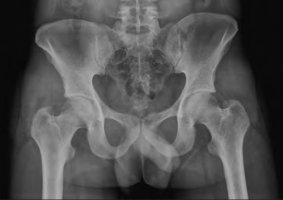
Determination of Salient View Point of Volume Data
  Volume rendering technique allows the user to adjust the opacity of the voxels in a volume data to reveal different contents:


In addition, different view angles reveal different amount of information:


The objective of this project is to determine the opacity and viewing angle that reveals the most amount of information.

Project Requirements:

  • Develop a model of that measures information content in the rendered result.
  • Develop an algorithm to determine the opacity and viewing angle that reveal the most amount of information.

Suggestion:

  • Start by assuming that the desired content to be visualized is the bone, which is very distinct in CT images.

Grading Criteria:

  • The method should be as automatic as possible. The fewer user inputs required, the higher is the grade.
  • The model that measures information content should as close to human perception as possible.
  • Entry Level: Model information content by the ratio of bone voxels rendered.
  • Intermediate Level: Model information content by general information measure such as entropy.
  • Advanced Level: Model informatoin content by information measure appropriate to the human skull. You may assume that a 3D model of the skull is available.
  • Ultimate Level: Model information content in a manner that is consistent with human's perception.

Notes:

  • Approch instructor for head CT images if you wish to do this project.
Selecting Best View of 3D Objects
 

Different viewing angles reveal different parts of an object. The objective of this project is to determine the best view of an object.

Project Requirements:

  • Develop a model of that measures information content in the rendered view of an object.
  • Develop an algorithm to determine the viewing angle that reveals the most amount of information.

Grading Criteria:

  • The method should be as automatic as possible. The fewer user inputs required, the higher is the grade.
  • The model that measures information content should as close to human perception as possible.
  • Entry Level: Model information content by the fraction of surface area shown.
  • Intermediate Level: Model information content by general information measure such as entropy.
  • Advanced Level: Model informatoin content by information measure appropriate to the selected object. You may assume that a 3D model of the object is available.
  • Ultimate Level: Model information content in a manner that is consistent with human's perception.
     
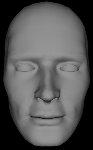
Estimation of Gaze Direction in Images
  The gaze direction of a person reveals a lot about the person's attention and intention.


The objective of this project is to estimate the gaze direction of a persion in an image.

Project Requirements:

  • Develop an algorithm to estimates the gaze direction of a person in an image.

Suggestion:

  • Start by estimating gaze direction in 2D and assuming that the person's gaze direction is aligned with the person's head direction.

Grading Criteria:

  • The method should be as automatic as possible. The fewer user inputs required, the higher is the grade.
  • The estimated gaze direction should be as accurate as possible.
  • Entry Level: Assume that gaze direction is aligned with head direction. Estimate gaze direction in 2D in a single image.
  • Intermediate Level: Gaze direction may not be aligned with head direction. Estimate gaze direction in 2D in a single image.
  • Advanced Level: Gaze direction may not be aligned with head direction. Estimate gaze direction in 3D in a single image.
  • Ultimate Level: Gaze direction may not be aligned with head direction. Estimate gaze direction and change of gaze direction in 3D in a video.

More project topics coming up...

 
General Grading Criteria
 

Students should show clear understanding of the problem and the method used to solve the
    problem.
The more general and robust the algorithm is, the higher is the grade. That is, the complexity
    of the problem that is solved is taken into account. Complex problems that are welll solved
    will be awarded higher grades.
The results produced by the method should be as accurate as possible.
Provide good evaluation and analysis of the results.

Each student is allocated 30 minutes for your project presentation. Prepare a 20-minute presentation of your project, which includes the following, and leave 10 minutes for Q&A:

Problem formulation (20%):
      Give a precise definition of the problem that you are solving.

Algorithm (40%):
      Clearly describe the main ideas and main procedures of your algorithm.
      Include only the details that are necessary to clearly explain how your algorithm works.

Tests and Discussion (40%):
      Show and discuss test results. Test results should include comparison of performance
      with various algorithms, qualitative and quantitative evaluations of your algorithm, etc.
      You should clearly explain why your algorithm works for the successful test cases and
      why it fails for other test cases.


Last updated: 31 March 2009