 |
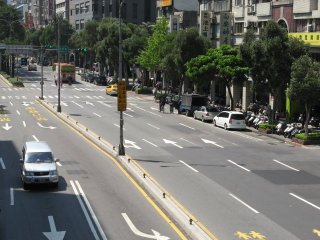
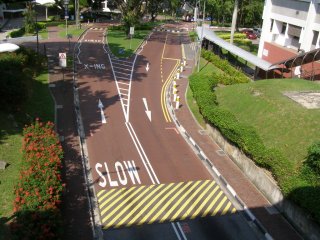
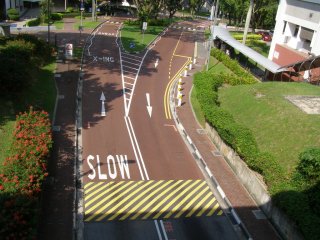
| Detection of Road Markings in Road Scene Images In surveillance applications, it is often useful to know where the roads are and what are the road markings indicating.
Project Objective: Detect and segment the road markings in road scene images. Grading Criteria: > The algorithm should be as automatic (i.e., little user input) as possible. > The detection and segmentation results should be as accurate as possible. Difficulty Levels: > Entry Level: Segment the image into two or three regions for white, yellow and red road markings. Road markings in shadow areas may be omitted. > Intermediate Level: As in Entry Level, but able to detect road markings in shadow areas. > Advanced Level: As in Intermediate Level, with the detection and segmentation of road surfaces as another region. > Ultimate Challenge: As in Advanced Level, with the detection and segmentation of road shoulders as another region. Notes: > You may shoot your own road scene images. |
||
| Detection and Matching of Keypoints in Road Scene Images In 3D reconstruction of road scene, it is important to detect and match keypoints in various views of a road scene.
Project Objective: Detect and match keypoints in various views of a road scene. Grading Criteria: > The algorithm should be as automatic (i.e., little user input) as possible. > The detection and matching results should be as accurate as possible. Difficulty Levels: > Entry Level: Keypoint detection with manual keypoint matching applied to two images. > Intermediate Leve: Keypoint detection with user-assisted keypoint matching applied to two images. > Advanced Level: Keypoint detection with automatic keypoint matching applied to two images. > Ultimate Challenge: As for Advanced Level but applied to a set of images of different view points.. Notes: > You may shoot your own road scene images. |
||
| Separation of Foreground and Background of Surveillance Video Surveillance video of a street contains both foreground moving objects (vehicles, humans) and static background (street, buildings, trees). 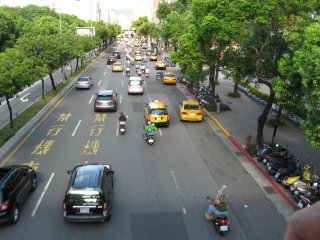 Project Objective: Given a surveillance video of a stationary camera, automatically separate the moving foreground from the static background. Produce two videos one containing only static background and the other containing only moving foreground. Grading Criteria: > The algorithm must be fully automatic. > The separation results should be as accurate as possible. Difficulty Levels: > Entry Level: Off-line mode, short-duration (i.e., lighting condition does not change significantly). > Intermediate Leve: On-line mode, not necessary real-time (i.e., can skip frames to keep up with current view), short duration. > Advanced Level: Real-time mode, short duration > Ultimate Challenge: Real-time mode, long duration (i.e., lighting condition changes significantly over time). Notes: > Shoot your own road scene videos. |
||
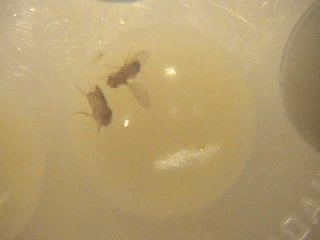
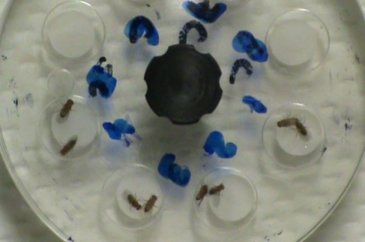
| Tracking of Fruit Flies Fruit flies have been regarded by biologists as an important model organism for the study of neurobiology and behavior. Research on fruit flies has led to the understanding of many behaviors of medical interest such as drug abuse, aggression, sleep deprivation, aging and memory loss. An emerging technology is to use computer vision techniques to track and understand the behavior of fruit flies in a semi-complex environment.
Project Objective: > Develop an algorithm to track the individual fruit flies in a video. > Visualize the tracking results by marking their positions in the video. > Output the tracking results in text file format. For example, for Intermediate Level, output the fly id and its position (x, y) in frame t. Grading Criteria: > The algorithm should be as automatic (i.e., little user input) as possible. > The tracking results should be as detailed and accurate as possible. Difficulty Levels: > Entry Level: Track one fly. > Intermediate Level: Track all the flies. > Advanced Level: Track all the flies and identify the heads and tails of the flies. > Ultimate Challenge: As in Advanced Level. In addition, identify the start and end of contact of a fly with another fly. A fly contacts a second fly when its head is close to the tail of the second fly. Notes: > Download a sample video here. For more videos, please contact the instructor. > Useful reference papers: ref1, ref2 |
||
| Surveillance Tracking with Pan-TIlt-Zoom Camera A pan-tilt-zoom camera can be controlled by a computer to pan, tilt, and zoom. It is frequently used for surveillance. 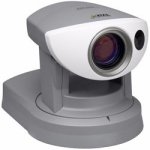 Project Objective: Develop an algorithm to track moving objects (e.g., humans) and follow them by panning, tilting and zooming. Grading Criteria: > The algorithm should be as automatic (i.e., little user input) as possible. In the case of tracking multiple people but following only one person, the user may specify the person to follow. > Panning, tilting, and zooming should be as smooth as possible. Difficulty Levels: > Entry Level: Track one person without following. > Intermediate Level: Track and follow one person. > Advanced Level: Track multiple people and follow them as a group. > Ultimate Challenge: Use a wide-angle camera to track multiple people and use a pan-tilt-zoom camera to follow one or more people as a group. |
Last update: 21 July 2011