|
|
|
Digital libaries contain a
lot of information. In spatial and temporal digital libaries, resources would
contain either location or time attribute. We have discussed just now that
the traditional ways of searching might not be sufficient. So, we are faced
with the question of how best to access these resources?
|
|
For example, if you want to
view resources, or search resources that have a place attribute, it doesn’t
really make sense… to have them presented in a list.. Like country by
country… it would be more intuitive to show them on a map.. At a glance you
can see the concentration of resources…
|
|
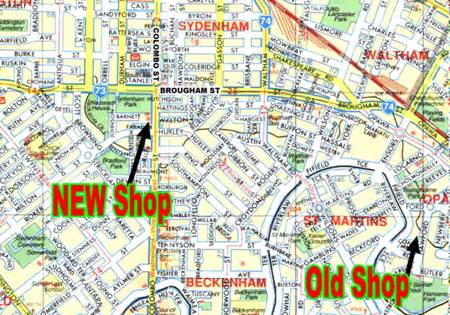
As another example, if we
want to search for shops in a particular district, it will be very hard to
use keywords to specify the exact geographic region that our shops will be
in… it will be easier and efficient if we can start from a map showing a
large region,.. Then progressively navigate deeper and deeper into the map…
so tat we get to more and more specific regions. Also.. We might not know the
specific names of the streets or shops.. So we can’t really specify them to a
keyword interface.
|
|
|
|
Why do people use keywords
for search? It is not a natural way to present user’s needs. User needs ->
formulating the concrete question -> keywords … user&IR system
interaction … keywords -> mapping documents -> mapping pieces of them,
corresponding to keywords. You see,
each transition phase is a potential loss of information. Also, the user
needs to do a lot of work in order to get the resources. Why couldn’t user
specify his information needs in a more direct way? And in our case, why
couldn’t the user search directly by choosing some region or some important
dates or names?
|
|
|
|
Now, we will discuss how
some of these needs to obtain and visualize resources that have geographic or
temporal attributes are currently addressed.
|
|
------------------------------------------------------------------------
|
|
Q: can we apply the
techniques of S&T DL for general DL? (referring to the Perseus example of
classification)
|
|
The (only?) way to present a
long document to user is to present him the distribution of some important
elements (names, dates, etc.) in the visual format.
|
|
|