|
1
|
- Module 5 Min-Yen KAN
- *Based on William Arms presentation at Cornell Univ. Modified by
permission
|
|
2
|
|
|
3
|
- Location independent name
- Globally unique
- Persistent across time
- Choice of human generated or automatic generation
- Fast resolution
- Decentralized administration
- Supported from standard user interfaces
|
|
4
|
- We’ll look at several different systems today
- URN
- PURL
- DOI
- OpenURL
|
|
5
|
- Globally unique, persistent, and accessible over the network
- Persistence: That is, the URN will be globally unique forever.
- Scalability: URNs can be assigned to any resource
- Legacy / Extensible: Backward and forward compatible
- Some Examples:
- urn:hdl:cnri.dlib/august95
- urn:lifn:some.domain:anything-goes-here
- urn:path:/A/B/C/doc.html
- urn:inet:library.bigstate.edu:aj17-mcc
|
|
6
|
- http://purl.org/
- PURL is a normal URL
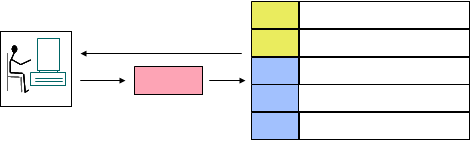
- Implement a layer of indirection
- Uses standard HTTP redirect
- Simple model
|
|
7
|
- Partial redirection
- http://purl.org/kanmy/pictures/nus.jpg
- http://www.comp.nus.edu.sg/~kanmy/
pictures/nus.jpg
- A PURL with no associated indirection causes the PURL resolver to
generate a history page
- Private and universal indirection with access control
|
|
8
|
- Places the burden of resolution on the manager of information
- PURL resolvers don’t know about each other: federated, no centralized
registry
- If URL goes down, doesn’t force or notify maintainer
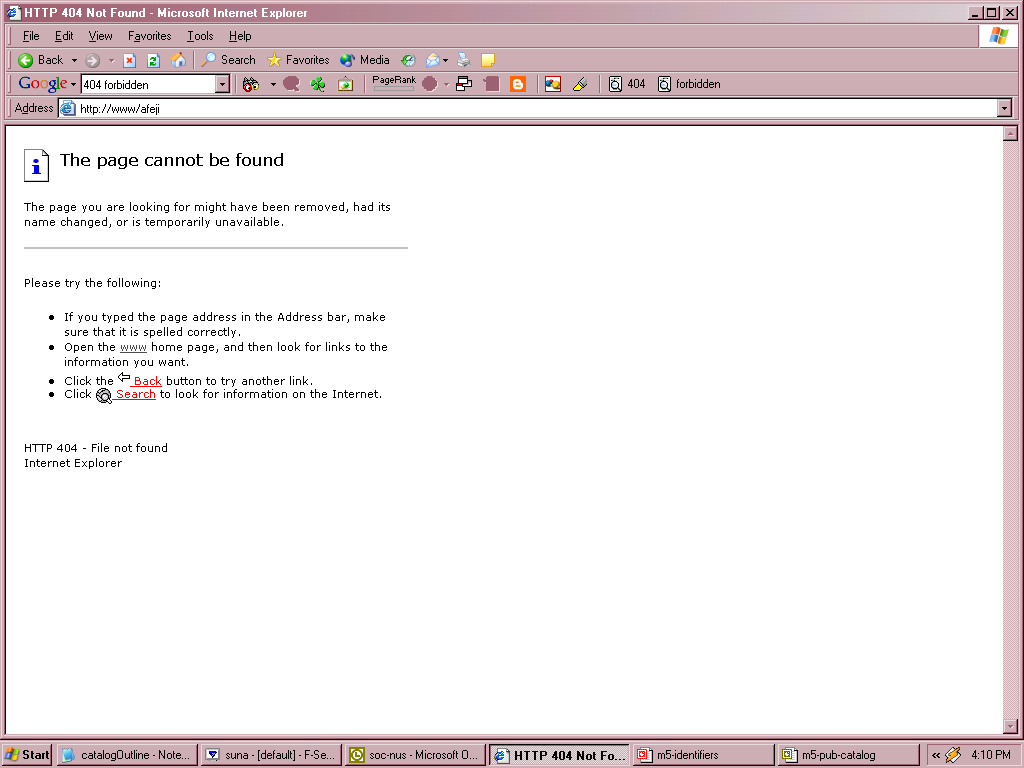
- Doesn’t guarantee that document will be available, indirection can lead
to a 404
|
|
9
|
|
|
10
|
|
|
11
|
- The Global Handle Service stores:
- a record for each naming authority
- a record for each local handle service
- The record for each naming authority includes:
- the home handle service for that naming authority
- For each handle, the home handle service stores:
- the handle record
|
|
12
|
- Leave the resolution up to the client
- Return all DOI data to the client
|
|
13
|
|
|
14
|
|
|
15
|
|
|
16
|
|
|
17
|
|
|
18
|
|
|
19
|
- Uses multiple levels of indirection
- ___________________
- But also more complicated, ___________________
- Supported by consortium of publishers (big and small)
|
|
20
|
- A identifier system that takes user’s context into account
- Created to solve the ________________________
|
|
21
|
- Different providers use different URL and points of access to the data
|
|
22
|
- Dissociate document from vendor-, library-specific provisions
- OpenURL lists access metadata
|
|
23
|
- Moll JR, Olive & M, Vinson C. Attractive interhelical
electrostatic
interactions in the proline- and acidic-rich region (PAR) leucine
zipper
subfamily preclude heterodimerization with other basic leucine
zipper
subfamilies. J Biol Chem. 2000 Nov 3 ; 275(44):34826-32.
doi:10.1074/jbc.M004545200
- http://sfx1.exlibris-usa.com/demo?sid=ebsco:medline&aulast=Moll&auinit=JR&date=
2000-11-03&stitle=J%20Biol%20Chem&volume=275&issue=44&spage=34826
- http://sfxserv.rug.ac.be:8888/rug?id=doi:10.1074/jbc.M004545200
- Legend:
- red - BASE-URL of service component
- blue - identifier of the resource where the user clicks the OpenURL,
added by publisher’s rewrite
- grey - metadata and identifiers
- DOI can be used to resolve the actual content
|
|
24
|
- Service component gets metadata query information
- Access and use information goes to library, not to publisher
- Not just user-to-user, but for generalized dynamic linking
- Web page to journal article full-text
- Abstract to library catalog collection
- Currently requires publishers to recast URLs as OpenURLs
|
|
25
|
- PURLs
- _________________
- ___________________
- DOI
- ____________________
- Purpose:
- ________________
- Resolution to multiple items of current state data
- Notably including location(s) and metadata
- OpenURL
- Purpose: _________________
- Selects between multiple items returned by DOI
|
|
26
|
- Title IIC gives LoC rights to every book published
- Legal deposit simulated on the web by folks at the Internet Archives
- http://www.archive.org/web/web.php
|
|
27
|
- How do these systems guarantee permanence? (hint: they don’t)
|
|
28
|
- URN: http://www.w3.org/Addressing/
- PURL: http://www.purl.org/
- DOI: http://www.doi.org/
- openURL: http://www.sfxit.com/open/index.html
- Internet Archives:
- http://www.archive.org/web/web.php
|

 Notes
Notes