Google TPU Grant Awarded
by Google, 2026
DualFloodGNN-TPU: A Scalable Physics-Informed Graph Foundation Model for Large-Scale Hydrodynamic Flood Simulation.
Google TPU credits of 50,000 USD awarded for the research.

Lecturer, School of Computing, National University of Singapore
Overview
I teach courses in programming and algorithms, focusing on helping students build a clear and working understanding of core concepts. My approach emphasizes active learning through questioning, discussion, and problem-solving, with the goal of encouraging students to think independently and engage deeply with the material. I aim to create a classroom environment where students are comfortable exploring ideas, asking questions, and learning from mistakes.
My research focuses on the application of artificial intelligence across diverse real-world domains. I am particularly interested in areas such as biometrics, hydrology, and large language models, with an emphasis on building systems that have practical impact. I enjoy working on cross-disciplinary projects that bring together ideas from different fields to address complex problems. I have active collaborations with the University of Sydney, the University of Melbourne, and the University of Moratuwa (Sri Lanka), where we are developing exciting real-world solutions utilizing AI.
Visit Real-World AI Lab (RAIL@NUS) here: https://rail.comp.nus.edu.sg/
Highlights
by Google, 2026
DualFloodGNN-TPU: A Scalable Physics-Informed Graph Foundation Model for Large-Scale Hydrodynamic Flood Simulation.
Google TPU credits of 50,000 USD awarded for the research.
Placed on the Honor Roll for 2027-2031
NUS-USYD Ignition Grant, 2025
Real-Time Flood Modeling for Climate Resilience in Sustainable Cities using Physics-Informed GenAI and Graph Neural Networks: Launching FloodBench Dataset and International Ai Challenge
NUS PI: Sanka Rasnayaka, USYD Co-PIs: Prof Lucy Marshall, Dr Viraj Herath
Hosted this session at Identity Week Asia 2024, held at Suntec Convention Centre, Singapore.
Got to interview Lorraine Finlay, Human Rights Commissioner, Australian Human Rights Commission, and Prof. Terence Sim, Associate Professor at SoC, NUS, for the panel discussion.
"Queues spotted in S'pore as people get their eyes scanned for cryptocurrency" [News article]
Quote: "Dr Rasnayaka, who researches biometrics and artificial intelligence, said biometrics can be misused for identity theft, surveillance and discrimination, as it reveals information such as a person's age, race, gender and even certain medical conditions."
I completed my PhD in 2021, from the Department of Computer Science at the School of Computing in National University of Singapore. My thesis focused on the application of AI and Computer Vision for Continuous Authentication and privacy.

Singapore
Lecturer
Full-time Teaching Assistant
GAP Teaching Assistant

Visiting Instructor
Current SOC Courses
Introductory programming methodology module for CS undergraduates. The course provides experiential learning through the SourceAcademy platform, to a large cohort of 800+ students. Co-teaching since 2022.
The course introduces fundamental data structures and algorithms using Java language. Co-teaching since 2024.
The course introduces databases and web application development, using SQLite and nodejs. Co-teaching since 2023.
Summer Courses and Workshops
Previously Taught
Previously TA-ed
My pedagogical research connects classroom practice with evidence-driven tools for large computing courses. The work sits around three related themes.
NUS Teaching Enhancement Grant (TEG). Role: PI. Amount: SGD 15,400. Term: 3 years.
This project investigates how computer science curricula can respond to generative AI by shifting from implementation-focused learning toward concept-centred approaches that emphasise abstraction, algorithm design, and validation of AI-generated solutions. The longitudinal study spans NUS and the University of Melbourne, with iterative curriculum redesign and mixed-methods evaluation across computing subjects.
Supporting introductory computing students with explicit problem-solving structures before they are expected to internalize them through practice.
Making repository activity, pull requests, team progress, and code quality visible to instructors in large project-based courses.
Studying how students use LLMs in realistic team projects and how educators can guide productive human-AI collaboration.
CRISP is a multi-git classroom management solution that allows educators to monitor student progress, create assignments, and grade submissions all in one place.
CRISP is built on the MERN stack and currently supports:
The product is currently in use for multiple courses within NUS. Available here: CRISP Platform.

Live Annotation Tool is a desktop overlay app that allows you to draw anywhere on your screen with many customizations aimed at making the annotation process more intuitive and easy for educators.
Currently supports:
The product has currently released its first version and is available here: Download Live Annotation Tool.
Research Interests and background
I am interested in the application of Artificial Intelligence and Machine Learning to real-world problems across diverse domains. My research focuses on adapting AI systems to domain-specific requirements, constraints, and expert knowledge, rather than treating AI as a one-size-fits-all solution. I enjoy working at the intersection of AI and applied domains, building practical systems that are robust, deployable, and useful in operational environments.
I founded the RAIL (Real-world AI Lab) @ NUS, which focuses on translating modern AI advances into practical systems with real societal and industrial impact. Through RAIL, I work on cross-disciplinary collaborations spanning biometrics, environmental modeling, software engineering, and large language models. I actively collaborate with researchers from the University of Sydney, the University of Melbourne, and the University of Moratuwa (Sri Lanka), alongside interdisciplinary and industry partners, to develop AI-driven solutions for real-world challenges.
DualFloodGNN-TPU: A Scalable Physics-Informed Graph Foundation Model for Large-Scale Hydrodynamic Flood Simulation.
Awarded USD 50,000 in Google TPU credits to support large-scale AI model training and hydrodynamic flood simulation research.
Real-Time Flood Modeling for Climate Resilience in Sustainable Cities using Physics-Informed GenAI and Graph Neural Networks: Launching FloodBench Dataset and International AI Challenge.
NUS PI: Sanka Rasnayaka. USYD Co-PIs: Prof. Lucy Marshall, Dr. Viraj Herath.

A major part of my research has focused on behavioral biometrics and continuous authentication for mobile and personal devices. Continuous Authentication aims to transparently verify users throughout device usage using behavioral signals such as gait, touch interactions, keystroke dynamics, and IMU sensor data.
I work on robust behavioral biometric systems using signals such as gait, keystroke dynamics, touch behavior, and motion sensor data. Recent work explores transformer-based architectures and multimodal behavioral biometrics that combine IMU and interaction data.
My PhD research focused on practical and deployable continuous authentication systems for mobile devices, including authentication accuracy, resource consumption, usability, and real-world deployment trade-offs.
I study function creep in biometric data, the privacy invasiveness of gait and sensor data, and how users perceive continuous biometric monitoring systems.
I am interested in moving biometric systems beyond laboratory settings through benchmarking, masked-face biometrics, mobile deployment constraints, and practical adoption studies.
Another major research direction focuses on applying AI to environmental and physical systems modeling. My work explores how modern generative AI and machine learning techniques can be combined with physical constraints and domain knowledge to model complex real-world systems.
I study AI systems for real-world environmental modeling, where purely data-driven approaches must operate alongside physical laws, sparse observations, and operational constraints.
Current projects investigate diffusion models, graph neural networks, and subgrid-informed neural architectures to improve the efficiency, scalability, and generalizability of environmental simulations.
I am beginning new collaborative projects related to deep sea and ocean environment modeling, extending this work into broader environmental systems.

My recent work explores the use of Large Language Models and Small Language Models for practical applications, particularly in software engineering, education, and decision support systems.
I study how students and software engineers interact with LLMs during software development, including prompting practices, human-AI collaboration, and the role of AI-assisted coding in education and professional workflows.
I investigate techniques for enforcing constraints and rules within LLM systems, including structured reasoning, controllability, and integrating expert knowledge into LLM workflows.
I am exploring domain-adapted LLM systems for applications such as real-estate decision support, as well as tabular reasoning and structured-data understanding in Small Language Models for constrained deployment settings.
Carlo Malapad Acosta, Herath Mudiyanselage Viraj Vidura Herath, Jia Yu Lim, Abhishek Saha, Sanka Rasnayaka, Lucy Marshall. International Joint Conference on Artificial Intelligence, IJCAI 2026
Ken Chen, Sachith Seneviratne, Wei Wang, Dongting Hu, Sanjay Saha, Md Tarek Hasan, Sanka Rasnayaka, Tamasha Malepathirana, Mingming Gong, Saman Halgamuge. Pattern Recognition Journal
H. M. V. V. Herath, Lucy Marshall, Abhishek Saha, Sanka Rasnayaka, Sachith Seneviratne. Journal of Hydrology
Kim-Ngan Nguyen, Sanka Rasnayaka, Sandareka Wickramanayake, Dulani Meedeniya, Sanjay Saha, Terence Sim. IEEE Transactions on Biometrics, Behavior, and Identity Science (TBIOM)
Sandareka Wickramanayake, Sanka Rasnayaka, Madushika Gamage, Dulani Meedeniya, Indika Perera. Advances in Computers, Elsevier
Pathirage N Deelaka, Devin Y De Silva, Sandareka Wickramanayake, Dulani Meedeniya, Sanka Rasnayaka. International Conference on Neural Information Processing
Pan Yubo, Sanka Rasnayaka, Terence Sim. International Joint Conference on Biometrics (IJCB) 2023
Sanjay Saha, Rashindrie Perera, Sachith Seneviratne, Tamasha Malepathirana, Sanka Rasnayaka, Deshani Geethika, Terence Sim, Saman Halgamuge. Workshop and Challenge on DeepFake Analysis and Detection at ICCV 2023
Dilshan Senarath, Sanuja Tharinda, Maduka Vishvajith, Sanka Rasnayaka, Sandareka Wickramanayake, Dulani Meedeniya. International Conference on Advanced Research in Computing (ICARC) 2023
Sachith Seneviratne, Damith Senanayake, Sanka Rasnayaka, Rajith Vidanaarachchi, Jason Thompson. International Conference on Digital Image Computing: Techniques and Applications (DICTA) 2022
Sanka Rasnayaka, Terence Sim. International Joint Conference on Biometrics (IJCB) 2022
Sachith Seneviratne, Nuran Kasthuriarachchi, Sanka Rasnayaka, Danula Hettiachchi, Ridwan Shariffdeen. Australasian Joint Conference on Artificial Intelligence (AJCAI) 2022
Sachith Seneviratne, Nuran Kasthuriarachchi, Sanka Rasnayaka. Digital Image Computing: Techniques and Applications (DICTA) 2021
Fadi Boutros, Naser Damer, Jan Niklas Kolf, Kiran Raja, Florian Kirchbuchner, Raghavendra Ramachandra, Arjan Kuijper, et al. International Joint Conference on Biometrics (IJCB) 2021
Sanka Rasnayaka, Terence Sim. International Joint Conference on Biometrics (IJCB), 2020
Sanka Rasnayaka, Terence Sim. [Book chapter in] Securing Social Identity in Mobile Platforms: Technologies for Security, Privacy and Identity Management.
Sanka Rasnayaka, Sanjay Saha, Terence Sim. International Conference on Biometrics (ICB), 2019
Sanka Rasnayaka, Terence Sim. Biometric Techniques Applications and Systems (BTAS) 2018
Full list of publications: Google Scholar.
Student Supervision
I actively supervise undergraduate and postgraduate students across Final Year Projects (FYP), Master's dissertations, and PhDs at NUS. I also provide external dissertation supervision. The records below are grouped into NUS students and external supervision. Each row represents one supervision entry, so group projects count as one entry.
If you are interested in working with me, please contact me directly. sanka(at)nus.edu.sg
| No. | Student | Project Title | Cat | Year | Sem |
|---|---|---|---|---|---|
| *Maximus Simon Lee | GNN-Based Super-Resolution for Flood Maps | R | 26/27 | S1 | |
| *Skyler Ng Ynn Zee | Scalable Physics-Informed GNNs for Large-Scale Flood Modeling | R | 26/27 | S1 | |
| *Sky Lim Kai Yi | Modelling spatial-rainfall distributions and Rainfall Forecasting with AI | R | 26/27 | S1 | |
| *Saravanan Sivaram Jeychand | Conditional Latent Diffusion Models (LDMs) for Probabilistic Flood Mapping | R | 26/27 | S1 | |
| *Yong Sook Mun | Vision-Language Model (VLM) for Real Estate Decision Support | R | 26/27 | S1 | |
| *Nguyen Le Quoc Hung | XAI-Guided Compression for Behavioral Biometric Authentication on Wearable Devices | R | 26/27 | S1 | |
| *Gauhar Vishesh | Vision-Language-Action (VLA) models for robotic manipulation | R | 26/27 | S1 | |
| *Tram Minh Man | AI-assisted optimisation for Floating Wind Turbine-Mooring System | R | 26/27 | S1 | |
| *Wang Junrui, Jeremy | Hybrid Modelling Framework for Structural Simulations of Floating Wind Turbine Foundations | R | 26/27 | S1 | |
| Low Jun Yu | Modelling spatial-rainfall distributions with AI | R | 25/26 | S1 | |
| [UROP] Yao Shy Wei, Lincoln | Memory-Limited Graph Neural Networks for Operational Flood Modeling | R | 25/26 | S1 | |
| Ngyuen Khoi Nguyen | Enforcing LLMs to follow game rules using RL | R | 25/26 | S1 | |
| Tan Wee Kian Justin | Enhancing CRISP platform | I | 25/26 | S1 | |
| Gallen Ong Kai Bin | Peer Review Feature for Software Engineering Project Classes | I | 25/26 | S1 | |
| Ibnu TaimIbnu Taimiyyah Bin Adam | Deployment of Transformer-Based Behavioral Biometric Authentication on Mobile Devices | R | 25/26 | S1 | |
| Yiming Tan | Explainable AI for Debugging Deep Learning-based Behavioral Biometric Authentication | R | 25/26 | S1 | |
| Koh Rui Jie | Static code quality analysis for multi-git-repo classrooms | I | 24/25 | S1 | |
| Tjan Eng Ger, Kevin | Assessment framework for multi-git-repo classrooms | I | 24/25 | S1 | |
| Wang Xinyi | Data-Driven Insights: Visualizing Dashboards and PR Reviews in Multi-git-repo Classrooms | I | 24/25 | S1 | |
| Neo Sun Han | Physics Informed Generative AI for High Resolution Flood mapping | R | 24/25 | S1 | |
| Rachel Angelyn Gunawan | LLMs for real-time question answering with proper context in live lectures | I | 24/25 | S1 | |
| Guai Tze Yang Ryan Christopher | LLMs for real-time question answering with proper context in live lectures | I | 24/25 | S1 | |
| Sim Choon Hong Dexter | Web dashboard for multi-git-repo classrooms | I | 23/24 | S2 | |
| Elvis Teo Chin Hao | Plugin for PowerPoint presenters to enhance their live-stream quality. | I | 23/24 | S2 | |
| Chua Min Hong | Web dashboard for multi-git-repo classrooms | I | 23/24 | S1 | |
| Lin Fangyuan | Web dashboard for multi-git-repo classrooms | I | 23/24 | S1 | |
| Tan Yan Lyn | Dashcam videos for driver identification, driving style profiling and other predictive tasks | R | 22/23 | S1 |
| No. | Student | Thesis Title | Year |
|---|---|---|---|
| Carlo Acosta | Physics-informed Graph Neural Networks for Operational Flood Modeling. | 2025 | |
| Pan Yubo | Facial Key Point Landmark Dynamics as a Behavioral Biometric | 2022 |
| No. | Student(s) | Co-Supervisor/University | Category | Thesis Title | Year |
|---|---|---|---|---|---|
| *Niramay Himmatlal Kachhadiya | Dr. Viraj Herath/University of Sydney | MSc | Graph Neural Network-based Multisource Rainfall Data Fusion Framework for Australia | 2026 | |
| *Roland Clemson, Sangmin Lee | Dr. Viraj Herath/University of Sydney | FYP | Super-resolution of coarse grid flood simulations using graph neural networks for operational flood modelling | 2026 | |
| *Aathif M.N.M, Khan M.I, Nilackshan A.P.P, Theesan L.M | Dr. Sandareka Wickramanayake/CSE, University of Moratuwa | FYP | A Cross-Modal Audit of Demographic Privacy Leakage and Suppression in Behavioral Biometric Embeddings | 2026 | |
| Devin De Silva, Nipun Deelaka | Dr. Sandareka Wickramanayake, Prof. Dulini Meedeniya/CSE, University of Moratuwa | FYP | Explainable Zero-shot Learning for Sensor-based Human Activity Recognition | 2023 | |
| D. U. Senarath, A. S. Tharinda, H. G. M. Vishvajith | Dr. Sandareka Wickramanayake, Prof. Dulini Meedeniya/CSE, University of Moratuwa | FYP | Enhancing Behavioural Biometrics with IMU Data | 2022 |
Availability
If the calendar does not load here, open it directly on Google Calendar.
Interests
I enjoy music and play the guitar and piano. As a hobbyist musician I have released two songs.
I have got together with friends during my PhD to record some cover songs as well.
My guitar instrumental performances: Guitar 1, Guitar 2, Guitar 3.
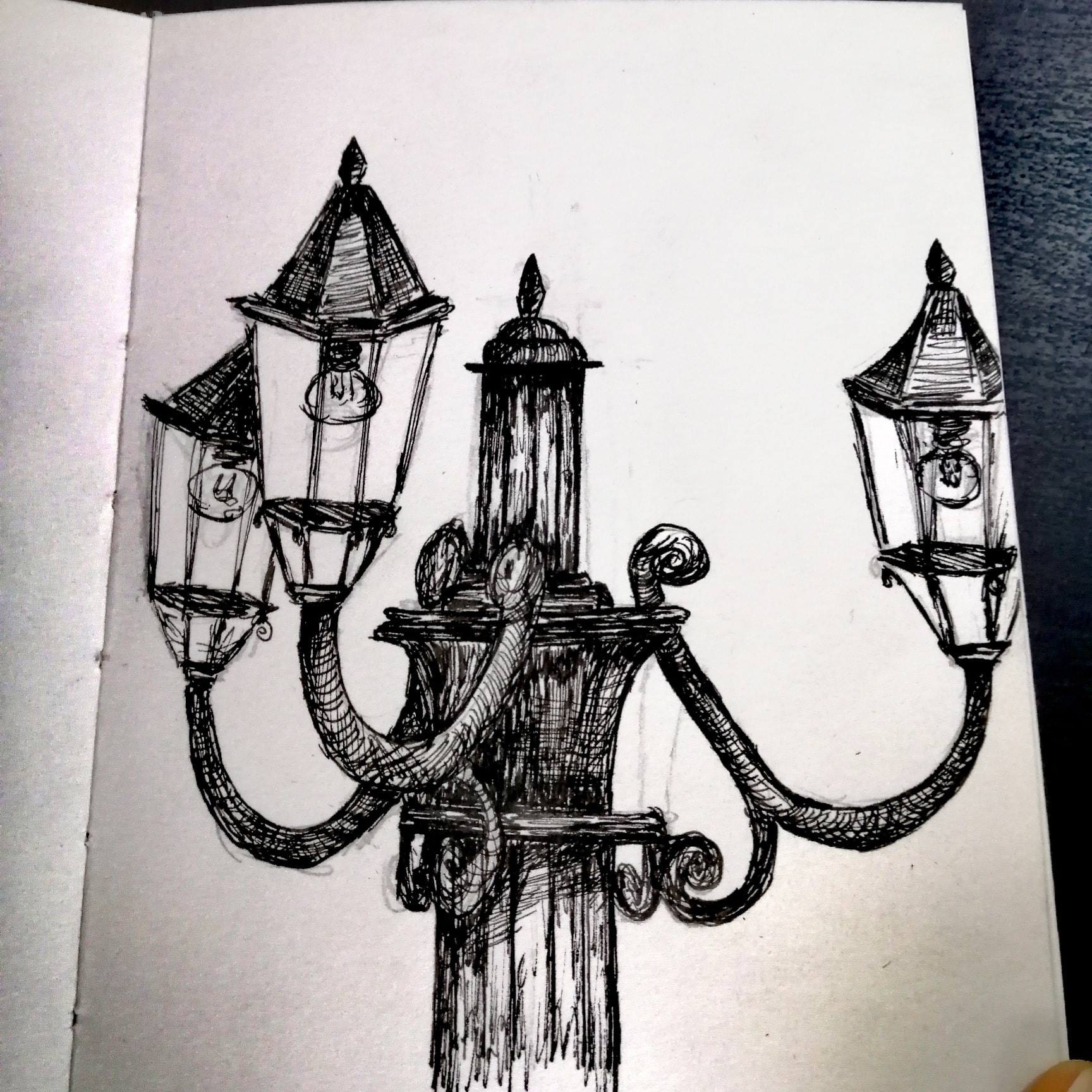
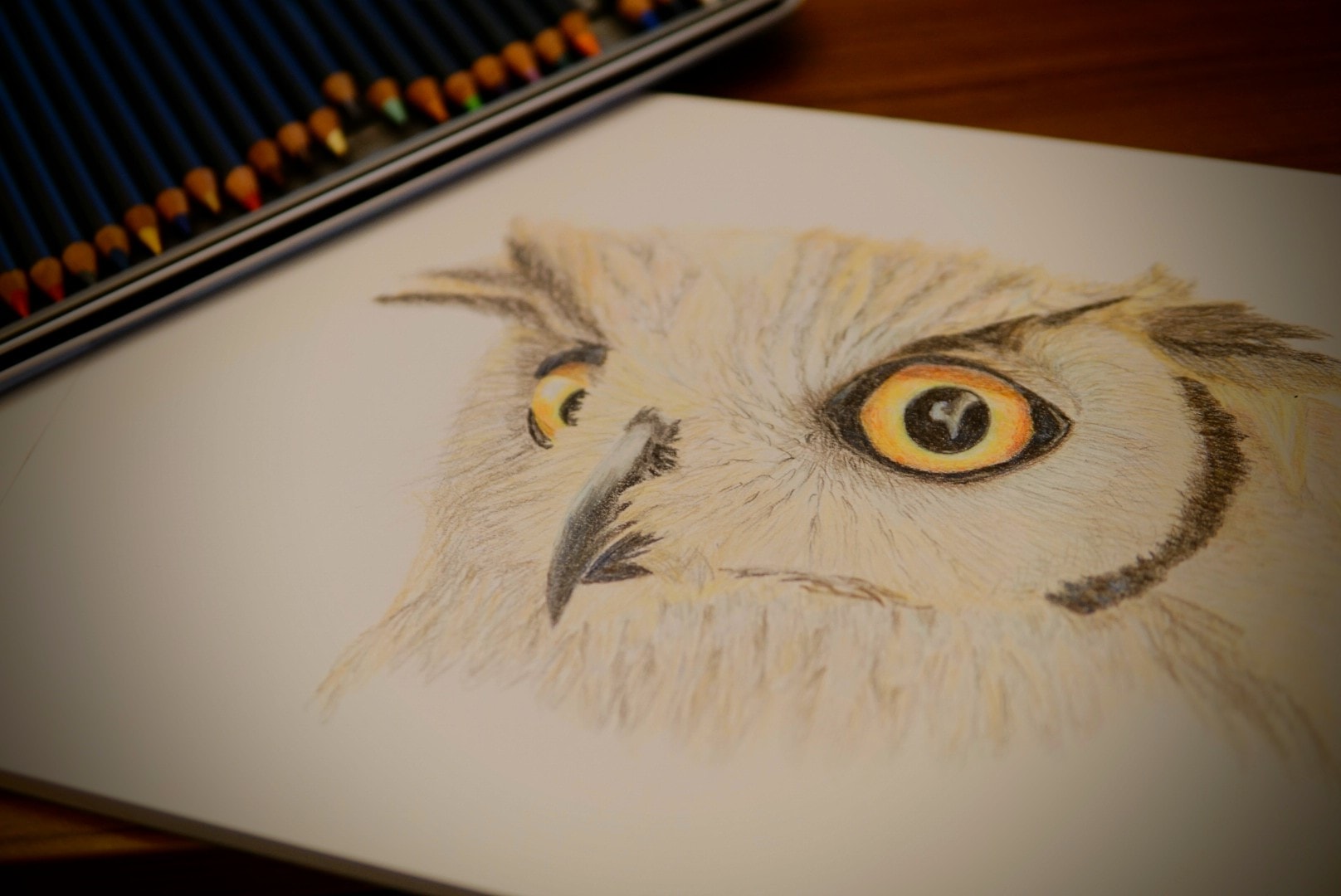
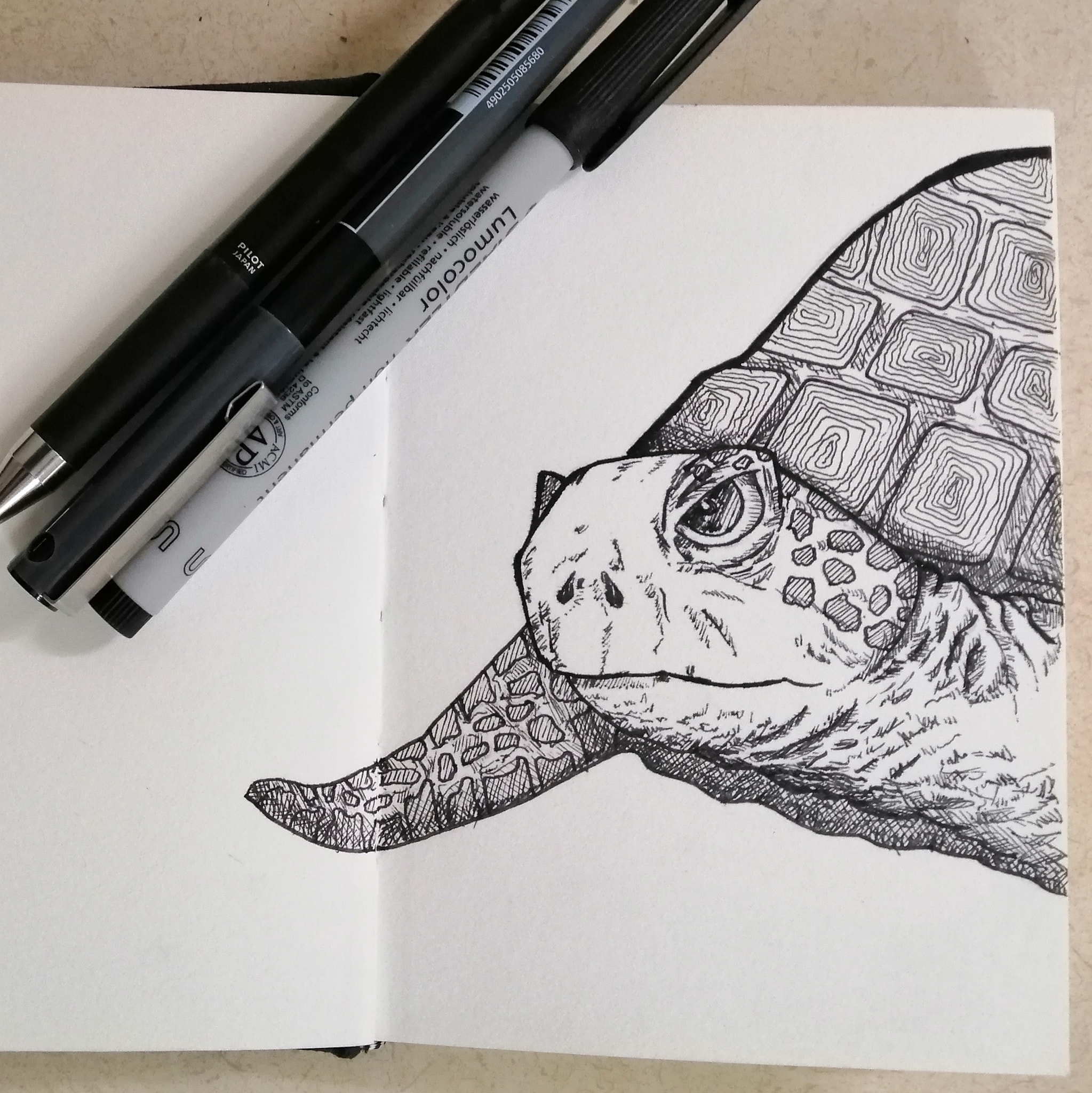
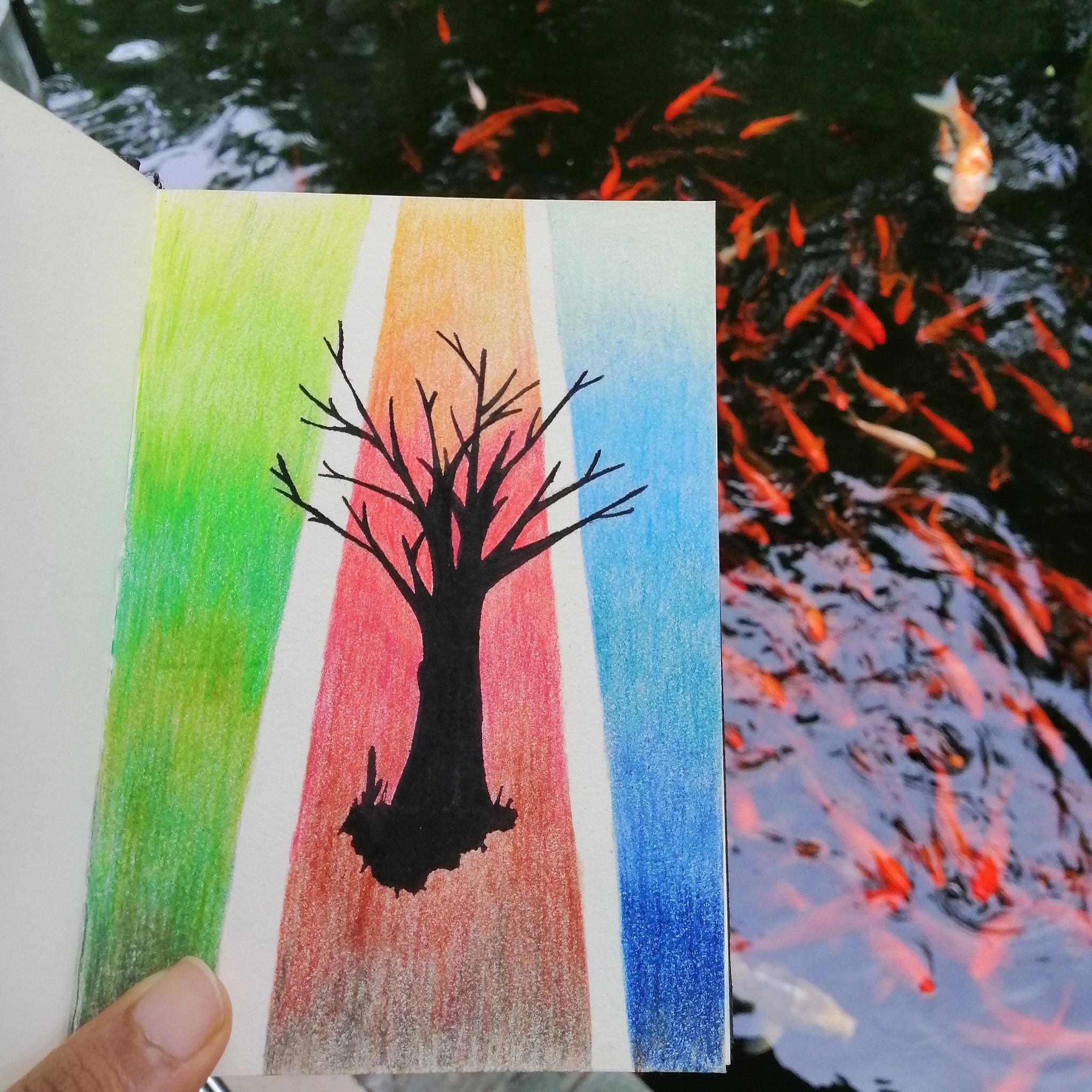
I dabble in a bit of scribbling and art from time to time.
I enjoy fantasy and sci-fi books. My books are tracked on Goodreads.
I enjoy running, cycling and exercising. My runs and rides are tracked on Strava.