Background
Punaravartan Foundation is a non-profit organisation dedicated to the repatriation, preservation, and promotion of Cambodia’s and Nepal’s cultural heritage. Its mission is to safeguard and celebrate tangible and intangible treasures, ensuring they are protected, researched, and shared for the benefit of present and future generations. The Foundation supports archaeological research, conservation training, cultural education, and the return of artefacts held abroad, while fostering creativity and scholarship rooted in the history of Nepal and Cambodia.
Currently, the Foundation manages its extensive library of digital assets on Brandfolder, a platform designed for creatives and marketers. With over 15,000 files and no specialised features to support the Foundation’s workflow, the library has become difficult to manage and make sense of. To address this issue, we created a purpose-built platform for the Foundation.
Project UMA
We named our product after Punaravartan Foundation’s project, Project UMA. Uma is a name of Sanskrit origin that means “splendour”, “tranquillity”, and “fame”. It is also associated with the Hindu goddess Parvati. We aim to provide domain-specific features that help the Foundation create associations between different entities and construct relationships between artefacts, locations, and people, while incorporating AI features to speed up its workflow.
Objects
The central entity of our application is the object. It represents a piece of evidence or an artefact of interest. An object can be attached to different pieces of metadata, such as fields and tags, all of which are highly customisable. The metadata associated with an object can also be used to find objects of interest through our powerful search mechanisms.
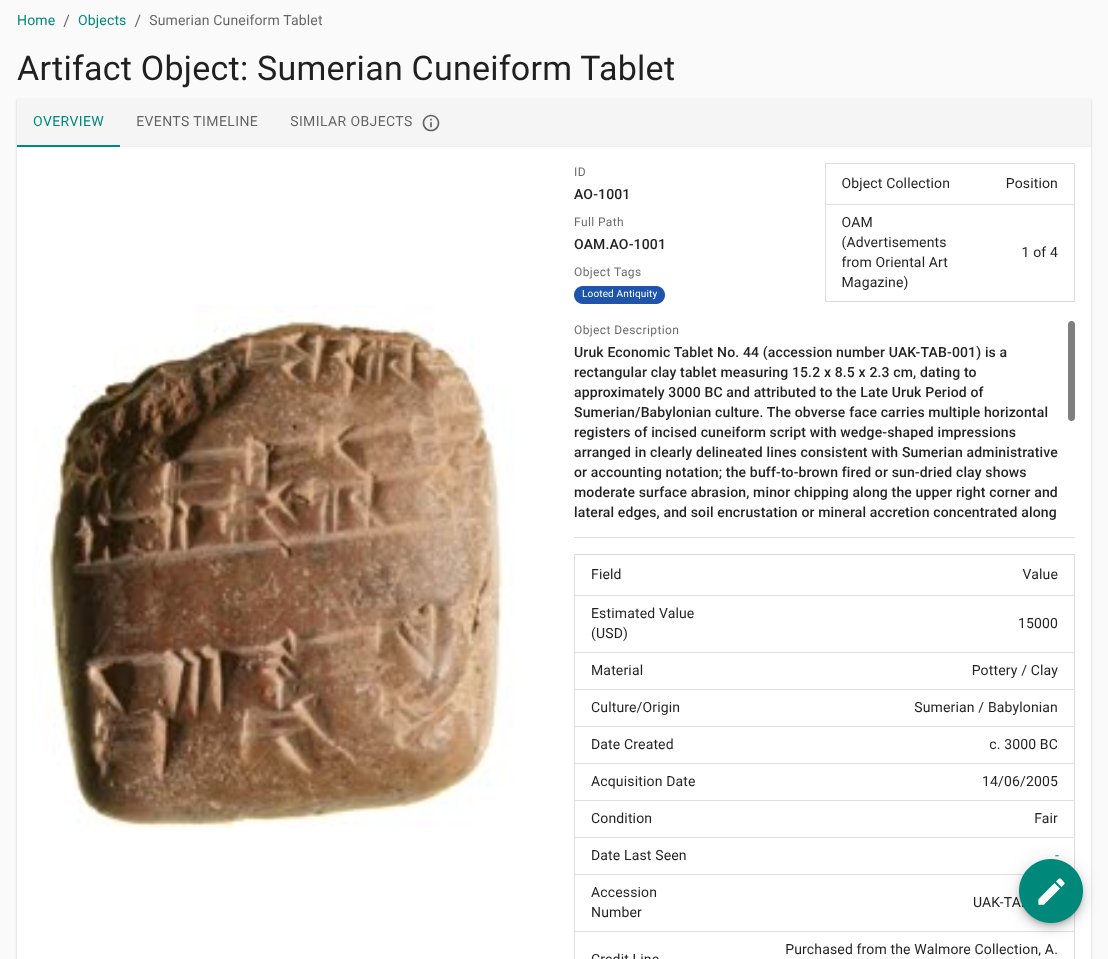
Figure 1.1 Objects
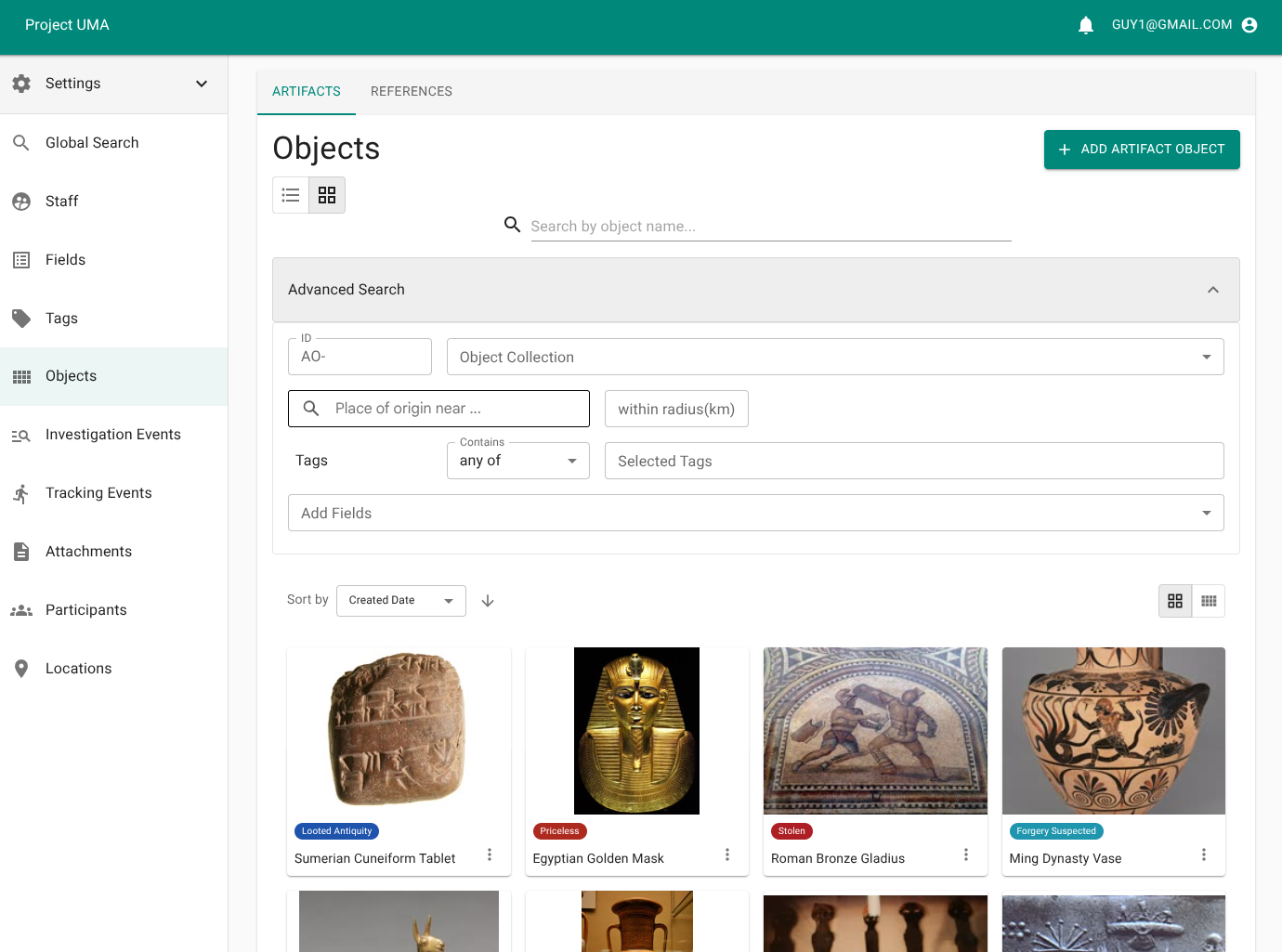
Figure 1.2 Collection View
Attachments Upload
Attachments represent files that can be uploaded to and stored on our platform, then associated with objects and events. We support a multitude of file formats, such as images, videos, office documents, 3D files, and emails, that can be viewed directly in our app through intelligent post-processing. We also incorporate AI features such as description generation using large language models and transcription generation to make all content searchable.
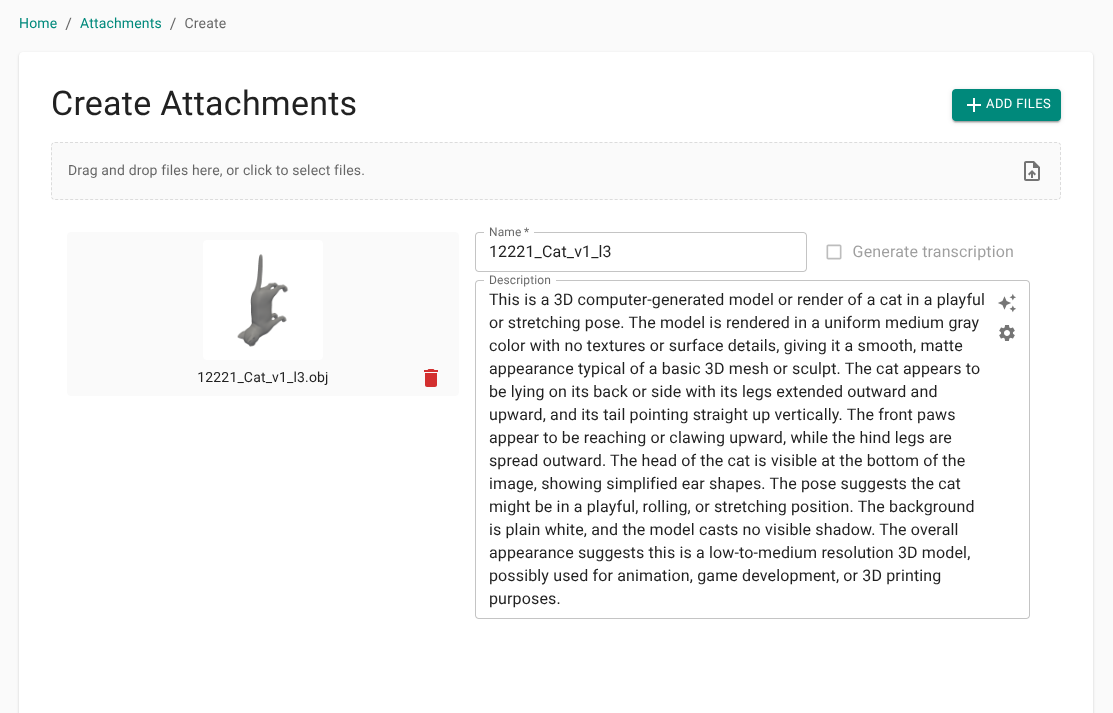
Figure 2.1 Attachments Batch Upload
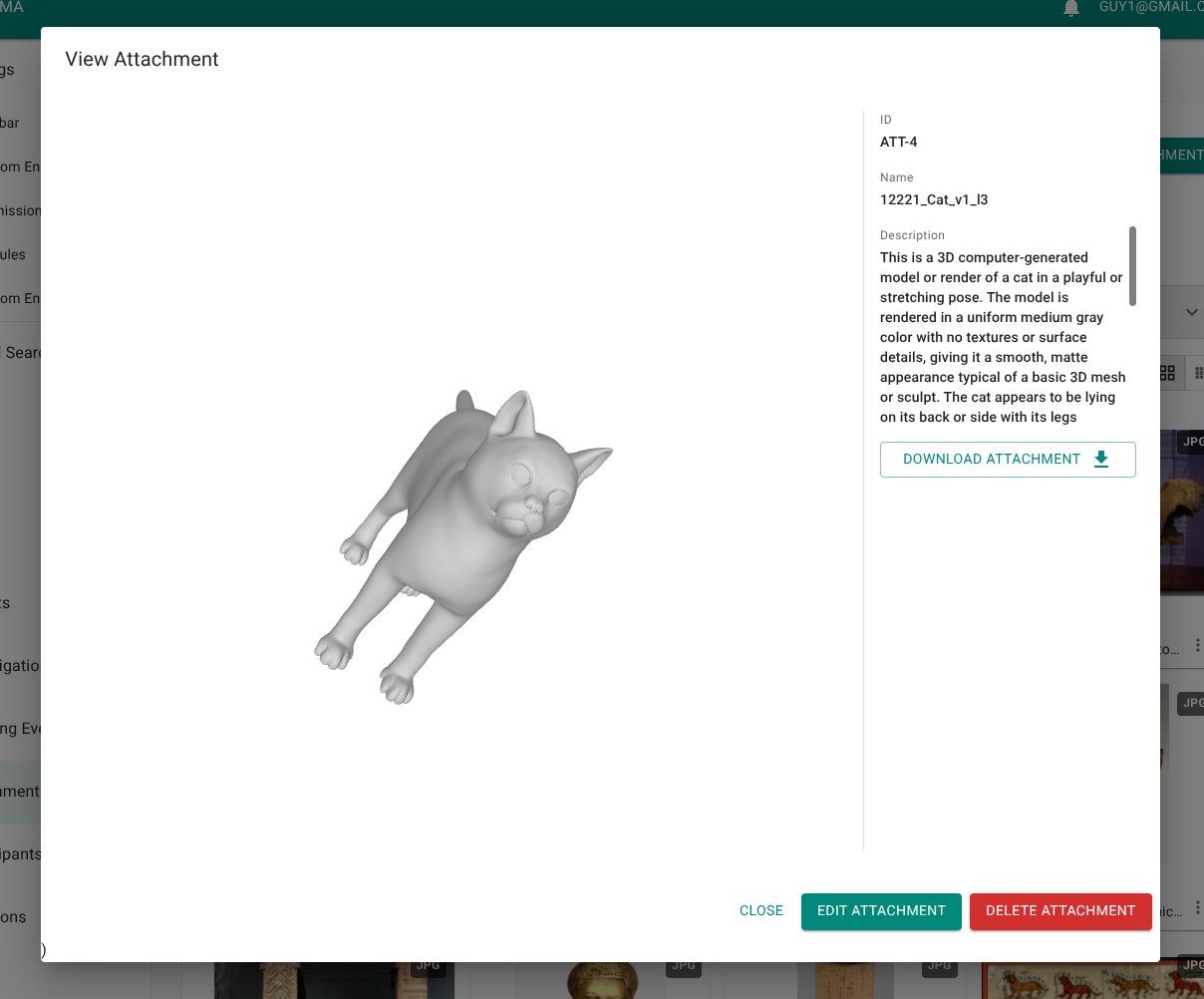
Figure 2.2 Previewing 3D Files
Global Search
All entities in our application can be represented as text through descriptions and transcriptions. This is a deliberate design decision that allows users to quickly search through all the data stored in our app using fuzzy search and semantic search.
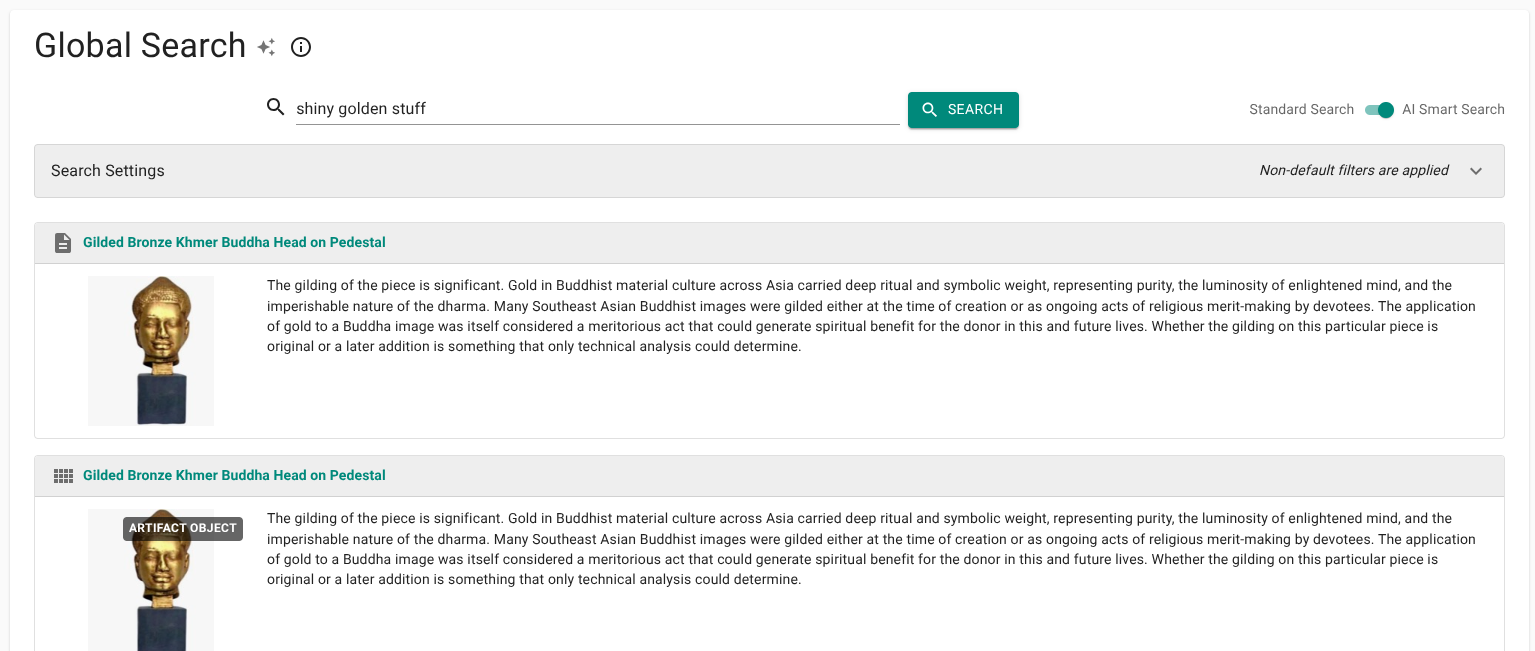
Figure 3.1 Semantic Search
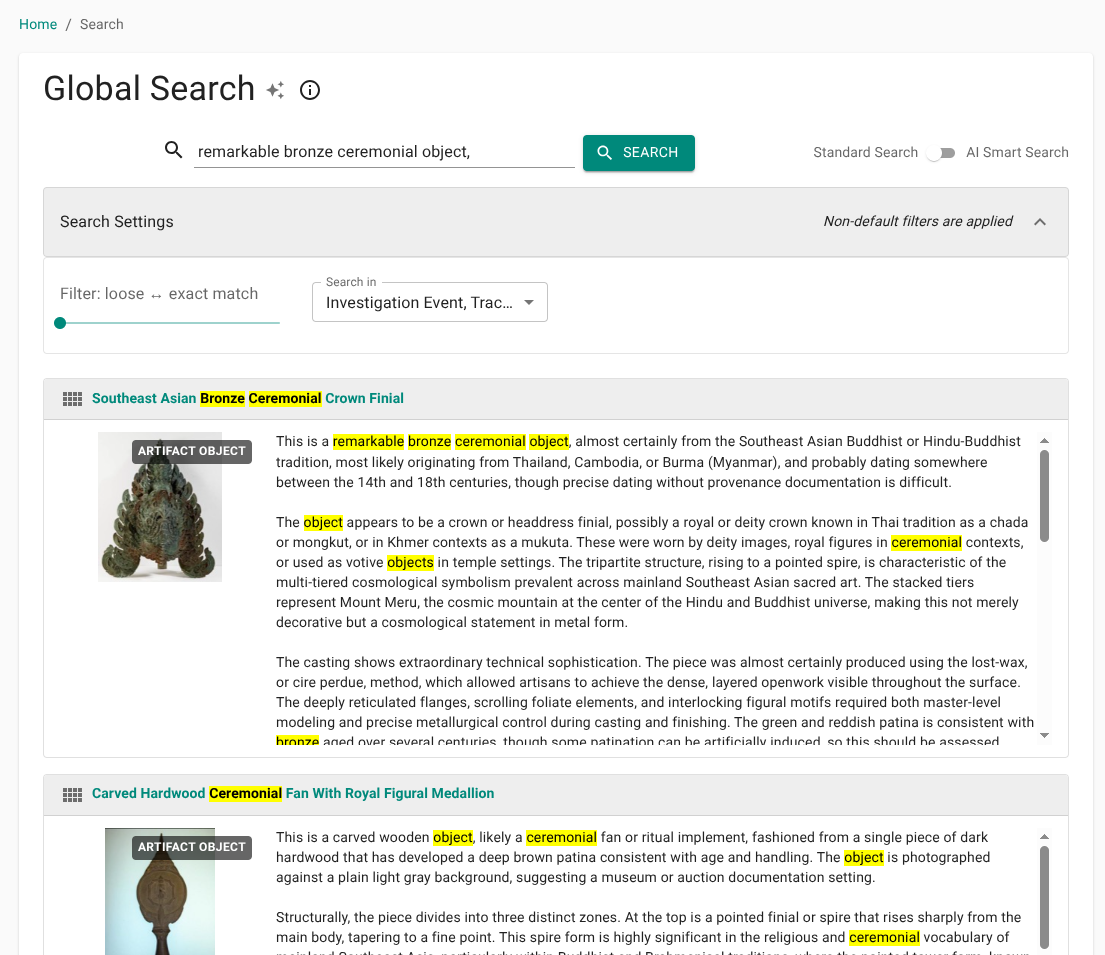
Figure 3.2 Fuzzy Search
Object Tracing
With all associations carefully created, we can visualise all events that have happened to an object over time, including the people involved and the places it has been. We can also use the generated embeddings to find similar objects based on their descriptions and transcriptions.
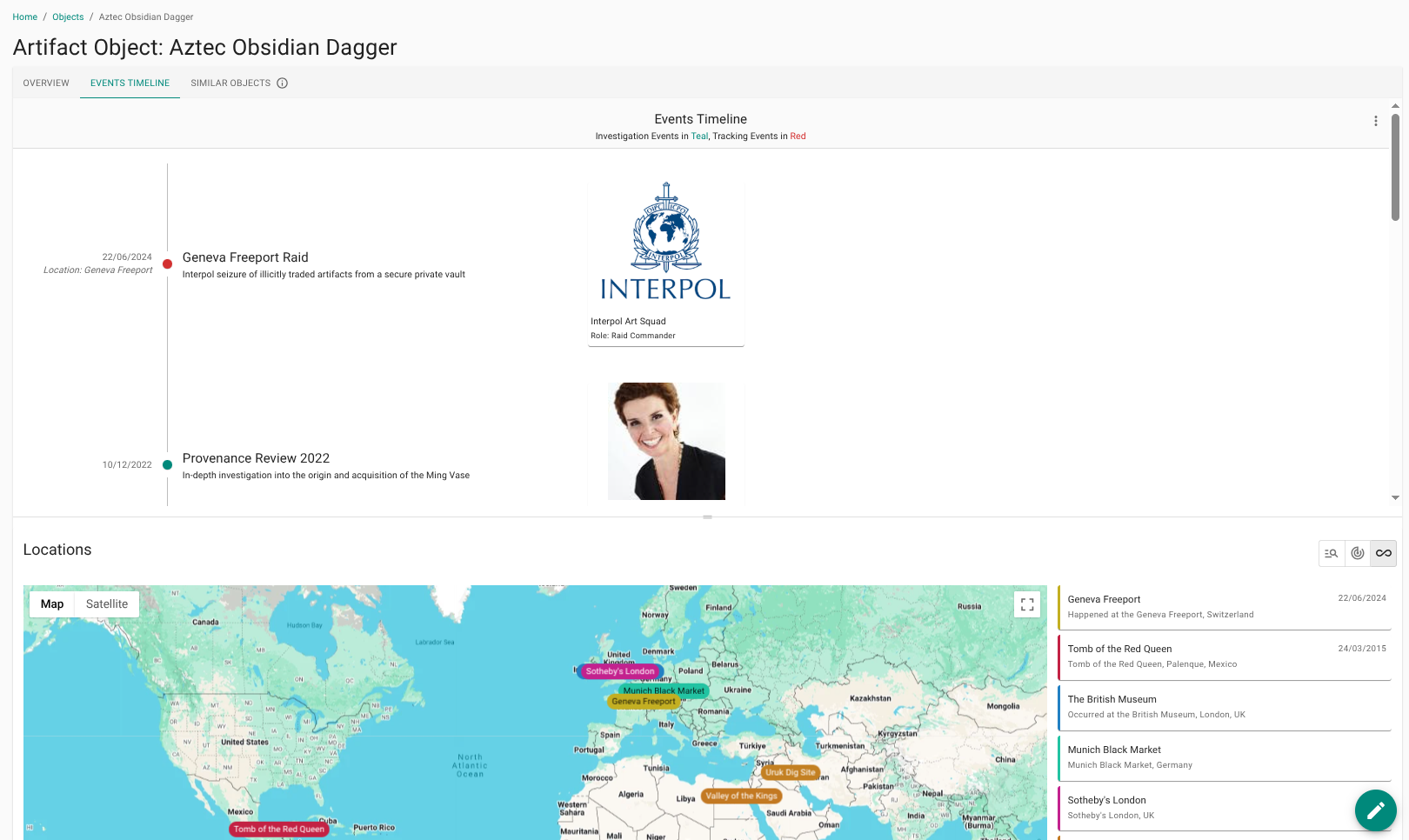
Figure 4.1 Object Tracing
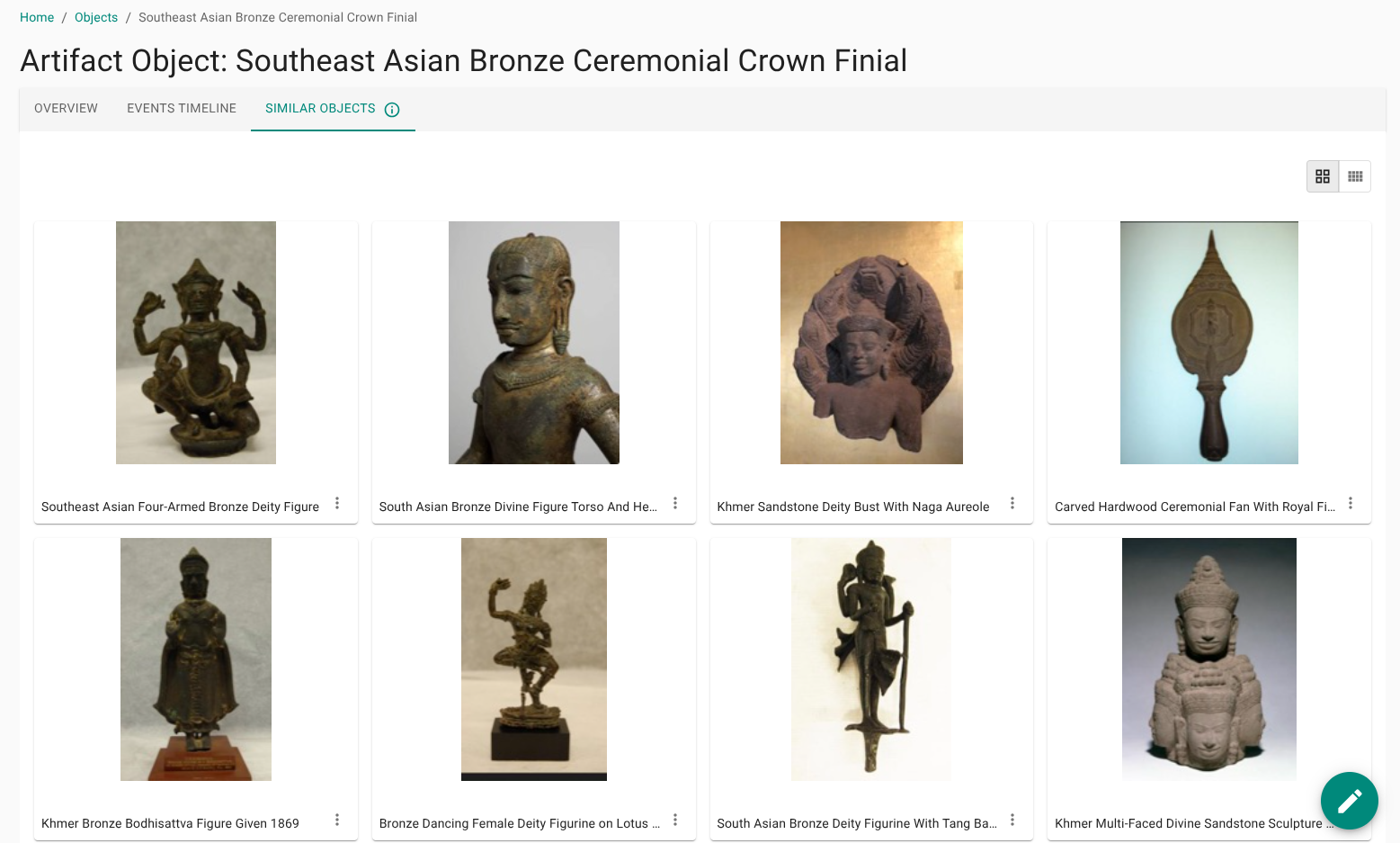
Figure 4.2 Similar Objects
Project Team
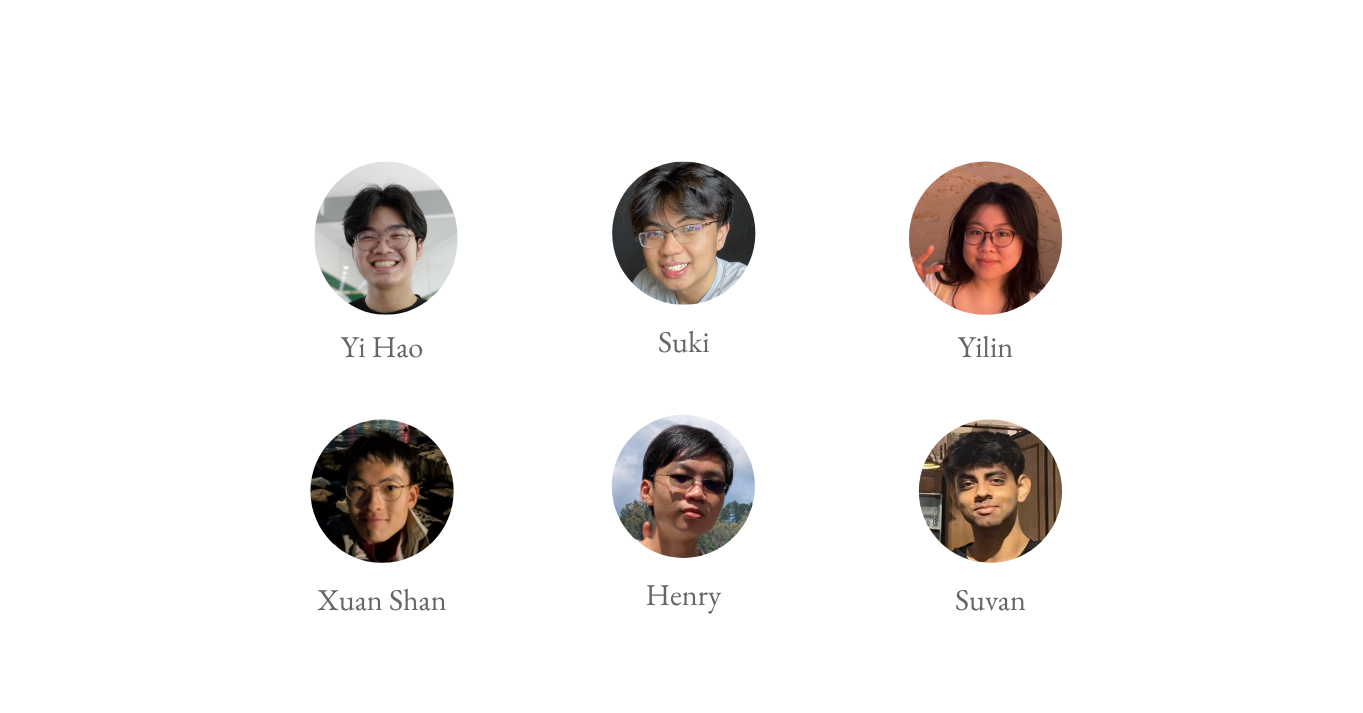
- Hon Yi Hao (Project Lead, Year 2)
- Apicha Maneerat (Suki) (Developer, Year 1)
- Zhang Yilin (Developer, Year 1)
- Ooi Xuan Shan (Developer, Year 1)
- Henry Lee (Developer, Year 1)
- Suvan Handa (Developer, Year 1)
Afterthoughts
I am grateful for the opportunity to serve in CVWO again and for the trust placed in me to manage production applications, liaise with clients, and manage a team of brilliant individuals. This is an experience that is hardly found anywhere else in an internship.
– Yi Hao
CVWO gave me the chance to build software while learning that doing so can be meaningful. It has been a challenging and rewarding experience, and I am grateful to have worked alongside such a supportive team.
– Suki
CVWO gave me the opportunity to use the computing skills I learnt in class to serve the community in a structured format, with guidance from computing professionals and professors.
– Yilin
CVWO taught me that simply writing code that works is not enough. I learned that prioritising clean and structured code is essential because it improves both code readability and overall efficiency.
– Xuan Shan
CVWO has provided a rewarding opportunity to learn more about software engineering while helping the community.
– Henry
I joined the CVWO programme expecting to sharpen my technical skills. However, the biggest lesson I learnt was that great engineering is actually about understanding people and building solutions that truly meet their needs.
– Suvan
Acknowledgements
We would like to express our heartfelt gratitude to the following individuals and organisations for their invaluable support and influence throughout our project:
- GIC for their generous support
- Prof. Ben Leong (NUS) and Patrick Wang (NUS) for their guidance and mentorship