
LIU Yuejiang
NUS Presidential Young ProfessorNUS Presidential Young Professor, Department Of Computer Science
- Postdoc, Stanford
- PhD, EPFL
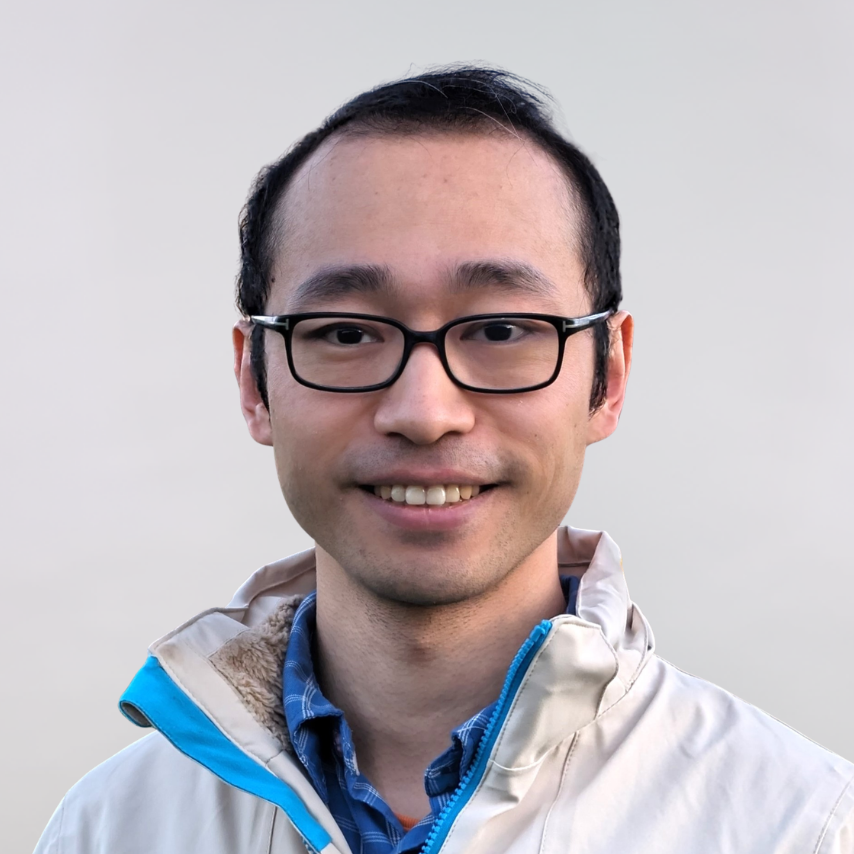
Yuejiang Liu is an incoming Assistant Professor in the Department of Computer Science, supported by the Presidential Young Professorship award. He is currently a postdoctoral fellow at Stanford University, advised by Chelsea Finn and mentored by Yilun Du. He received his Ph.D. from EPFL, where he was advised by Alexandre Alahi, and also worked with Francesco Locatello, Chris Russell, and Bernhard Schölkopf. His research seeks to build intelligent agents that can perceive, reason, and act in the physical world. He is particularly interested in physical intelligence in open, dynamic environments, where agents must learn from limited data, act under partial observability, adapt to moving objects, and interact with other agents. His work spans adaptive robot policies, interactive world models, and proactive self-improvement, with the broader goal of enabling embodied agents to generalise, adapt, remember, and improve through experience. His research has been recognised with Best Paper awards at ICLR, CVPR, and RSS workshops, ICML Oral presentations, and invited talks at OpenAI, NVIDIA, and other leading institutions. Yuejiang leads the Learning for Embodied Minds and Agents (LEMA) Lab, which aims to discover simple and scalable principles of embodied intelligence while fostering a culture of rigor, curiosity, and growth. The group is actively looking for highly motivated Ph.D. students, postdoc researchers, and visiting students. For more information, please visit the lab website at https://lema-nus.github.io.
RESEARCH AREAS
Artificial Intelligence
- Machine Learning
- Robotics
- Trustworthy AI
RESEARCH INTERESTS
Robot Learning
World Model
Self-Improvement
Representation Learning
Data-Centric AI
RESEARCH PROJECTS
RESEARCH GROUPS

Learning for Embodied Minds and Agents
Learning for Embodied Minds and Agents (LEMA) is a collaborative group of researchers working to build intelligent agents that can perceive, reason, and act in the physical world. Our research bridges machine learning, computer vision, and robotics, with a focus on learning agents that can generalise from limited data, adapt during deployment, remember what matters, and improve through experience.

TEACHING INNOVATIONS
SELECTED PUBLICATIONS
- World Action Verifier: Self-Improving World Models via Forward-Inverse Asymmetry
- RoboMME: Benchmarking and Understanding Memory for Robotic Generalist Policies
- Learning Long-Context Diffusion Policies via Past-Token Prediction
- Bidirectional Decoding: Improving Action Chunking via Guided Test-Time Sampling
- Scaling Verification Can Be More Effective than Scaling Policy Learning for Vision-Language-Action Alignment
AWARDS & HONOURS
Outstanding Paper Award, ICLR World Model Workshop, 2026
Best Paper Finalist, CVPR Scalable Robot Learning Workshop, 2026
Best Paper Award, RSS Robot Representation Workshop, 2025
COURSES TAUGHT