Switching Off Waste: How Two NUS Computing Founders
are Rethinking Energy Use with Ecovolt
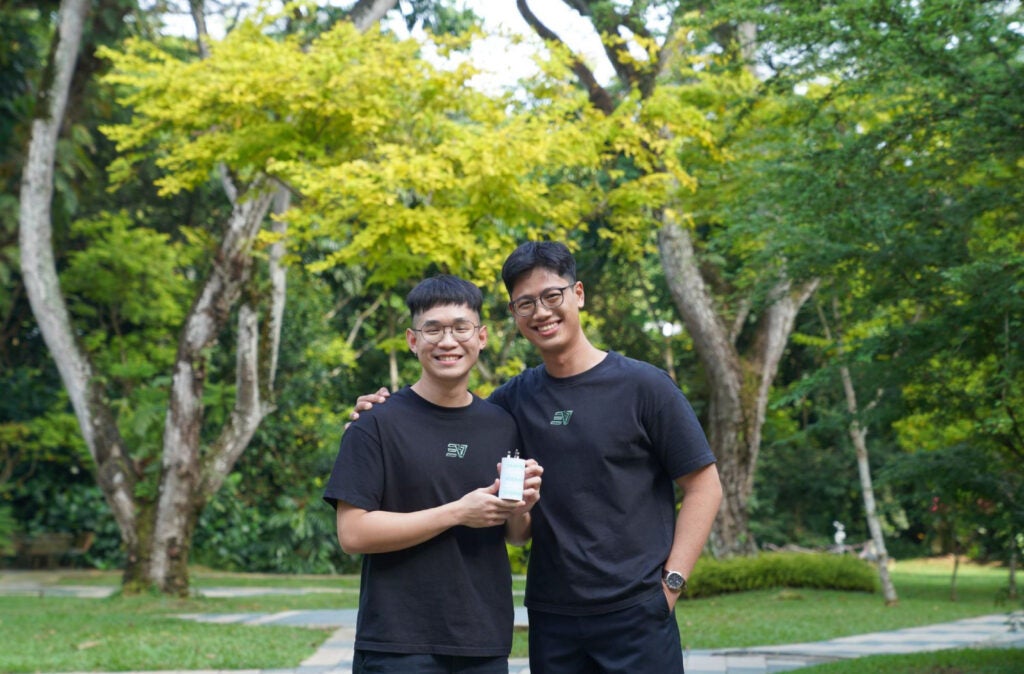
For Eugene and Glenn, sustainability did not begin as a grand mission. It started with frustration – high electricity bills, limited visibility, and the sense that energy was being wasted in ways no one could clearly explain or control.
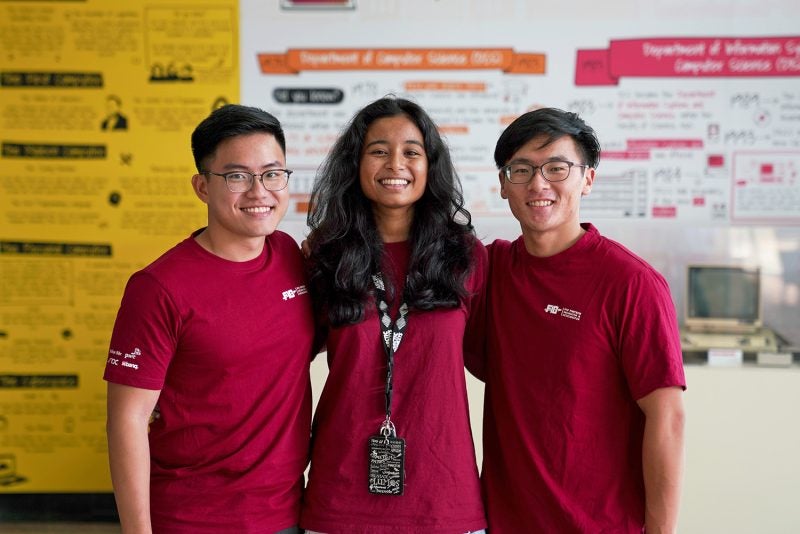
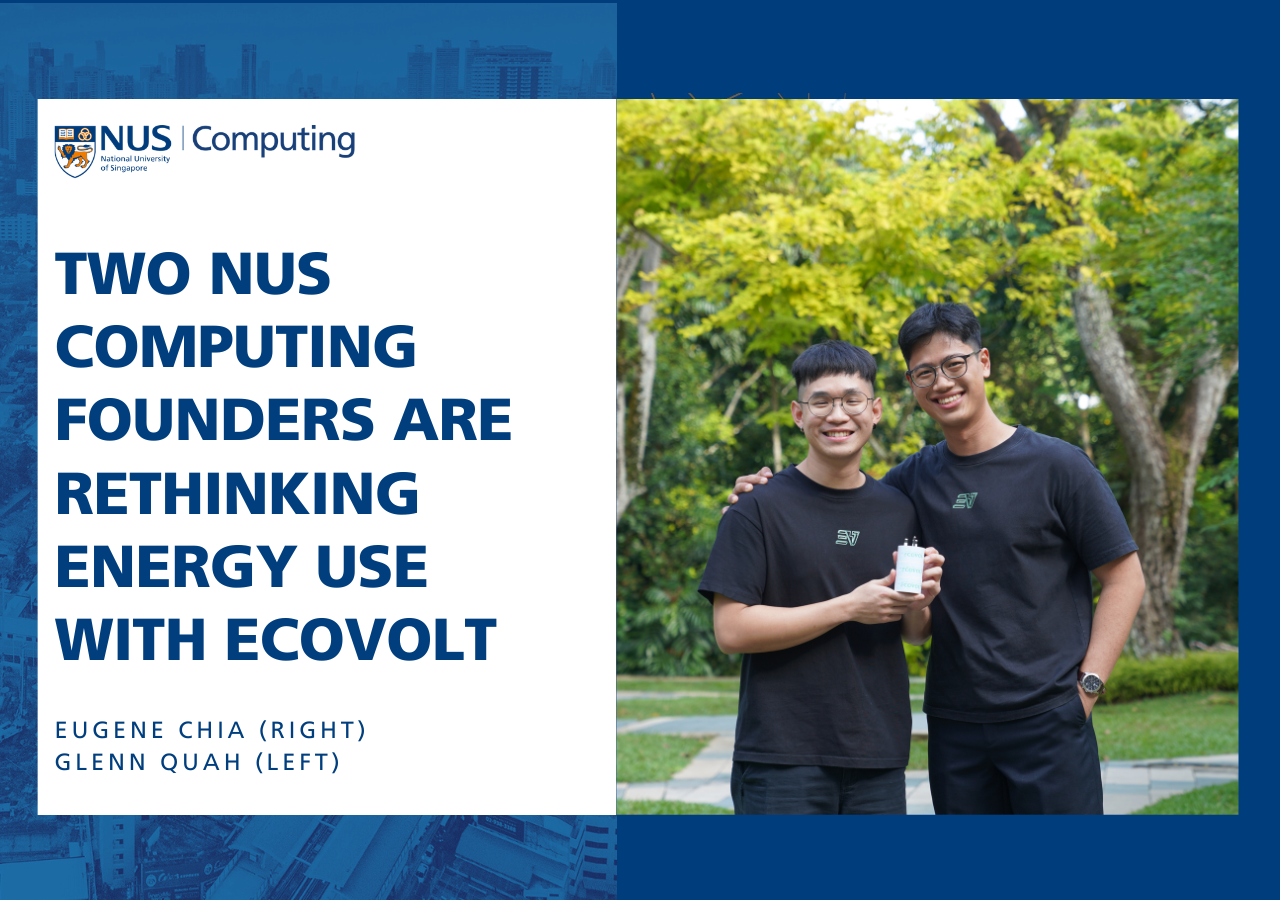
Eugene Chia, a Computer Science graduate from NUS School of Computing, and Glenn Quah, a final-year Information Systems student, are co-founders of Ecovolt, a startup developing smart energy solutions for schools and commercial buildings. Together with their third co-founder, Raphael, they are building systems that help organisations see, understand, and reduce energy waste at scale.
From Frustration to First Validation
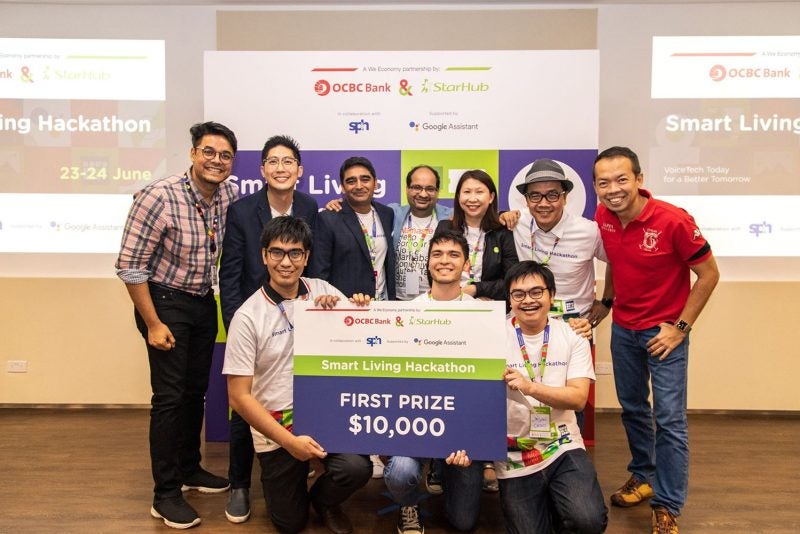
The idea for Ecovolt first took shape during preparations for a United Nations Sustainable Development Goals hackathon organised by NUS’ Innovation with Societal Impact (ISI), where the team’s early concept went on to win first place.
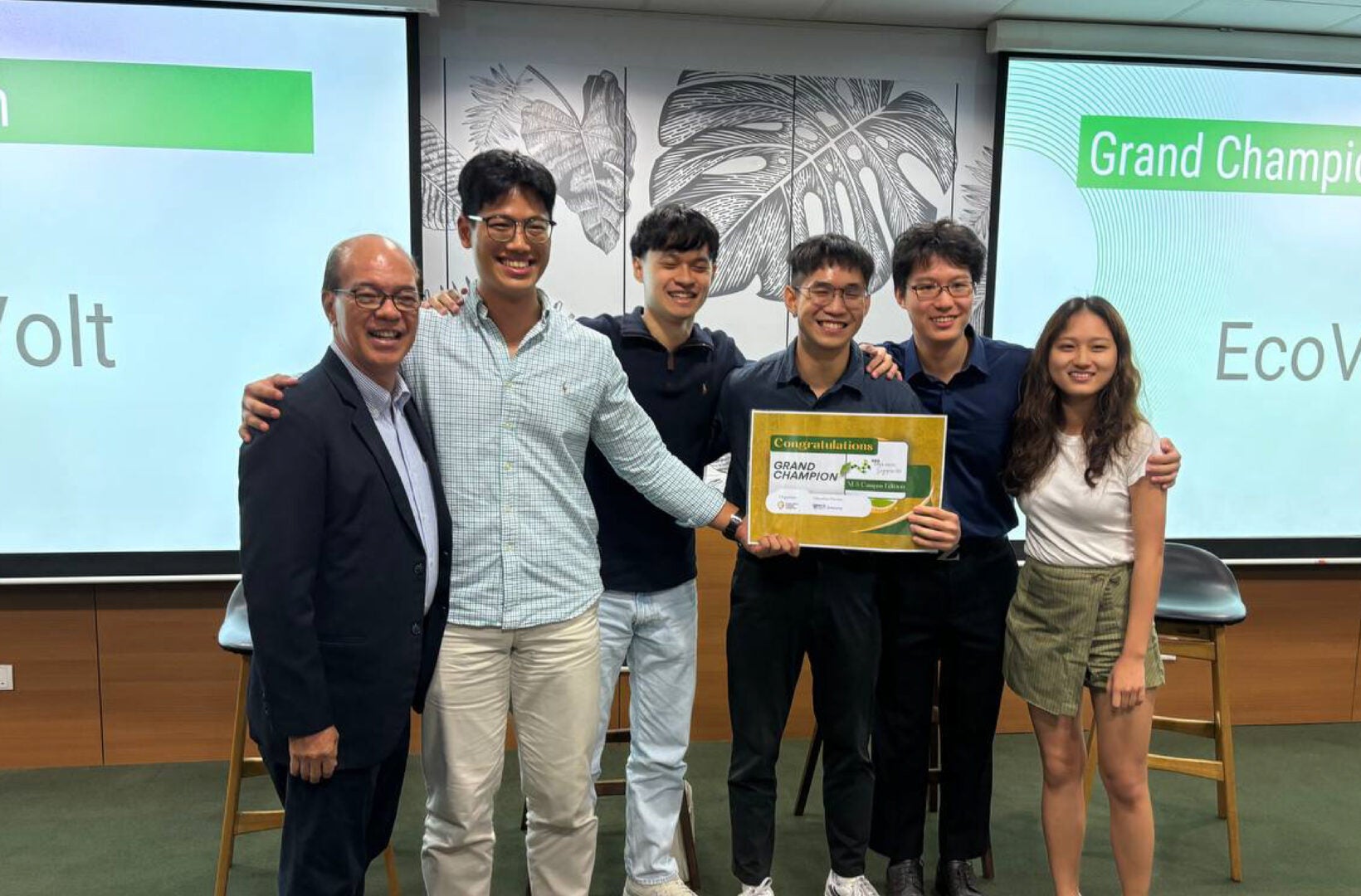
But the real trigger came from a conversation among the three founders, reflecting on their time abroad under the NUS Overseas Colleges (NOC) programme. Despite being out most of the day, their respective apartments were consuming a surprising amount of electricity. “Bills were high, but none of them had visibility into what was driving the usage,” Glenn recalls.
“That’s when we started thinking about vampire energy,” Glenn recalls – power drawn by devices even when they are not actively in use. “We began asking how technology could eliminate that kind of waste.”
For Eugene, the motivation was also deeply personal. “I was fed up,” he says frankly. “Fed up with being nagged at home to turn things off, and seeing train ads telling people to save energy while the posters themselves were being lit up 24/7.” If society kept telling people to switch things off, he reasoned, why not build something that actually helps them do it?
That idea eventually became Ecovolt.
From Classroom to Product
Both founders credit their time at NUS Computing for giving them the confidence to move beyond an idea and build a working product.
For Glenn, modules such as IS4151 (Artificial Intelligence of Things), Capstone, and IS2103 on backend services were instrumental. These foundations were put to the test during his internship at a startup under the NOC Norway programme, where he gained first-hand experience building secure, scalable systems for real users.

“That experience gave me confidence that Ecovolt could move beyond an idea and actually perform in production environments,” he says.
Eugene’s path was shaped by contrast. Before Ecovolt, he had tried to bring an ed-tech startup from his NOC Paris internship to Singapore. Despite significant effort, traction was minimal, and the experience was demoralising. “I internalised it as a skill issue,” he admits. That mindset changed when Ecovolt secured six schools as pilot partners. “That’s when I realised it wasn’t about skill. It was about solving the right problem, with the right people.”
The two founders met through N-House, an entrepreneurship residence where NOC alumni live and build startups together. After connecting at a networking session, they decided to team up for the hackathon that led to Ecovolt.
Their roles evolved naturally. As CTO, Glenn focuses on system architecture, technical decision-making, and product design. Eugene, now COO, bridges customer needs and technical execution. Rachael oversees business strategy as CEO. Together, the trio constantly balance what is technically possible with what is necessary for real-world deployment.
Building for Scale and Accuracy
Ecovolt’s system is built with scale and reliability in mind. While most smart plugs on the market are designed for homes and small setups, Ecovolt targets commercial and institutional environments where customers may deploy over hundreds or even thousands of devices across multiple rooms or buildings.
Smart plugs were only the starting point. The team is now building a next-generation, AI-native Building Management System (BMS) designed to integrate anything and aggregate everything – from hardware and sensors to upstream and downstream rooms or buildings.
Beyond plug-level monitoring, Ecovolt has also developed smart circuit breakers that measure total energy consumption for an entire room directly from the grid. This method provides a higher level of accuracy, making it especially useful for identifying usage anomalies and tracking long-term trends.
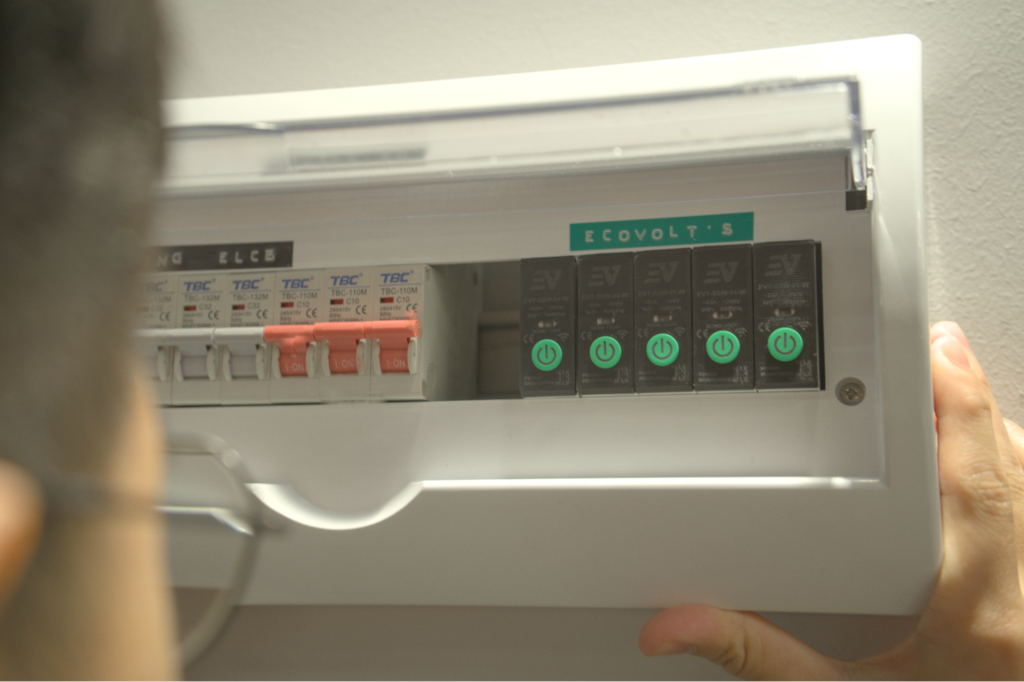
This modular approach sets Ecovolt apart from traditional BMS solutions, which often rely on vendor lock-in. Instead, Ecovolt’s platform is designed to grow and adapt with customers’ needs, offering flexibility without sacrificing control or accuracy.
As part of pilot deployments, Ecovolt currently has about 50 smart plugs installed across iCube and the NUS School of Computing. Over five months, these pilots have helped save approximately S$1,000 in energy costs – offering an early indication of how improved visibility can translate into measurable savings.
Real-World Validation
Early pilots have reported electricity savings of up to 20 per cent, results that were featured in The Straits Times. For the founders, the numbers matter, but what matters more is how people engage with the data.
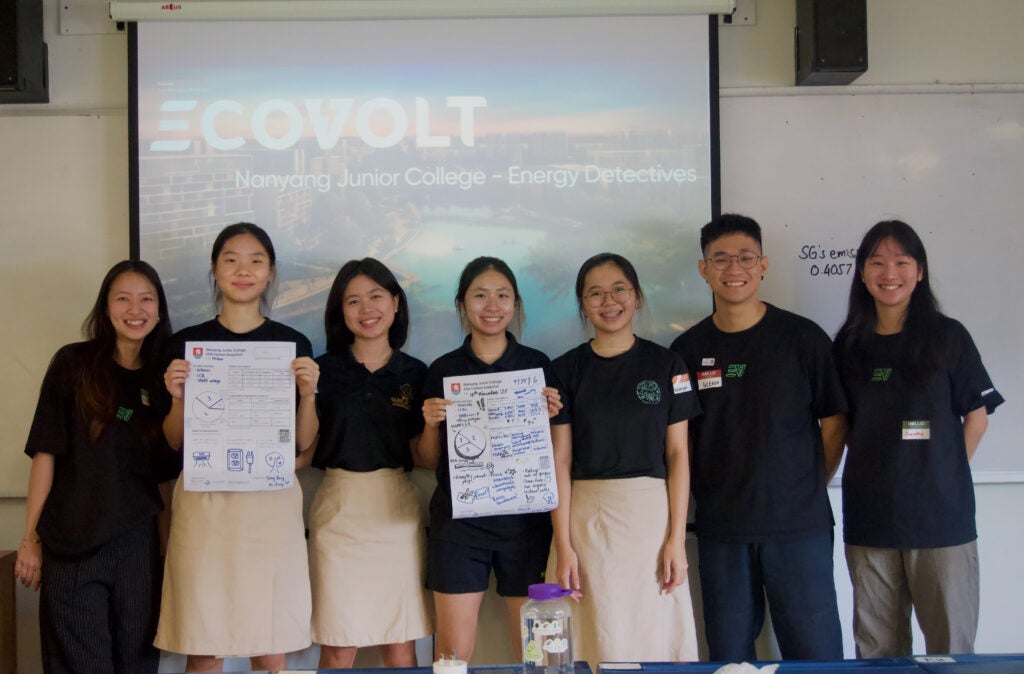
One story that stood out was NYJC winning the School Green Awards 2025. Through Ecovolt’s platform, students were given access to real-time energy consumption and carbon emissions data from their own campus. Using these insights, student leaders designed initiatives to engage their peers and track the impact of their sustainability efforts.
“It wasn’t just about saving energy,” Glenn reflects. “It was about helping students see what’s happening and take ownership.”
Life as Student Founders
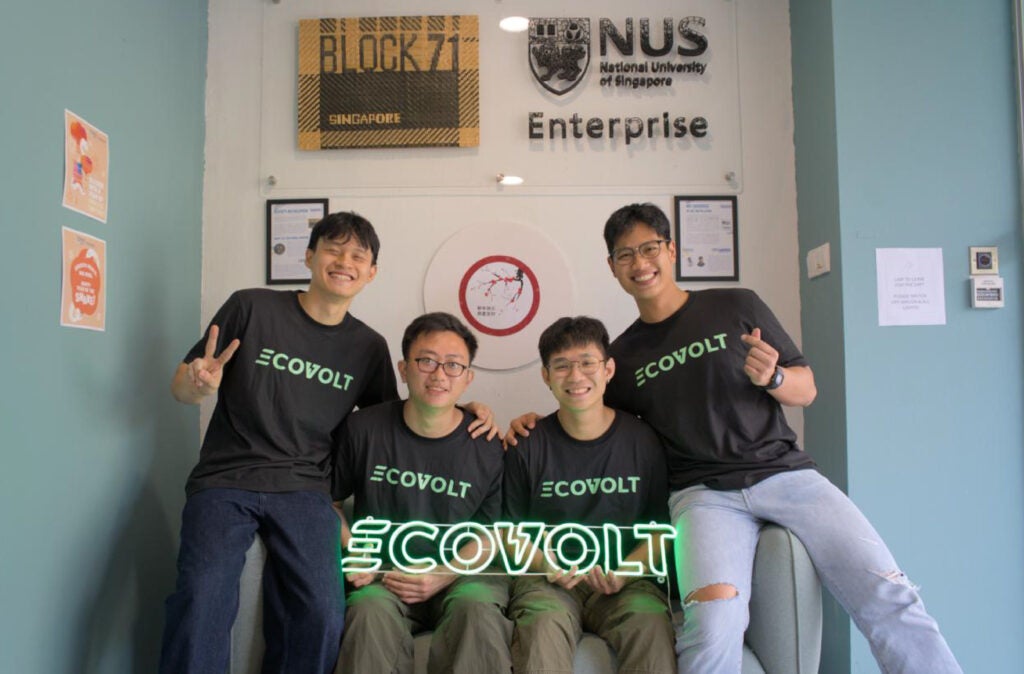
Balancing a startup with academic life has been demanding. Time management, Glenn says, is the hardest challenge. Long nights, early mornings, and overlapping deadlines are common.
What made the journey sustainable was support – from co-founders, loved ones, and the wider startup community at N-House and Block71. “These environments understand the hustle,” Glenn shares. “That empathy validates what we’re trying to build and makes it possible to keep going.”
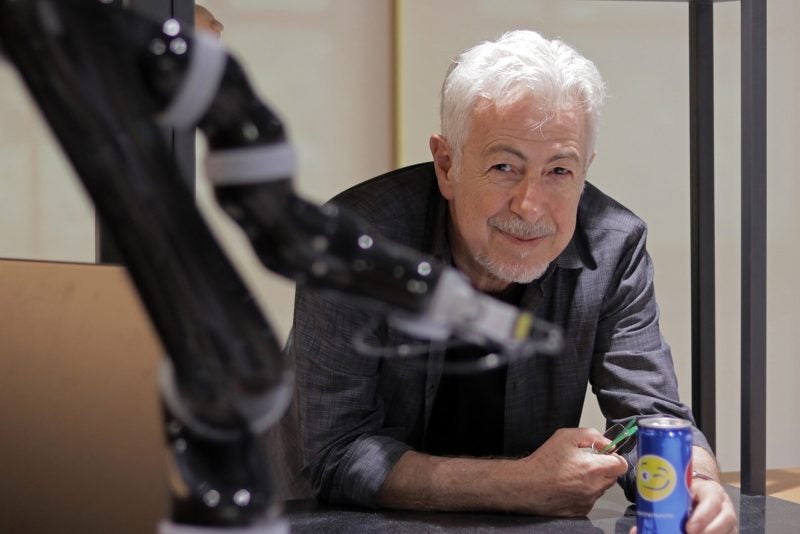
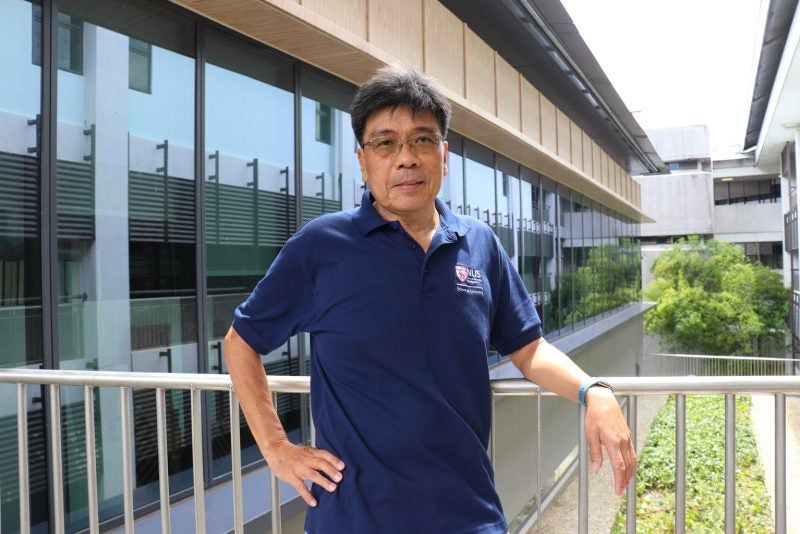
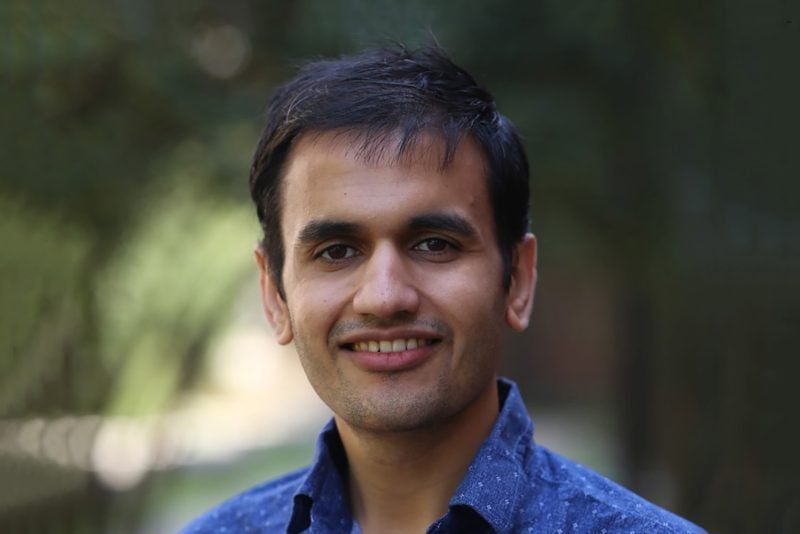
Support from the NUS School of Computing played a central role. Glenn credits his Final Year Project supervisor, Professor Tan Wee Kek, whose guidance helped validate Ecovolt’s technical direction and pushed the team to think beyond a purely academic exercise.
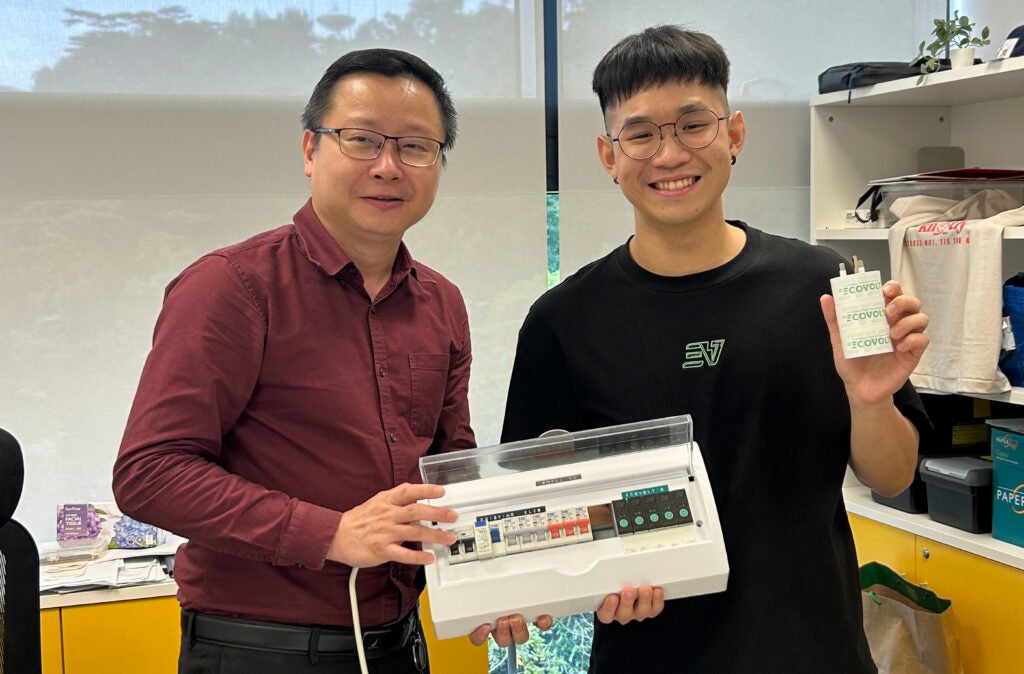
Glenn with Professor Tan Wee Kek, whose guidance during his Final Year Project helped shape Ecovolt’s technical direction and commercial thinking.
He also acknowledges Ho Yuen Ping from the NUS Enterprise Social Impact Hub as one of Ecovolt’s earliest supporters, alongside a growing interdisciplinary team of 10 spanning SoC, Business, and CEG.
Asked which skills from SoC mattered most, Glenn answers without hesitation: “Full-stack development. Being trained across frontend, backend, and system integration made it much easier to build end-to-end systems quickly – which is invaluable in an early-stage startup.”
Looking ahead
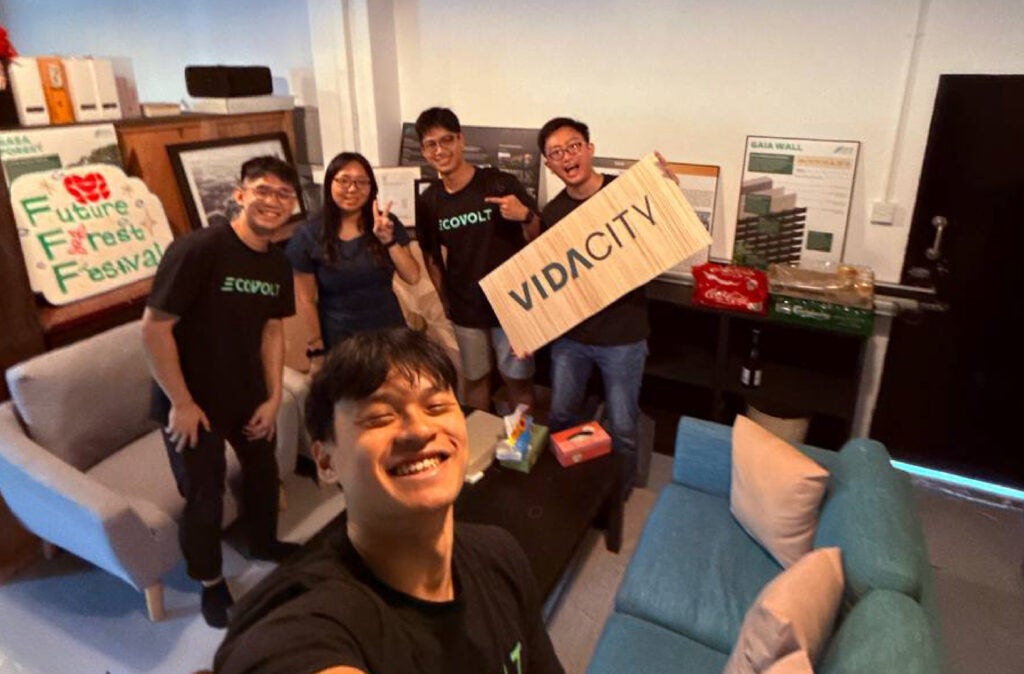
Looking ahead, Ecovolt is focused on scaling both its technology and its impact. As organisations place greater emphasis on sustainability and operational efficiency, the team continues to refine its platform to support larger and more complex environments.
Glenn sees AIoT becoming foundational as Singapore’s IoT infrastructure scales. “You can’t optimise what you can’t measure,” he says. “That’s where Ecovolt fits. We provide data and control.”
As a founder, Glenn hopes to stay technically sharp while mentoring his team and leading by example. Eugene, as COO, focuses on building strong processes and standards. “I want Ecovolt to be a place our staff feel proud to work at, and a business our clients are proud to recommend,” he says.
Their advice to students reflects lessons learned through experience. “Take the leap,” Glenn says. “If you never try, you’ll never know.” Eugene adds, “Run into fear. Face it, and turn it into an opportunity.”
If they could speak to their first-year selves, Glenn would offer reassurance: “Everything will turn out fine. Stop worrying so much, enjoy the process, and put yourself out there.” Eugene smiles. “Meet Raphael and Glenn sooner.”