
Capstone Projects (Undergraduate)

Business Analytics Capstone Project

Programme Overview 

The Business Analytics capstone project is a multifaceted, culminating experience that allows students to hone their technical and soft skills by solving real-world problems. Partnering with industry clients, students apply the principles and analytic methods acquired throughout their degree program to deliver impactful, data-driven solutions.

Target Students: 3rd and 4th-year undergraduate students pursuing a Bachelor of Science in Business Analytics.

For any inquiries, please direct emails to: Dr Shalinda Adikari <dispsaa@nus.edu.sg>

Project Scope and Deliverables

Analyze & Apply Business Analytics for Real-World Client Projects

In this capstone project module, students are required to complete a realworld business analytics project based on principles that they have acquired throughout the degree program. The key emphasis of the project is on understanding the objectives of the analytics exercise and applying appropriate analytic methods and techniques to deliver impactful solutions to real-life clients. Students are also expected to deliver effective presentations of the findings through visualization techniques, oral presentations, and written communication, and exhibit important project management and teamwork skills to be effective in professional settings.​

13 Weeks
8 Course Units (equivalent to 2 4-unit courses)
Teams of 5-6

The analytic project may comprise of a common back-end, analytical models (e.g., econometrics, machine learning, data mining, text mining) with two or more front-end applications/dashboards (any combination of desktop, web, or mobile applications). The project scope and complexity should be around 1200-1440 man-hours, and companies should ensure that all data and resources (Gen AI APIs, Cloud APIs, etc.) required for students to conduct the project are ready by the first week of the semester.

Category 1: Agentic AI, Generative AI & Conversational Intelligence Category 2: Descriptive Analytics & Dashboard Development Category 3: Advanced Analytics
Scope
Intelligent AI agents, LLMs, RAG, persona modeling, and domain adaptation.
Exploratory data analysis (EDA), interactive dashboards, KPI definition, and stakeholder-oriented reporting.
Predictive modeling, time-series forecasting, anomaly detection, and operational optimization.
Sample Project Title
• AI-Powered Security Knowledge Discovery and Management Platform

• LLM-based Clinical Copilot: A Generative AI Solution for Streamlining Electronic Health Records

• Gen-AI for Adult Learner-Course Matching
• Hospital Operations Dashboard for Administrative Planning

• Security Metrics and Benchmarking Analytics Platform for Enterprise Risk Assessment

• Workflow Analytics for Order Fulfilment
• Forecasting of Market Conditions Using Deep Learning

• Multimodal Content Analytics – Multi-Platform Engagement Prediction System

• Blockchain Phishing and Anomaly Detection System
Typical Deliverables
End-to-end AI system architecture, RAG pipelines, web prototype, model evaluation framework, and governance documentation.
Comprehensive EDA report, interactive dashboard (Power BI, Tableau, Streamlit), business insights, and cleaned data pipelines.
Forecasting/classification models, feature engineering pipelines, scenario simulation modules, and performance benchmarking reports.

Company Submission & Timeline

Submission Instructions:

  1. Register your company in the system (https://app.comp.nus.edu.sg/app/capstone/company/) to receive an activation email.
  2. Once activated and approved, log in and submit your project description(s).
  3. Upon acceptance of the project scope, you will receive an invitation to submit a recorded company/project presentation.
Company Submission Period Project Period
June 2026 to July 2026
August 2026 to November 2026
November 2026 to December 2026
January 2027 to April 2027

Frequently Asked Questions (FAQ)

What does it mean by a business analytics project?

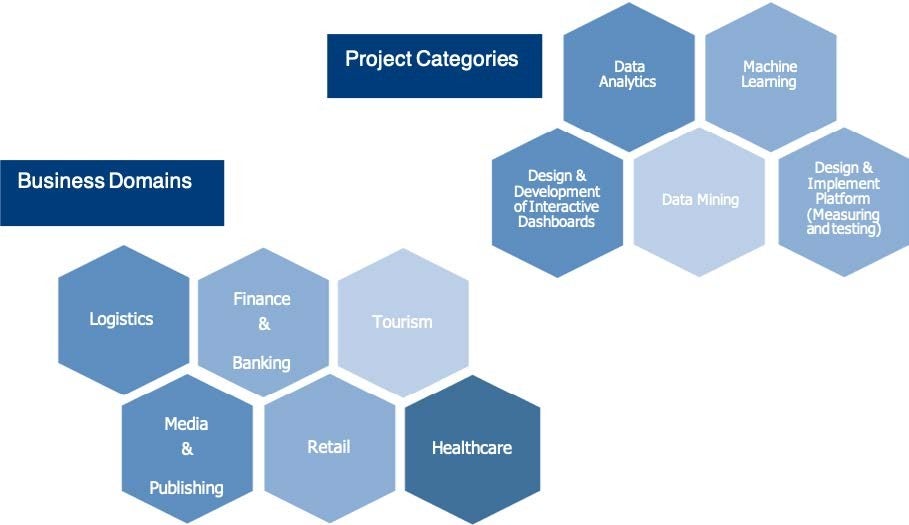
The project is about solving a business analytics problem proposed by the company. This involves using the analytic skills that the students have learned in their degree program. The type of projects and business domains the previous teams have worked on are as follows:
What is the program timeline (Tentatively)?
  • Early July (For Semester 1) and Early December (For Semester 2): Deadline for online submission of project description
  • After submission: Companies to be informed of selection for project briefing
  • Before start of the semester: Companies to submit a recorded presentation about the company and the project
  • First instructional week: Students bid for projects based on preference; companies to be informed of bidding results
  • By end of first instructional week: Project kickoff; students have visited the company and project supervisors
How does a company register in the Capstone system?

Go to the Capstone system (https://app.comp.nus.edu.sg/app/capstone/company/) and enter your company details.

What skills do students have for this project?

Our students are equipped with data management, data visualization, data modeling, and statistical skills, including developing predictive and optimization models using machine learning concepts. In addition, they are competent in R and python.

Does NUS provide access to different tools (Power BI, Tableau, etc.), or will the company need to grant internal access for students?

Students do have access to some tools at NUS like R, python, tableau, which they can use for their work. However, if there is any software required by the company that students do not have access to, then companies will need to provide access.

What are the key deliverables required from industry partners in addition to the project descriptions, recorded company presentation upon selection, and assigning of project supervisors?

The other important deliverable from the company would be to provide students with access to the data and resources required to do the project, especially if there are specialized software that the students do not own, or NUS does not provide for them. As the project duration is short, it is important that all data and resources are made available to the students by August.

How often are supervisors expected to meet the students?

Supervisors generally meet with students once a week. This is necessary, as the project duration is short, and it would be helpful for students to get feedback weekly to be sure they are on the right track. If multiple groups are assigned to a project, the company can decide whether to meet all the groups in one meeting or separate meetings.

What are the expectations from the supervisors?

Be the point of contact between students and your company, facilitate and provide access to data and resources required for students to do the project, provide feedback to students to ensure their project is on track and meet business requirements, be available for final presentation and provide feedback/assessment of students’ performance.

How long should a weekly meeting be?

It depends. There is no fixed time duration. Based on the students’ questions and feedback from the supervisors, it can be varied. During weekly meetings, supervisors can set milestones, assign tasks, provide technical advice, and any other relevant feedback.

How many teams will be working on each project?

Usually, one team per project, but we may assign a project to multiple groups based on the student enrolment for the semester. At the time of project submission, the company can indicate whether they are willing to work with multiple groups.

How many supervisors are needed per project?

The company can decide the number of supervisors to be assigned for each project and they can also decide if the same or different supervisors will supervise different projects.

How many members per team?

Usually, there are 5-6 members. This depends on the module enrolment for the semester.

Can multiple student groups be assigned the same project?

Yes, we’re able to assign the same project to multiple groups. However, please indicate, as shown in the figure below (project submission form in Capstone System), how many project groups you would like to supervise for each project.

Does the company select the students for the projects, or will they be assigned by NUS?

Students will bid for the projects based on their preferences, and projects are then assigned by the module instructors.

Will all the proposed projects be assigned to student teams?

No, first module instructors will check the project scope, decide whether the scope is suitable for the module, and approve it. Once the project is approved, it is available for students to bid. Then, based on the bidding results, module coordinators will assign the projects to students’ teams.

However, if the student enrolment is low for the semester, not all approved projects will be assigned. The projects that are not assigned can be re-proposed for the next semester via the Capstone system.

Where will students carry out this project? Will they be working on it remotely?

Yes, the company will host the students for the kickoff meeting. Thereafter, the students will work mostly remotely since they have to attend classes on campus. If there is a need for them to work on-site due to data security issues, arrangements will have to be made with the students. Some companies have provided remote access for students. It would be good if you could let students know the mode of work in your introduction presentation.

What is the expected time commitment per week?

The students are working on this project as part of a module. So, their workload is equivalent to doing two normal modules, which is about a 20-hour workload per week per student. The project’s duration is about 13 weeks, so the project scope and complexity should be around 720-1200 hours of work.

What is IMPORTANT about DATA?

All data and resources required for the projects must be available by the kickoff meeting so the students can start their work right after the kickoff meeting. We do not encourage projects that expect students to collect publicly available data wholly; gathering publicly available data to complement company data is preferred. The students can do some preprocessing to transform the data such that it is useful for the analyses.

Does the company need to pay any stipend for the students?

No, it is not required.

What happens at the end of the project?

The students will do a final presentation where the supervisor would be invited to attend. Supervisors will also be given a rating form to provide their feedback and assessment on their performance. Students will also hand over all required deliverables to the company.

Is it possible to sign an NDA with the students and module coordinators who are assigned to the project?

Yes, it would not be a problem.

Can we see some examples of successful projects from prior semesters?

We are unable to share specific examples and companies, as all our projects are bound by NDAs. However, we have done many projects involving various domains, including finance, healthcare, transportation, technology, entertainment, marketing, education, etc. The completed projects have involved developing dashboard applications (e.g., for customer-facing agents/staff, senior management, or analysts), trend analyses from mining and analyzing data (both company data and publicly available data), developing prediction models on demand and sales, and developing and implementing optimization models for resource allocations.
Business Artificial Intelligence Systems Capstone Project

Programme Overview 

The Department of Information Systems and Analytics is calling for industry partners to propose full-stack AI solutioning projects. This Capstone project is a multifaceted culminating experience designed to let students apply modern software and AI best practices to automate business processes and decision-making for real-world organizations.

Target Students: 3rd and 4th-year undergraduates pursuing a Bachelor of Computing (Business AI Systems).

For any inquiries, please direct emails to:

Project Scope and Deliverables

Analyze, Design & Implement AI Solution For a Well-Defined Business Domain

In this course, students are required to develop a complete AI solution incorporating elements of data engineering, machine learning modelling, and software engineering to address a real‐ world problem. They will apply modern best practices, such as Agile methodology, DataOps and MLOps throughout the solutioning process. An emphasis will be placed on seamlessly integrating AI and machine learning models into software applications to automate business processes and decision making. Students will be assessed based on their understanding and ability to apply AI solutioning knowledge on a large‐scale real‐life business problem, as well as their communication skill.

13 Weeks
8 Course Units (equivalent to 2 4-unit courses)
Teams of 4-8

The scope and complexity of the project should reflect the workload of the course adequately and commensurate with the team size. 

Other than AI solution, it is also possible for industry partners to propose a project without the AI element so long as the software engineering element is of sufficient scope.


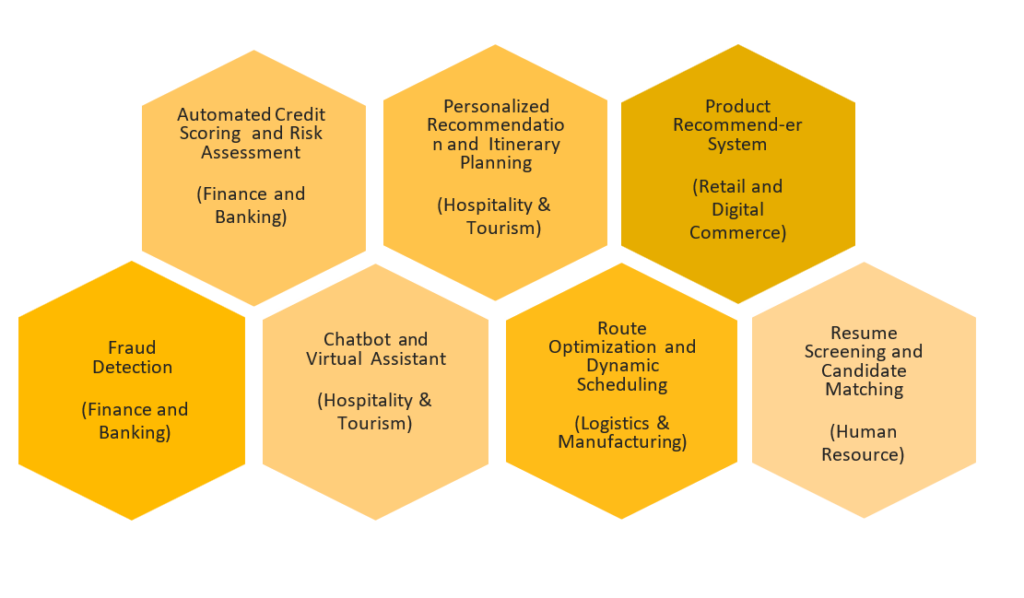
Typical Projects Across Various AI Domains & Business Domains

Scope
Intelligent AI agents, LLMs, RAG, persona modeling, and domain adaptation.
Sample Project Titles
• AI-Enabled Text-to-Slides Multi-Agent Generator Solution
• SLA Property Smart Search
• URA Heritage Compliance AI System
• Maki AI
• Vertical AI Multi-Agent Framework for Web-based Educational Content Analysis and Personalised Guide
Typical Deliverables
• Data engineering pipelines.
• Big data management and storage solutions.
• AI models involving discriminative AI and generative AI trained using structured (typical business data) and unstructured data (text and images).
• Analytics insights delivered via dashboards and reports.
• Full-stack software applications consisting of backend (SOA and Microservices) and frontend applications (web and mobile).

Company Submission & Timeline

Companies are invited to submit project proposals via our e-form:
🔗 Submission Portal: http://tiny.cc/nusbaiscapstone

Annual Cycle Dates:

Company Submission Period Project Period
June 2026 to July 2026
August 2026 to November 2026
November 2026 to December 2026
January 2027 to April 2027

Frequently Asked Questions (FAQ)

What are the differences between icap and a typical internship?

ICaP is NOT a typical internship.

The table below lists the main differences between ICaP and other internship programmes that are offered by the School:

Factor

ICaP

Internship

Supervision Mode

Joint supervision between University and host organisation

Sole or majority supervision by host organisation

Overarching Goal

A balance between University’s academic requirements and host organisation’s business requirements

Host organisation’s business requirements

Duration

3 months

3 months or 6 months

Number of Students

4 to 8

1 or 2

Project Location

Offsite

Onsite at host organisation’s premise

Project Duration

Approximately 56 to 112 man-week

Approximately 12 man-week to 48 man-week

Project Size

Moderate to Large

Small to Moderate

Stipend/Allowance

No, optional

Yes, compulsory

Concurrently Reading Other Courses

Yes, maximum is three to four other courses.

It depends on individual student, but maximum is two other courses.

Course Credits

8 Units

6 Units or 12 Units

Letter Graded

Yes

It depends on internship programme.

What are the commitments from my organisation?
  • Meeting the students regularly during the semester, at least once a week. The meeting duration can vary between one and two hours.
  • Explaining the business and technical requirements of the project to the students clearly.
  • Providing advice and feedback to the students on their project work.
  • Making available all necessary resources to the students.
  • Endorsing the official project proposal form and project completion form.
  • Assessing the students’ progress and deliverables at specific milestones.
What are the resources that my organisation needs to provide the students?

Your organisation needs to provide ALL resources that the students require in order to complete the project. These resources include, but are not limited to, hardware, software, software services, data, data services, source code repositories, libraries, design templates/assets, and remote access to such resources (if necessary).

Can I request the students to come to our premises physically?

Yes, you can request the students to be onsite for meetings, presentations and gaining access to protected resources.

But please keep in mind that students would be reading other courses concurrently with the capstone project. Thus, onsite visits should avoid clashing with the students’ timetable.

Do I need to compensate the students?

In general, your organisation does NOT need to compensate the students as the students would be undertaking the project on a pro-bono basis in exchange for letter-graded course credits.

However, your organisation can, at your discretion, optionally compensate the students in-cash and/or in-kind if desired. Compensation can be given to students to help defray their travelling expenses to your premise, defray out- of-pocket expenses such as printing, or reward the students for completing the project satisfactorily.

Please declare all compensation that you plan to give the students in the official project proposal form.

My organisation is a government agency. Can we restrict our project to Singaporean students only?

Yes, but please indicate this restriction clearly when submitting your project proposal.

What would happen to the intellectual property of the students' deliverables?

The intellectual property of the software applications that have been created by the students would belong to your organisation. Students would be told that they are not allowed to reuse any part of the software applications unless with the explicit approval of your organisation.

However, your organisation must allow the students to submit a copy of the source code for the University’s retention as part of the academic evaluation process.

Can my organisation ask the students to sign a non-disclosure agreement (NDA)?

Yes, but please take note that in general, the NDA can only be signed between your organisation and the students in their individual capacity. You should also allow the students sufficient time to review the wordings and terms contained in the NDA. In general, the NDA should not contain extraneous legal obligations.

If organizational-level NDA with NUS is required, it would be subjected to a review by our Office of Legal Affairs.

I have more questions to ask. Whom should I contact?

Please email the course coordinator at distwk@nus.edu.sg (Project Period: August-November) or hsianghui@nus.edu.sg (Project Period: January-April).