This Is What Pi Day Looks Like at NUS School of Computing
A late night idea, a residential college corridor, and two students who simply couldn’t stop building
Every year on 14 March, the world marks Pi Day – a small tradition honouring the mathematical constant that appears everywhere from engineering equations to planetary motion. This year, two NUS Computing students decided to mark the occasion by building something.
It started, as Ambar will tell you, sometime after π² pm – well past nine at night, when sensible people are winding down.
Ambar was watching a video about something entirely unrelated: whether the digits of π follow a pattern. Four hours later, he had read six research papers and run three machine learning experiments.
Then a thought struck him.
What if you could search for your own name – converted to digits – somewhere inside π’s infinite sequence?
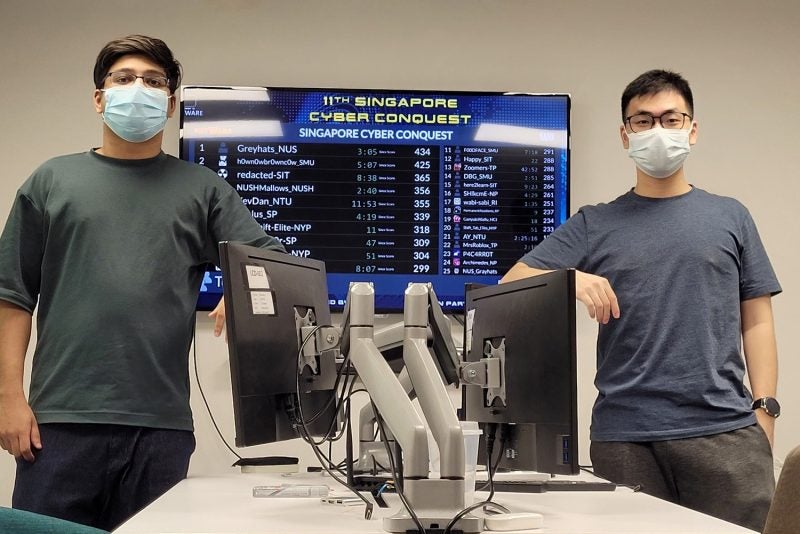
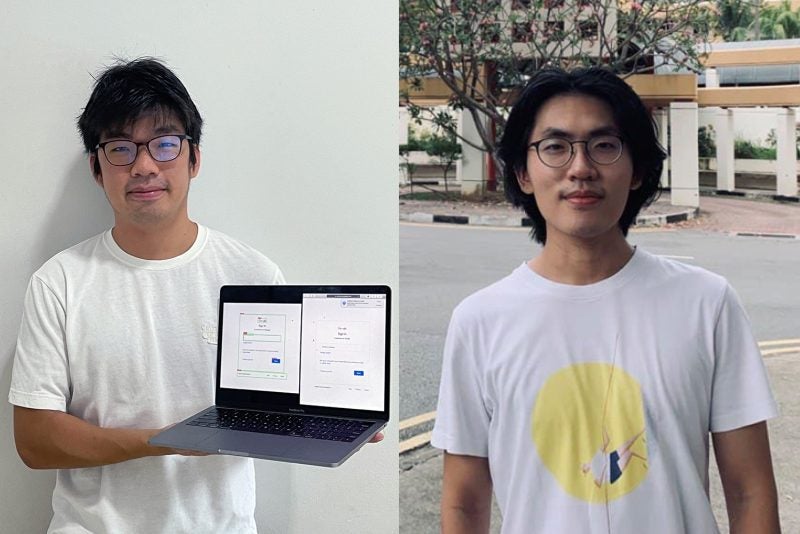
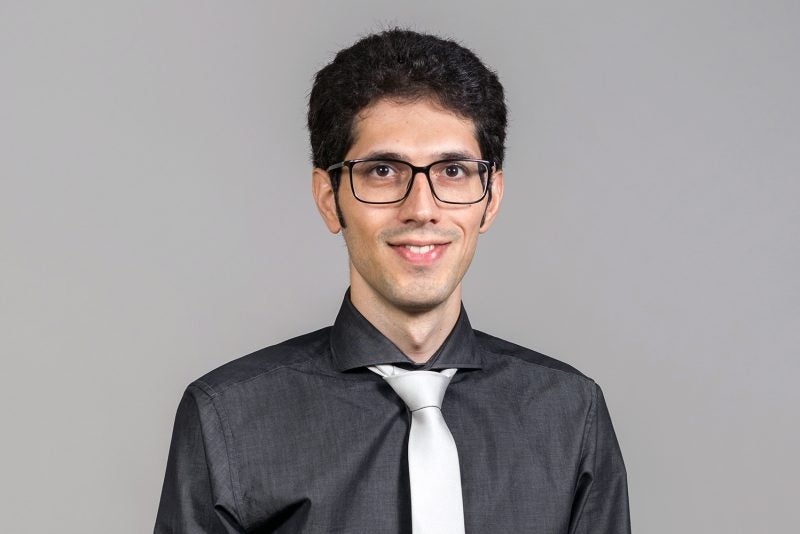
Pi Day was coming, and the idea refused to leave him alone. He mentioned it to his neighbour at Residential College 4, fellow student Matthias Joseph.
“He said ‘yes’ before I finished explaining what ‘different’ meant,” Ambar recalls. “We opened our laptops.”
Five days later, they had built pidayfest.com.
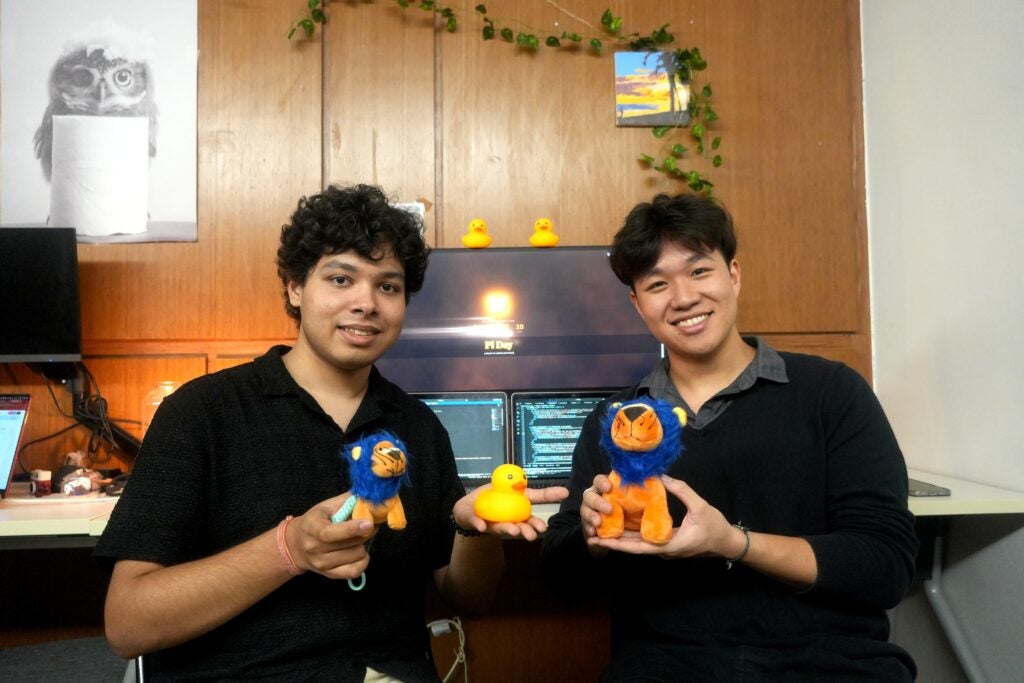
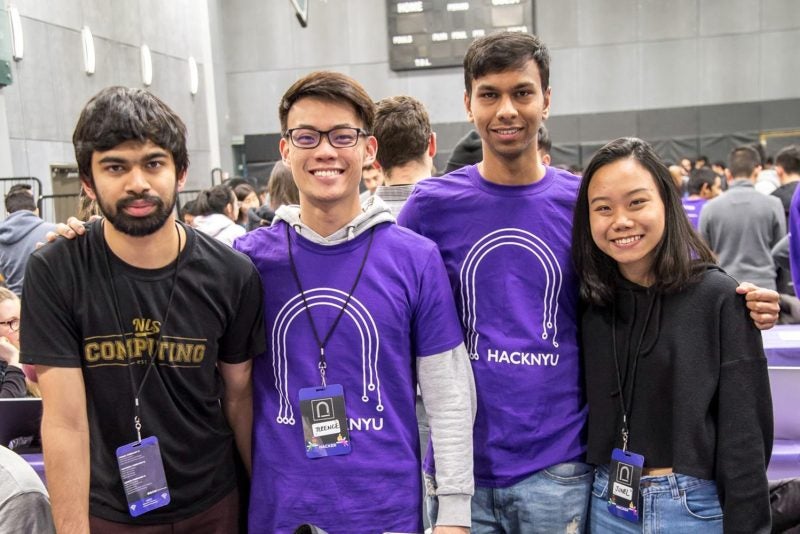
Photo credit: Kow Ming Yuan
A playground for π
The website is not a typical Pi Day tribute.
Instead of static graphics or lists of digits, pidayfest.com invites visitors to explore π in playful and interactive ways. Users can search for number sequences – including names converted into digits – within the infinite digits of π, experiment with small mathematical tools, and take part in coding challenges inspired by the famous constant.
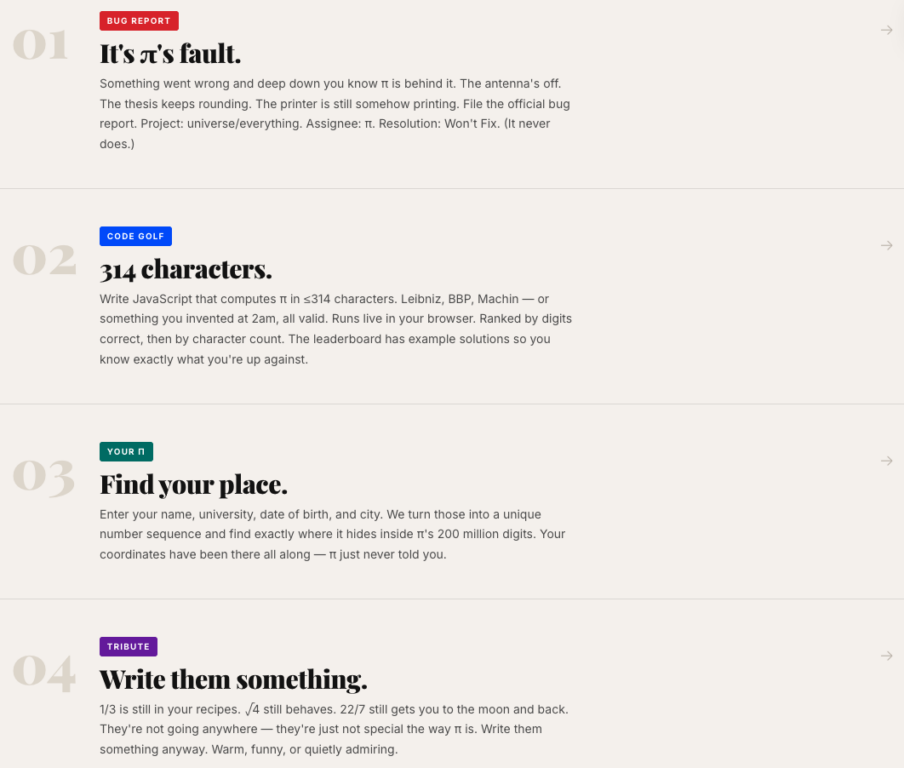
One of the site’s centrepieces is a programming challenge with a simple but demanding rule: participants have exactly 314 characters of code to compute digits of π.

“The constraint is the whole point,” Ambar explains. “You have to choose: elegant algorithm or brute force? Readability or character count? It’s the same tension you see in real engineering.”
Every semicolon matters. There is no room to be verbose.
The site also includes short essays that range from reflective to quietly absurd – including one written from the perspective of an engineer whose satellite ends up 19,000 kilometres off course because someone used 3.14 instead of the full value of π.
“It escalated,” Ambar says, smiling. “We couldn’t stop. Neither of us wanted to.”
Different paths, shared curiosity
The collaboration reflects something familiar at NUS: students from different disciplines meeting at the intersection of ideas.
Matthias studies Computer Science and Quantitative Finance, while Ambar is a Computer Engineering student pursuing a second major in Mathematics and a minor in Physics.
They are neighbours. They do not, academically speaking, think in quite the same way – which turned out to be an advantage.
“The best collaborations aren’t between people who think the same way,” Matthias says, “but between people who care about the same outcome and simply take different paths to get there.”
In practice, that meant Ambar thought in systems and connections, how the tools related to real frustrations, how finding their name hiding in π since the Big Bang might make someone feel special. Matthias focused on architecture, execution, and making the website a visual treat for anyone landing on the site for the first time.
“The best ideas usually emerge from that back-and-forth,” Matthias adds. “You question assumptions, refine each other’s thinking, and eventually arrive at something neither of you would have built alone.”
Following the rabbit hole
For Ambar, curiosity rarely arrives at convenient hours.
He describes himself as “inconveniently curious” the kind of person who starts reading about Archimedes’ geometric approximations of π and resurfaces hours later with a dozen browser tabs open.
“Somewhere along the way you discover things like the Indiana Pi Bill of 1897, when someone tried to legally redefine π as 3.2,” he says with a laugh.
Those late-night explorations often reveal unexpected connections.
“Math is how I see patterns everywhere,” Ambar explains. “You read a neural networks paper and suddenly realise the structure is identical to something from differential equations or system dynamics. That moment when two things quietly turn out to be the same thing is incredibly satisfying.”
For Matthias, curiosity shows up in a slightly different way.
“If I encounter an idea in mathematics, physics, or computer science that I don’t fully understand, I tend to keep digging until it clicks,” he says. “Often that naturally turns into explaining it to someone else, helping a friend through a problem, or building something small to test the idea.”
In that sense, projects like pidayfest.com feel like a natural extension of that process.
“The process itself is rewarding,” Matthias adds. “You follow a question, build something around it, and see where it leads.”
For Ambar, that endless trail of questions is exactly what makes mathematics so compelling.
“It’s the one place I know where a 400-year-old idea can still surprise you on a Tuesday night.”

Making mathematics feel playful
Above all, the students hope the website makes mathematics feel more approachable.
“We wanted it to feel like stumbling into something unexpectedly fun,” they say.
“Maybe someone searches for their birthday in π’s digits and ends up staying longer than they planned because they’re curious what else they might find.”
If visitors leave the site a little more curious about mathematics – or inspired to explore an idea simply because it seems interesting – the project will have achieved its goal.
“A lot of good things start that way,” Ambar says.
“Sometimes the best projects begin with a random question and the curiosity to follow it.”
Explore the Pi Day project: pidayfest.com