From NS Bunk to NUS: How Andre Liu Kept Building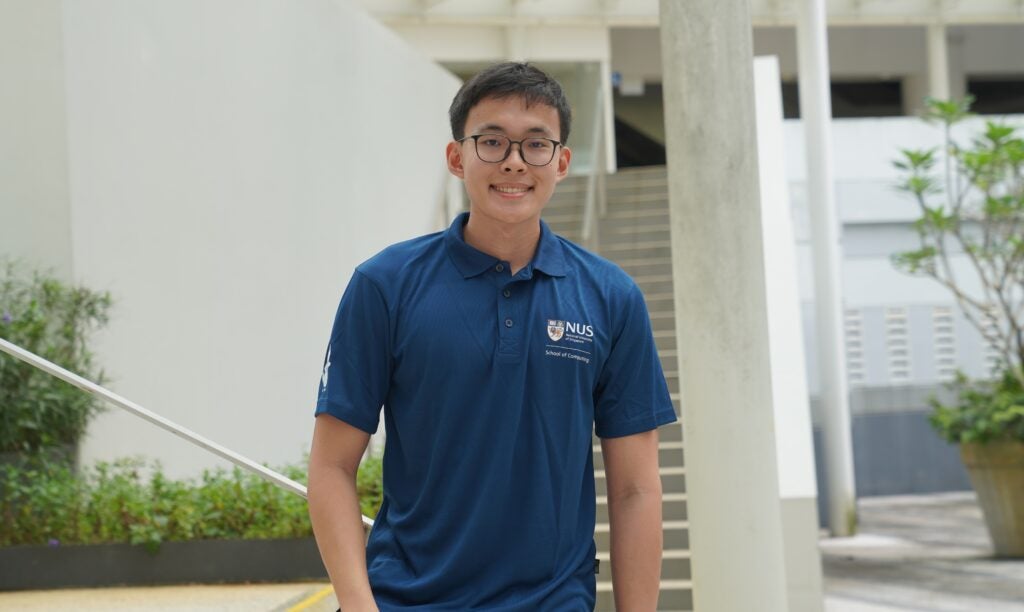
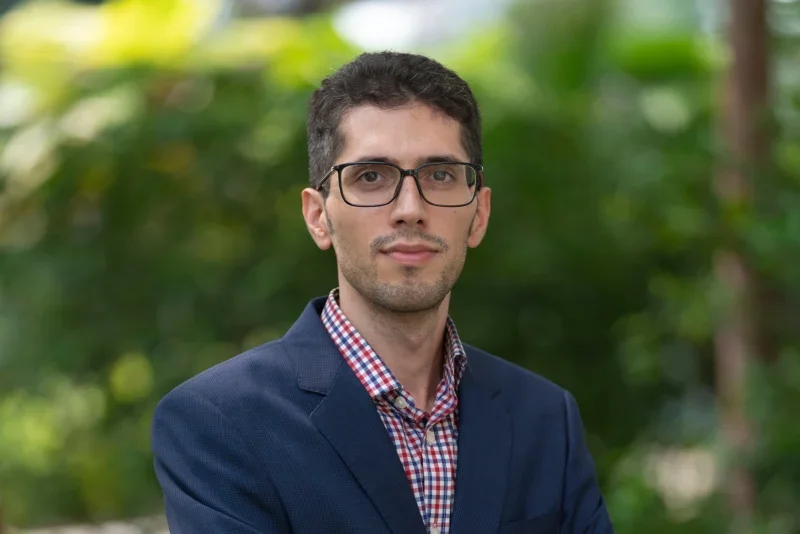
There’s a particular kind of restlessness that drives someone to build things when no one is asking them to. For Andre Liu, a Year 1 Computer Science student with a minor in Mathematics at NUS School of Computing (SoC), that itch showed up early – in middle school, in hackathon halls, in the quiet corners of National Service (NS).
“I started programming in middle school,” he says. “I’d built websites, joined hackathons – so naturally, I gravitated towards Computer Science.”
But the story that really shaped him didn’t happen in a classroom. It happened in a bunk.
Building in the gaps
During NS, Andre noticed something that bothered him. His friends were dabbling in stock trading – and losing money. When he asked about their strategies, the answers were vague. Some had none at all. They were placing bets on trends without reading a single financial report or news article.
He asked why. The answer was honest: “Too many words.”
He didn’t judge them for it, but instead, saw a problem worth solving.
Together with a friend, Andre began building StarryTrader – an app to summarise financial news and make market information more accessible to beginners. That was the easy part.
“I hadn’t worked on a project for a long time since enlisting,” he says. “I was itching for something to work on.”
The technical side, Andre will tell you, wasn’t actually the hardest part. With documentation, tutorials, and a willingness to figure things out, frameworks can be learned. The harder problem was building something people genuinely needed.
“Many founders – myself included – can get carried away building cool features,” he says. “But the most important thing is whether the idea actually solves a problem.”
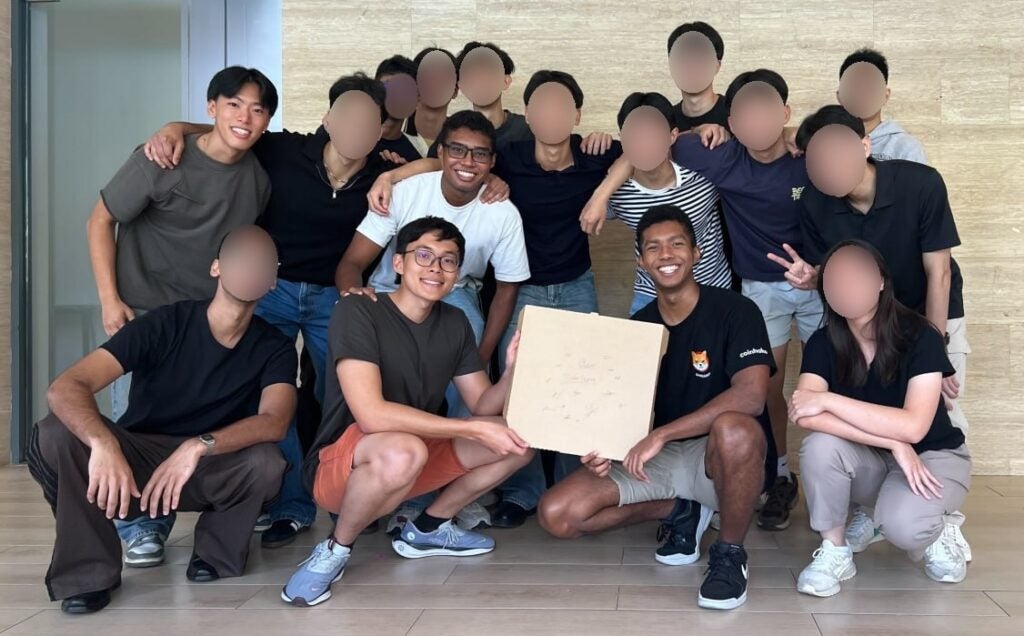
Most of his time wasn’t spent writing code. It was spent talking to users, running surveys, and gathering feedback. The team even organised a community meetup – pizza included – to sit down with their earliest users and understand what they actually wanted. Features the team had been proud of got quietly removed after testing. “We realised some of the features we liked the most were actually the least used.”
When a deadline for the Gemini API Developer Competition, hosted by Google, crept up with barely any progress made, they had no choice but to pull all-nighters to finish.
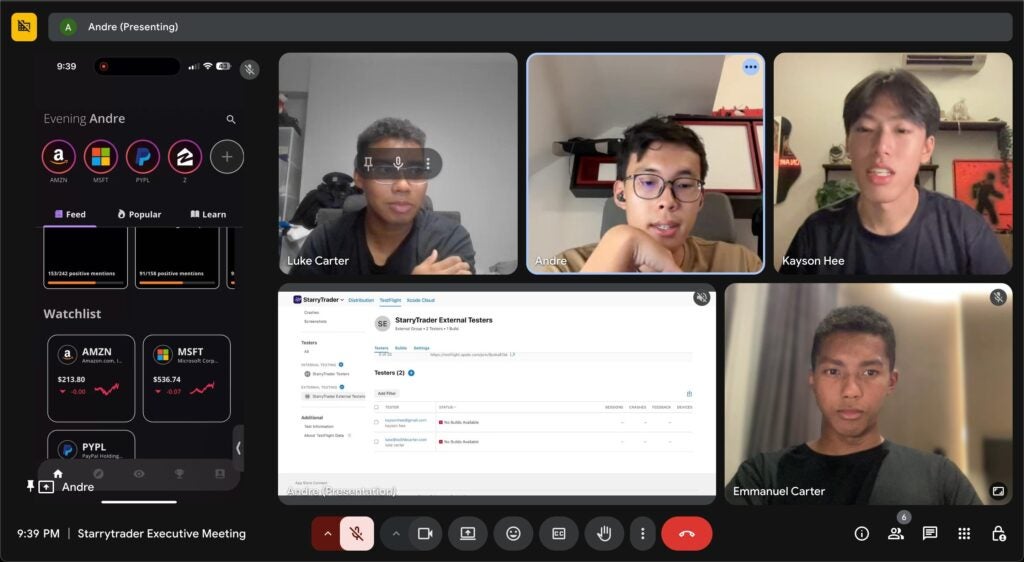
Early on, traction was slow. Friends he’d asked to test the app weren’t convinced. There were moments, Andre admits, where it felt like StarryTrader might just become another project gathering dust on GitHub.
He also learned what sustained effort actually costs. “Time management is the most important skill I have,” he says. “Juggling work and side projects could easily lead to burnout – and NS brainrot didn’t help my attention span either.”
His fix was simple: short focused bursts of 20 to 30 minutes, then a proper break. In the process, he picked up things no module had taught him: marketing instincts, customer empathy, the reality of managing a working relationship when the stakes feel real.
A different kind of challenge
Andre arrived at SoC having already built and shipped a real product, with an internship behind him and years of self-directed projects.
SoC still made him slow down.
“Before ‘vibe coders’, you had ‘cowboy programmers’ like me,” he says. “I only thought about completing a project. I cared less about structure, efficiency, code quality.”
Modules like CS2030S and CS2040S pushed him to examine the foundations he’d been instinctively skipping. Data Structures and Algorithms – the very area he’d neglected during his years of self-directed building, has become the course he finds most interesting.
“I’m starting to see the importance of it, and how fundamental it is to building one’s technical skills.”
Outside of class, Andre reads widely – fiction, business, history. He boulders, goes to the gym, and believes that what you do beyond your coursework shapes who you become.
“It was through this project that I learned about marketing, customer outreach, managing working relationships – things I wouldn’t normally encounter in a typical programming assignment,” he says.
Long-term, he wants to go deep into Natural Language Processing – not just deploying models, but understanding the theory behind why they work and the systems engineering beneath them.
Starting before you’re ready
When asked what he’d say to students who feel they need to be more ready before starting something, Andre doesn’t overthink it.
“We have nothing to lose.”
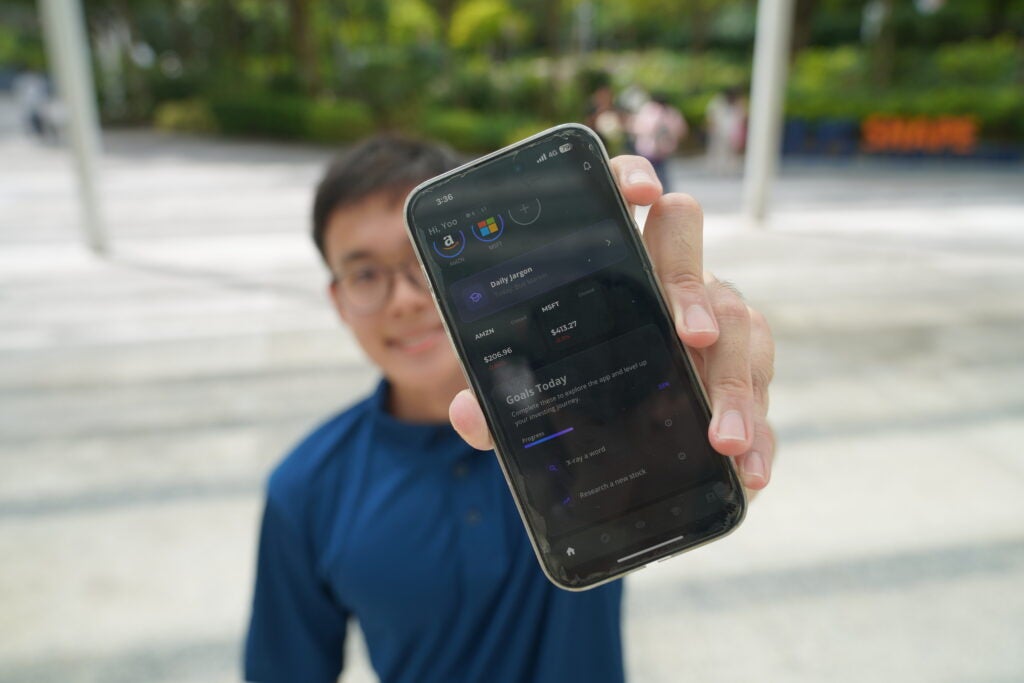
It’s the logic of someone who built his first real product in the slivers of free time NS allowed – no funding, no guarantee, no roadmap. “Learning beyond the classroom means putting yourself in situations where there’s no syllabus or answer key,” he says. “Building things people actually use. Talking to users. Reading widely. Classroom learning gives you foundations – but real-world projects teach you how to deal with ambiguity, priorities, and impact.”