From Frustration to Six Continents: The NUS Students Behind a Study Platform That’s Changing How Students Learn
Ryan Loh and Alfred Ben are finishing their degrees at NUS this year. In between lectures and finals, they’ve been building a study platform used by students across six continents. It started, as most things do, with a problem they knew firsthand.
An accidental start
Ryan Loh was supposed to be studying Business at NUS. He’d already secured a place when National Service intervened, followed by COVID, and with it a stretch of empty hours that led him to try programming – somehow randomly. He liked it enough to switch his degree entirely – from Business to Computer Engineering – and has been making similarly decisive calls ever since. When he believed enough in what he was building, the Year 4 Computer Engineering student at NUS College of Design and Engineering turned down a six-figure part-time engineering role to keep going. His friends thought he’d lost his mind.
What kept pulling him forward was a problem he’d been sitting with for years. He’d tutored students through secondary school and into the post-ChatGPT era, and watched his younger brother put in genuine effort and still fall behind. The issue was never effort or access. It was that nobody had actually taught these students how to study. The tools available to them – ChatGPT, NotebookLM, and the rest – worked well enough if you already knew how to use them effectively. For students who were already struggling however, they mostly just added more to manage.
“They don’t just need more tools,” Ryan says. “They need structure. A clear framework for how to actually study.”
He started building one. The first version of LearnKata was modest – a platform where students could chat with their lecture notes and trace exactly where the AI’s answers came from, something ChatGPT didn’t do cleanly. It was a small fix to a specific frustration. But as Ryan spoke to more students, a bigger problem came into focus. They weren’t lost because they couldn’t find information. They were lost because they didn’t know where to begin.
The co-founder who came in through a user interview
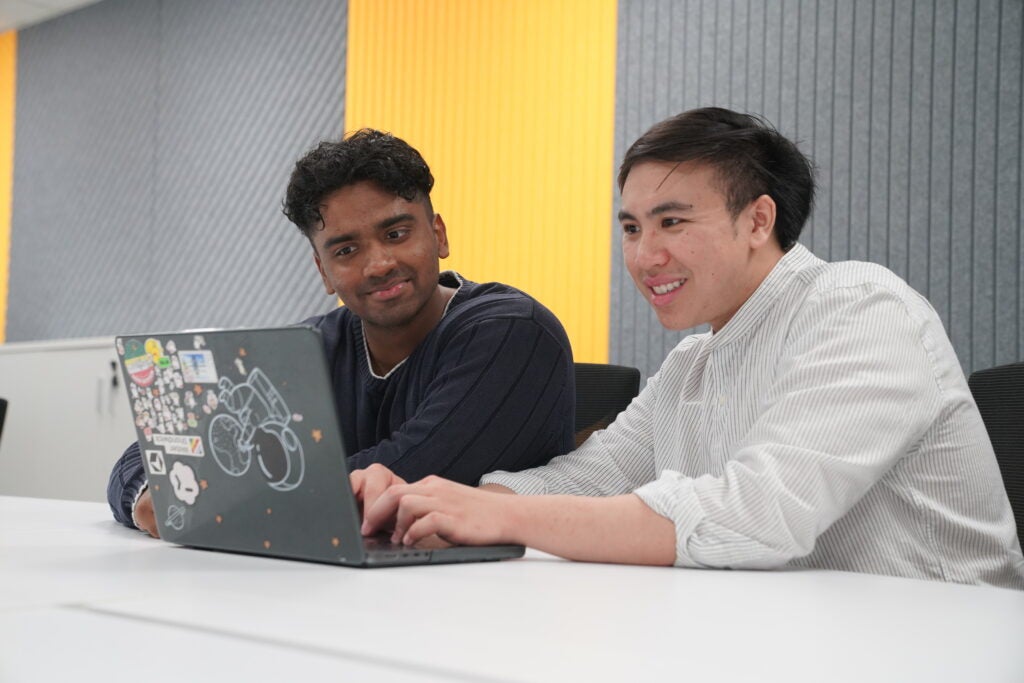
Alfred Ben came into the picture through a user interview. Ryan was running them as a solo founder, trying to understand why students still felt stuck even with better tools available. Alfred was one of the people he spoke to, and at the end of the call asked if he could help.
The Year 4 Computer Science student at NUS School of Computing (SoC) had been building since secondary school, starting with Minecraft – not just playing it but working through the Java source code to understand how the game functioned. At the School of Science and Technology, he built his first proper app, which the school used for its Open House. By the time he arrived at SoC, and later spent a year in San Francisco through NUS Overseas Colleges, the instinct to build was already well established.
His year in San Francisco, interning at an EdTech startup that built AI tools for young children, sharpened how he thought about the relationship between technology and learning. What stayed with him wasn’t the technical work but the care behind every product decision – whether a given feature actually helped children understand something, or simply gave them the answer. The people there treated that distinction as fundamental.
Coming back to NUS, he found that most study tools had been built around convenience, not learning. “The generic AI tools make it so tempting to just get the answer and move on,” he says. “And it’s not even the student’s fault. The friction of trying to use those tools properly for learning is so high that you end up spending more time setting up than actually studying.”
When he saw what Ryan was building, he recognised the problem immediately. It was his own.
They had disagreements early on. Alfred wanted to add sharing and collaboration features. Ryan thought otherwise. The way they settled it became the way they’ve settled everything since: align on a single north star – helping people learn more effectively – and measure every feature against it.
“Its not that collaboration wasn’t valuable,” Ryan says. “There were just more critical features to focus on at the time, like the study plan. “ The disagreement didn’t go away so much as it stopped mattering. They just had a way of deciding.
Building it right
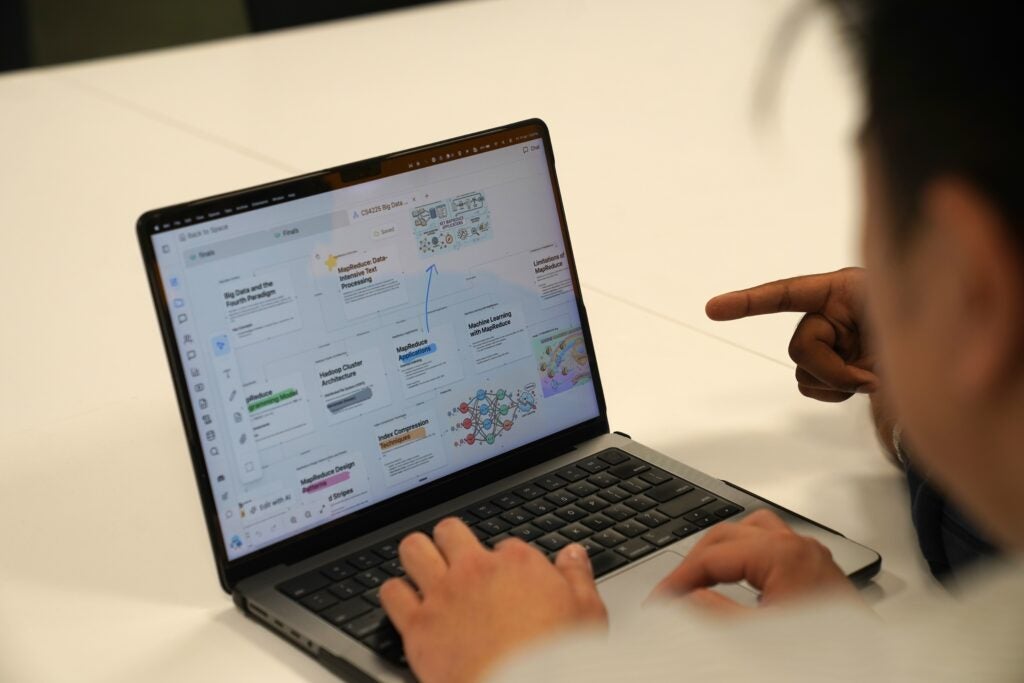
The platform they built together takes a student’s lecture materials and generates a structured roadmap through them – breaking content into concepts, explaining each one and how it connects to the next, and running short quizzes before the student moves forward. Everything is grounded in the student’s own notes, with an AI tutor operating in the same context throughout.
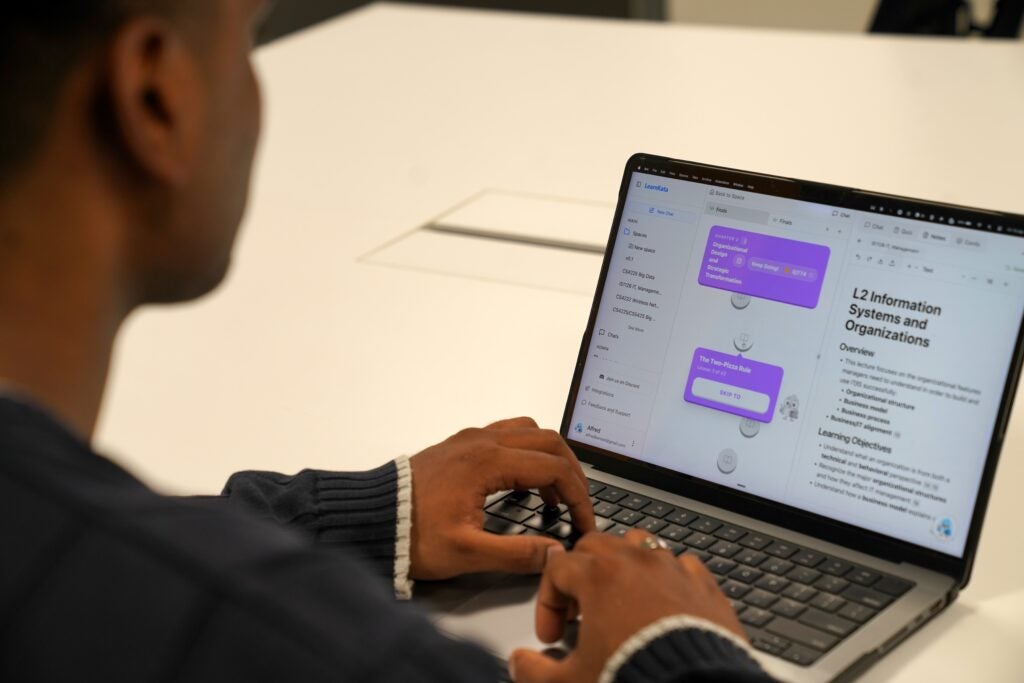
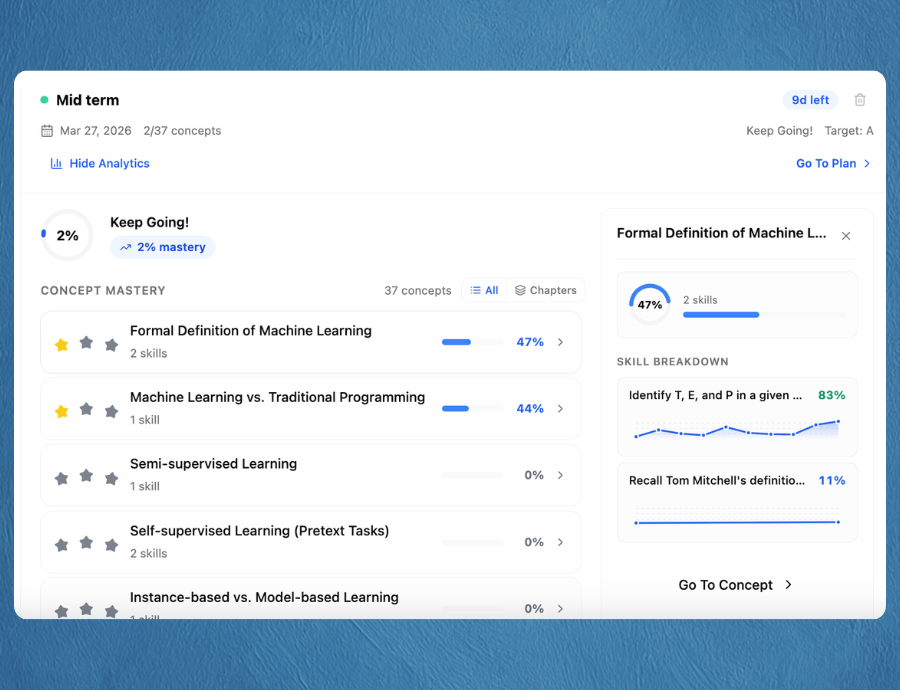
Ryan uses it himself. In a typical week he spends five days on LearnKata and two on school – four modules and a final year project, for which he received a distinction. He attributes that to the same principle he’s built the product around: focus on the material that matters most, and work through it properly rather than just covering ground.
For Alfred, the clearest proof that it worked came during his own finals last semester. Final year, six modules, a semester in which building had taken up most of his attention. By reading week he had a lot of ground to cover – a situation he’d been in before, with the long nights and the slow, uncertain grind through past papers that came with it. This time he worked through his materials on LearnKata. It moved faster than expected, and things came together more clearly than they had in previous years. “Usually after finals I’m just drained,” he says. “This time I couldn’t wait to get back to building.”
Most days they work remotely. On days with classes, they’re on campus in COM3, but otherwise they work apart – partly because Ryan films content from home and needs the props and setup there. It’s a quieter working rhythm than the all-nighter image people tend to have of two founders building something. But it suits them, and it works.
600,000 views on a Tuesday night
Growth didn’t come straight away. The first 300 users took three months. People around them were vocal about it – friends asking why Ryan had quit his internship, why he wasn’t just doing this on the side, when he was going to get a proper job. One of Alfred’s friends even told him directly, to his face, that he was wasting his time and should just go find a job.
They kept going anyway, focused less on the numbers and more on the small things – whether the content was standing out, whether the product was becoming more intuitive, whether they were solving the problem in a way that actually felt good to use. “That obsession with execution over metrics is what helped us push through those first few months,” Ryan says.
Then one of the Reels took off.
Ryan had been putting out Instagram Reels – one feature in particular, he says, was designed with social media in mind from the start, right down to the colours and animations. One of those Reels, posted on a Tuesday, sat quietly for five days before taking off.
He scrolled past it one evening and stopped: 600,000 views. Overnight, their user base jumped from 800 to 2,000, and the platform went down briefly under the load. The following week was spent entirely on keeping things stable. That reel has since crossed 1.6 million views, and the platform now has over 10,000 users, with paying subscribers in six continents and more than 30 countries, most of them in the US and Europe.
The messages started coming in not long after – students writing on Discord, Instagram, and TikTok from across the world, saying the platform had made studying feel manageable again. Some wrote to say they’d done well in exams they’ve been dreading. “The amount of fulfillment I get from these messages never gets old,” Ryan says.
What NUS made possible
Both founders point to NUS Overseas Colleges as the experience that most shaped how they think. For Ryan, the year in Silicon Valley recalibrated his sense of what was possible. The companies he admired hadn’t been built on exceptional talent alone – grit and conviction mattered just as much, and so did a willingness to enter spaces where others were already competing. He came back prepared to do that, even in a market with well-funded players already in it. “Singaporeans can dream bigger and do bigger things,” he says. “I didn’t fully believe that before I went.”
For Alfred, it was a different kind of shift. San Francisco was the first place he’d been where deep technical conversations were entirely unremarkable – where that was simply how people talked. “It was the first time I really felt like I’d found my tribe,” he says. He came back with a clearer sense of the standard he wanted to hold himself to.
Ryan also credits SoC’s Venture Initiation Programme, which between April 2024 and April 2025 supported an earlier project of his that eventually didn’t work out. The project is gone, but the experience of building it, and getting it wrong, carried forward. “Without that,” he says, “LearnKata would not be the same today.”
What comes next
For students thinking about building something, Ryan’s advice is simple. “Just start. It doesn’t matter if people think it’s a bad idea or if it already exists. No two executions are ever the same.”
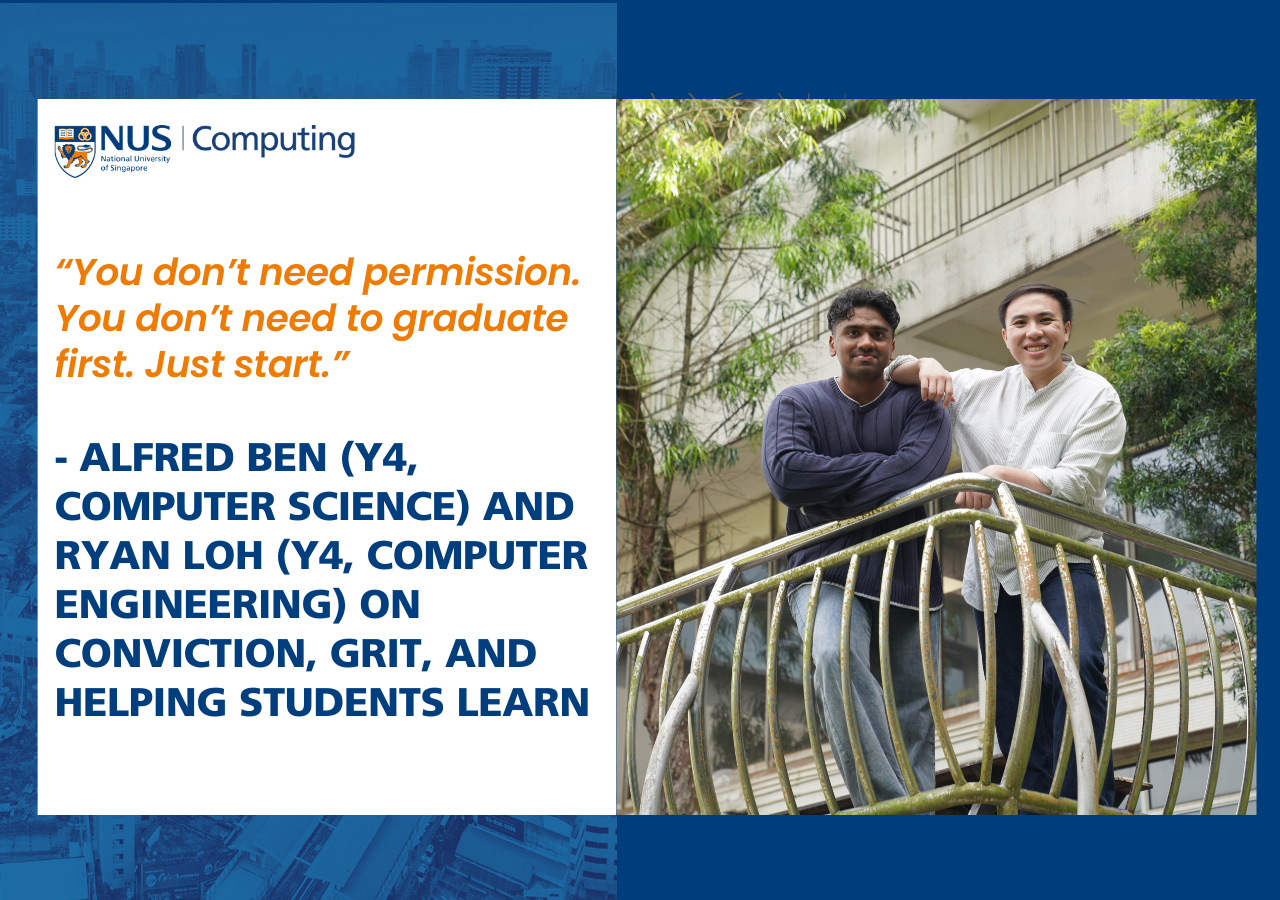
Alfred’s is much the same. “You don’t need permission. You don’t need to graduate first. You just need to start.”
They graduate this year with no particularly tidy plan – just a problem they’re not done solving, a platform that’s still early, and a growing number of students somewhere in the world who are studying a little better because of something two NUS undergraduates built between lectures.
That feels like enough to keep going.