NUS School of Computing Collaborates with OpenAI to Develop AI-Native Graduates
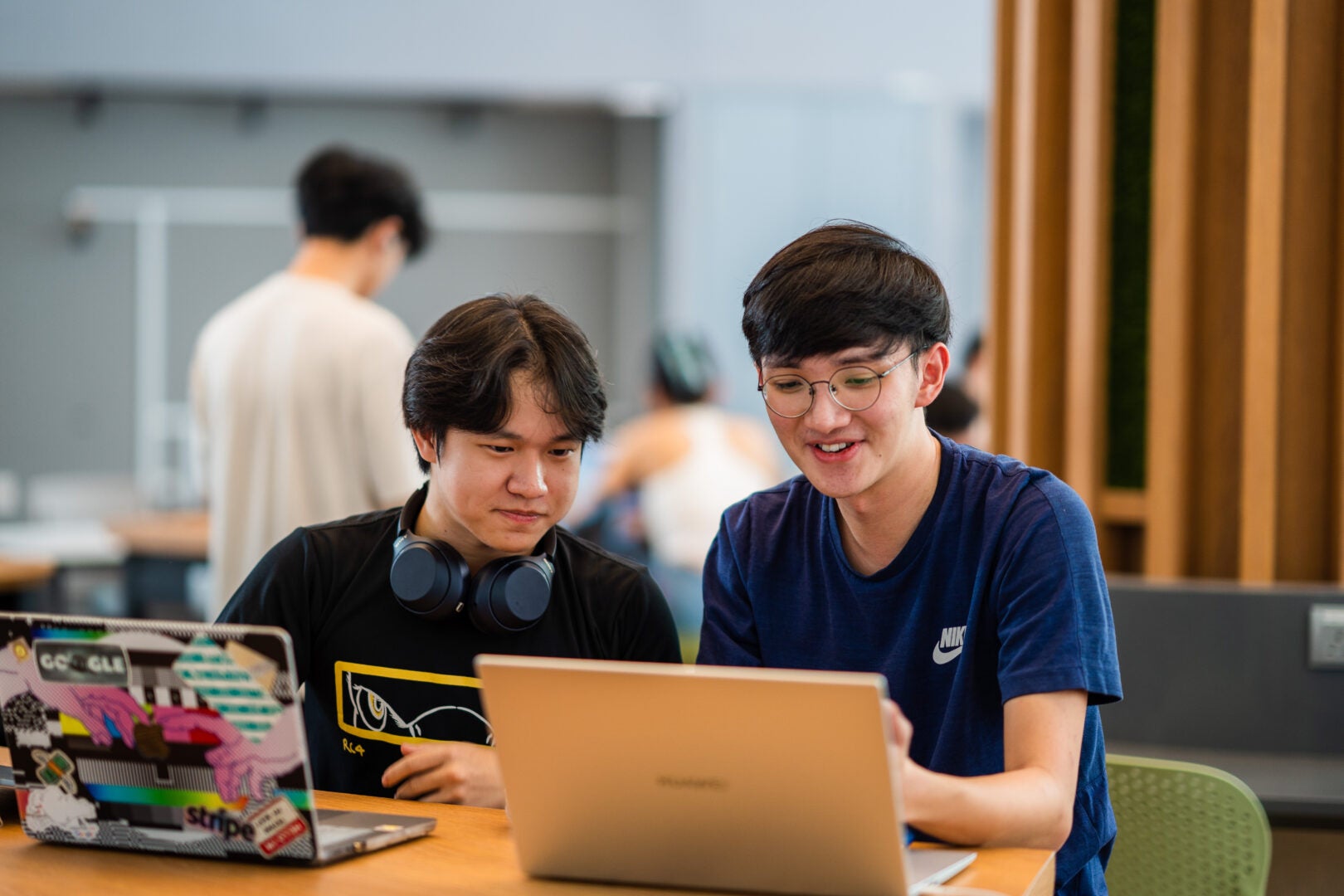
The National University of Singapore’s School of Computing (NUS Computing) is deepening the integration of advanced artificial intelligence (AI) technologies across its curriculum and student learning experiences through a collaboration with OpenAI, as part of the School’s broader strategy to prepare Computing graduates for a world increasingly shaped by AI.
Through this collaboration, NUS Computing will introduce OpenAI’s enterprise-grade platform for universities – including AI-assisted software development tools such as Codex – for use by its undergraduate and graduate students as part of their learning experience. The initiative will provide students with opportunities to work with cutting-edge AI technologies that are increasingly shaping modern software development.
Codex is OpenAI’s advanced agentic coding tool powered by the latest GPT5.4 frontier model, which assists developers with tasks such as generating code, identifying bugs and supporting software development workflows. By integrating these tools into coursework, NUS Computing aims to help students build practical experience using AI in real development environments, while strengthening students’ computing fundamentals that remain essential in the AI era.
OpenAI data show that Singapore already ranks one of the most highly engaged country globally for Codex usage, reflecting how quickly developers and students are embracing AI-assisted software development.
This initiative will equip graduates to enter the workforce with industry-relevant skills and the confidence to apply AI responsibly and effectively in real-world professional settings. This effort supports Singapore’s broader push to strengthen national AI capabilities by nurturing a future-ready digital workforce capable of developing next-generation digital systems and AI-enabled applications.
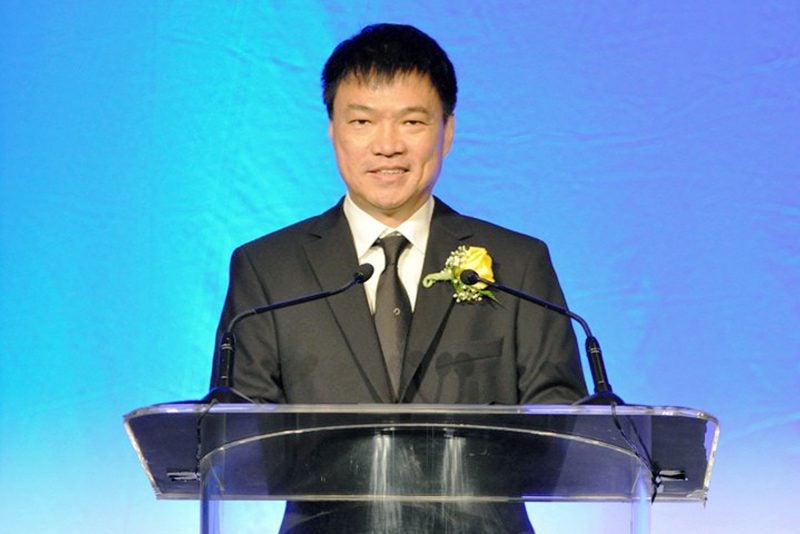
Professor Tulika Mitra, Dean of NUS Computing, said,
“Even as AI reshapes the technology landscape, strong computing fundamentals remain essential. Mathematical foundations, algorithms, and systems thinking form the grammar of computing. At NUS Computing, we build on these enduring foundations with hands-on experience using advanced AI technologies, including through collaborations with industry tech players such as OpenAI, so our graduates develop strong practical AI fluency and are equipped to design, build, deploy, and lead the next generation of intelligent digital systems.”
Oliver Jay, Managing Director, International at OpenAI, added,
“Singapore has built one of the world’s strongest environments for technology and innovation. Through this collaboration with NUS Computing, we want to build the next generation of AI-native developers. By giving students hands-on access to advanced tools like ChatGPT and Codex, we believe this collaboration will empower these students with strong computing fundamentals, but also with real experience using the tools that are increasingly shaping how software is built today.”
Expanding AI capabilities across the NUS Computing curriculum
AI has long been embedded within the NUS Computing curriculum, including advanced courses in machine learning, intelligent systems, and human-AI interaction. The School also offers dedicated degree programmes in Artificial Intelligence and Business AI Systems, reflecting its broader commitment to developing AI expertise and talent.
NUS Computing students will now gain access to secure environments designed for educational use, enabling them to experiment with advanced AI technologies while maintaining safeguards for institutional data and privacy. This allows students to prototype ideas more rapidly, explore alternative design approaches, and focus on higher-level system design and problem-solving while strengthening their understanding of core computing principles.
These tools will be progressively incorporated into over 30 undergraduate courses where students design and build software systems, including modules involving software engineering, systems development, and industry-linked capstone projects. Examples of courses where students are already applying AI technologies include:
- CS3216 Software Product Engineering for Digital Markets – students use agentic AI to develop highly usable software that solves real-world problems, enabling them to rapidly prototype and refine digital products.
- CG2271 Real-Time Operating Systems – students explore how intelligent systems analyse and respond to environmental conditions in real time, enabling them to design systems that interact with the physical world.
- IS4403 Agentic AI Solutions and Development – students design and develop agentic AI solutions that can autonomously perform tasks and support decision-making in complex digital systems.
NUS Computing is also working with other leading AI labs and industry partners to support teaching, experimentation and student learning through access to emerging AI technologies.
Building AI solutions through real-world projects
Beyond individual courses, NUS Computing students apply AI technologies in industry-linked capstone projects, where they design and build complete AI-driven solutions addressing real-world challenges.
In these projects, students integrate elements of data engineering, machine learning modelling and software engineering to develop intelligent systems that automate workflows, generate insights and support decision-making across various domains.
Projects span areas such as AI-powered search systems, intelligent digital assistants, recommendation platforms and AI-enabled analytics solutions, allowing students to work on real problems in collaboration with industry and public-sector partners while gaining practical experience building production-ready AI applications.
Learning beyond the classroom
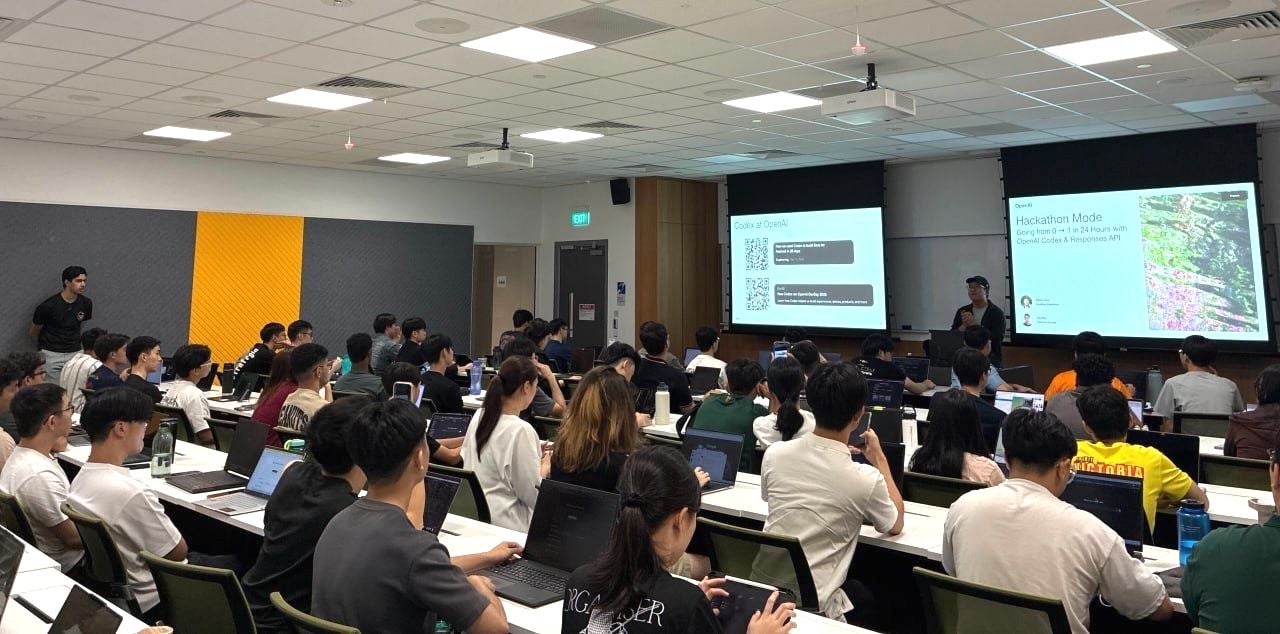
Students will also have opportunities to participate in workshops, training sessions, hackathons and build days organised in collaboration with OpenAI and other industry partners.
These activities will enable students to experiment with advanced AI technologies, develop AI-native prototypes, and gain exposure to emerging industry practices and real-world problem solving.
The collaboration with OpenAI will also explore pathways that connect NUS Computing students with the broader AI innovation ecosystem, including opportunities to showcase applied projects, engage with industry partners and explore emerging career pathways in AI like Forward Deployed Engineers, Solutions Architects and many others.
Jordan Seow, an NUS School of Computing 2021 Alumni and now a Forward Deployed Engineer at OpenAI, shared,
“Having studied at NUS Computing, it’s incredibly encouraging to see students today gaining early access to tools like ChatGPT and Codex as part of their learning journey. When I was a student, we focused on building strong foundations in algorithms and systems, and those fundamentals remain essential. What’s exciting now is that students can combine those foundations with powerful AI tools to prototype faster and experiment more boldly. It’s inspiring to see the next generation of NUS students building the skills that will shape the future of technology and help solve real-world problems.”
Preparing students for the future of computing
NUS Computing is nurturing the next generation of leaders by equipping its graduates with the skills to design, innovate, and lead the development of advanced computing and AI systems that will shape the future of the digital economy.