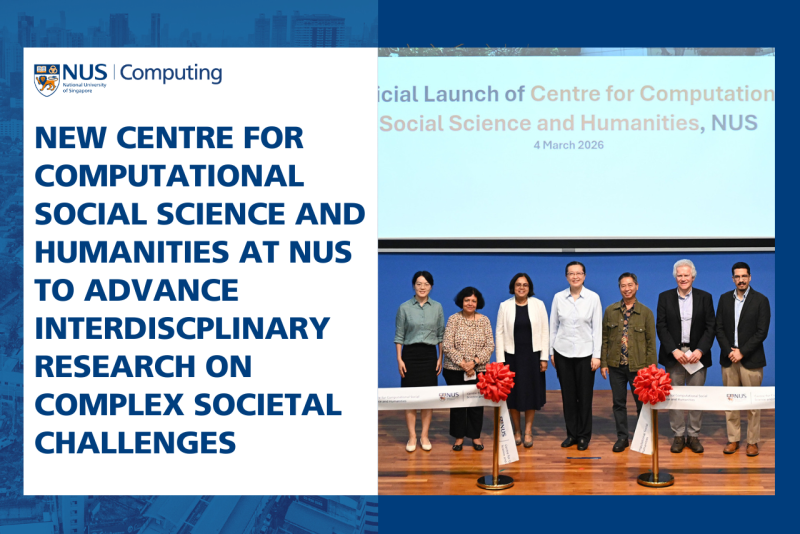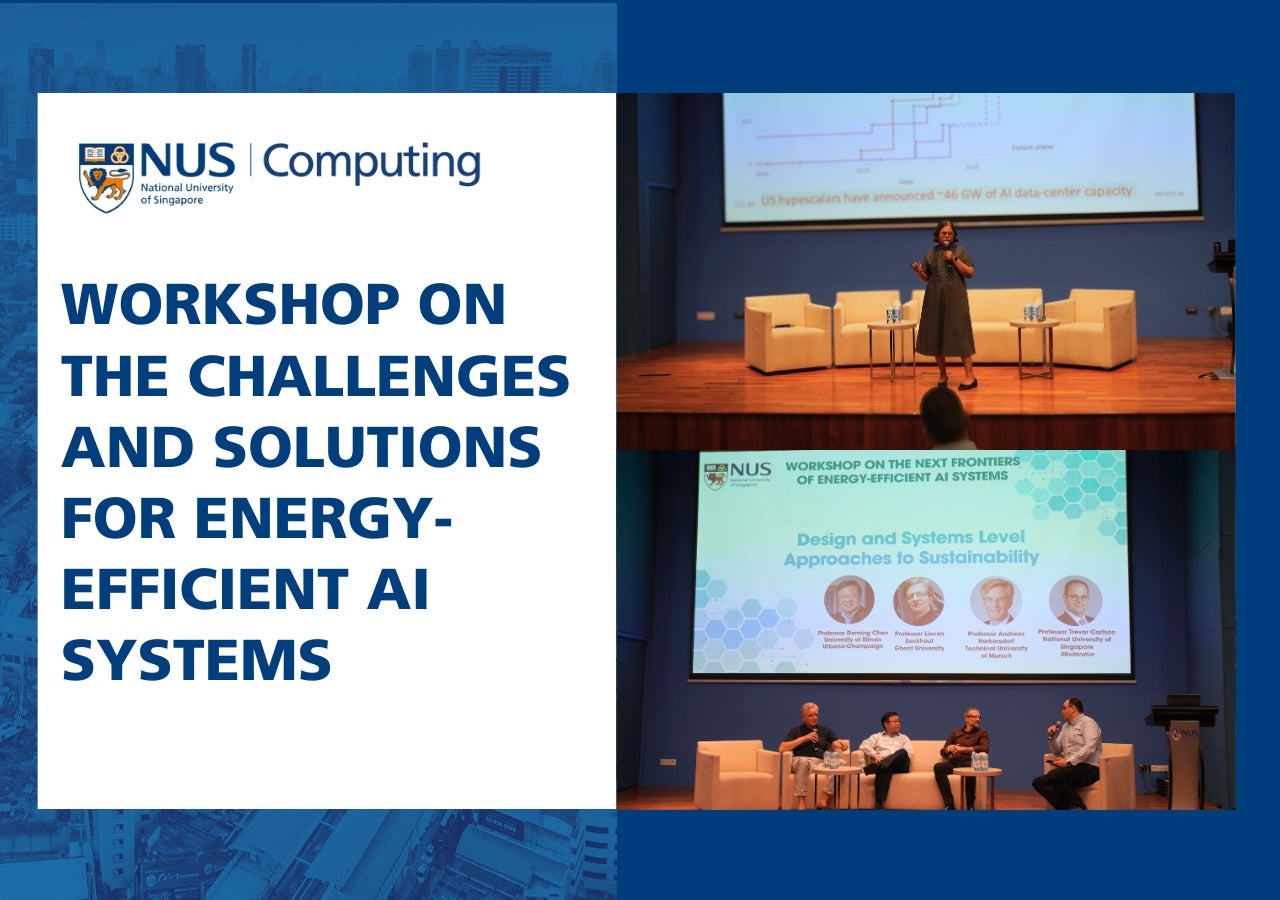
On 17 November 2025, NUS School of Computing (SoC) convened researchers and industry practitioners for the Workshop on the Challenges and Solutions for Energy-efficient AI Systems. Held at the Shaw Foundation Alumni House, the full-day event brought together experts working at different layers of the computing stack – from devices and memory technologies to accelerators, processors, and large-scale infrastructure – to address one of computing’s most urgent challenges: the rising energy footprint of Artificial Intelligence (AI).
The workshop opened with Professor Tulika Mitra, who welcomed participants and framed the day as an opportunity to examine how the foundations of computing need to evolve alongside the rapid rise of AI.
A day built around three big questions
Rather than centring on a single discipline, the programme was structured around three broad questions shaping the future of sustainable AI:
- How will emerging hardware technologies reshape the next generation of AI systems?
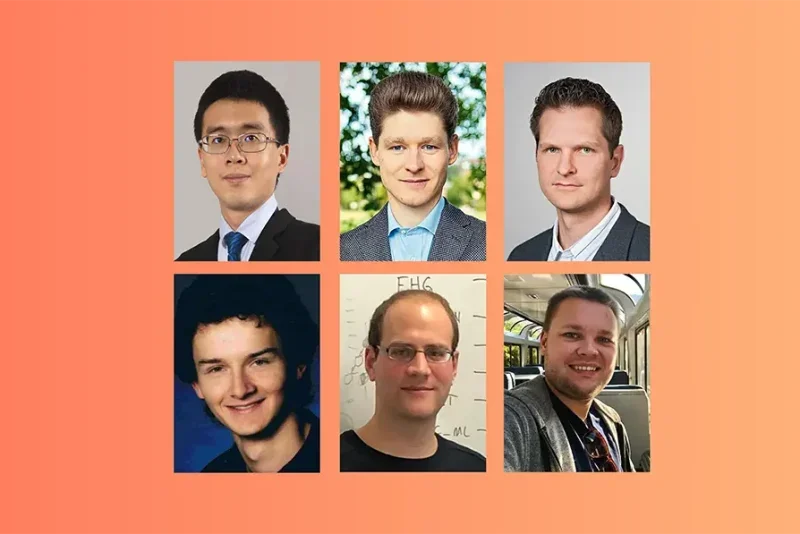
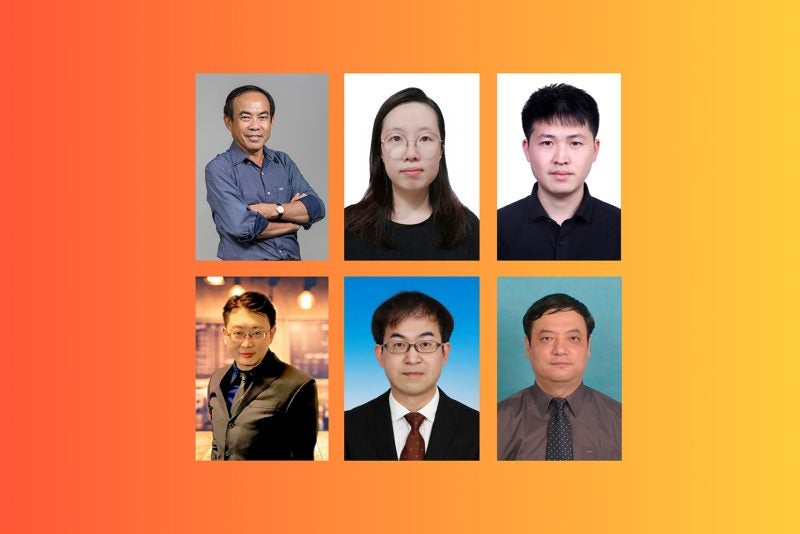
The morning sessions featured invited talks by Professor Subhasish Mitra (Stanford University) and Professor Sharon Hu Xiaobo (University of Notre Dame), whose topics – future hardware technologies for AI, and NVM-based-in-memory computing – set the tone for discussions on how device-level advances could influence system-level possibilities.
Their joint roundtable brought these perspectives together, highlighting how emerging technologies may introduce new opportunities as well as fresh design constraints.
- What role will reconfigurability and domain-specific acceleration play in building greener AI?
The conversation shifted to specialised accelerators and flexible architectures. Talks by Professor Wayne Luk (Imperial College London), Dr Michaela Blott (AMD), and Professor Chen Deming (University of Illinois Urbana-Champaign) explored domain-specific acceleration in healthcare, industry perspectives on enabling the AI revolution, and dataflow acceleration for LLM workloads. Their roundtable examined how reconfigurable and domain-specific approaches could help address efficiency challenges in today’s AI systems.
- How can system-level design and infrastructure support sustainable AI at scale?
The final segment of the day turned attention to broader systems and infrastructure. Talks by Professor Lieven Eeckhout (Ghent University), Professor Andreas Herkersdorf (Technical University of Munich), and Professor Gustavo Alonso (ETH Zurich) covered themes ranging from sustainable processor design to SmartNIC-enabled traffic steering and end-to-end data processing infrastructure.
A closing roundtable drew these threads together, connecting processor design, networking components, and data pipelines within the wider context of sustainable AI deployments.
A collective push towards greener computing
Throughout the workshop, a consistent message emerged: the path to energy-efficient AI is not the domain of any single technology or research area. Instead, it requires coordinated thinking across devices, architectures, and large-scale systems – and ongoing collaboration between academia and industry.
NUS Computing thanks all speakers and participants for contributing to this shared effort, and for advancing the conversations that will help shape the next generation of efficient and responsible AI systems.