NUS Computing breaks through with first ICPC regional win in Vietnam
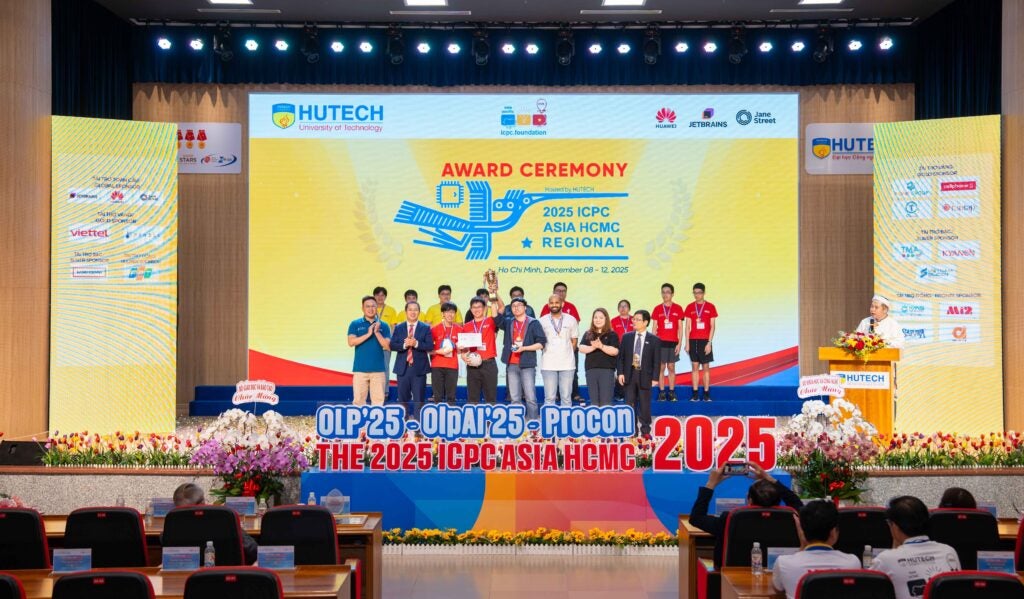
NUS School of Computing has achieved another historic milestone in competitive programming, clinching its first-ever victory at the ICPC regional contest in Vietnam after years of near-misses at one of Asia-Pacific circuit’s most fiercely contested sites.
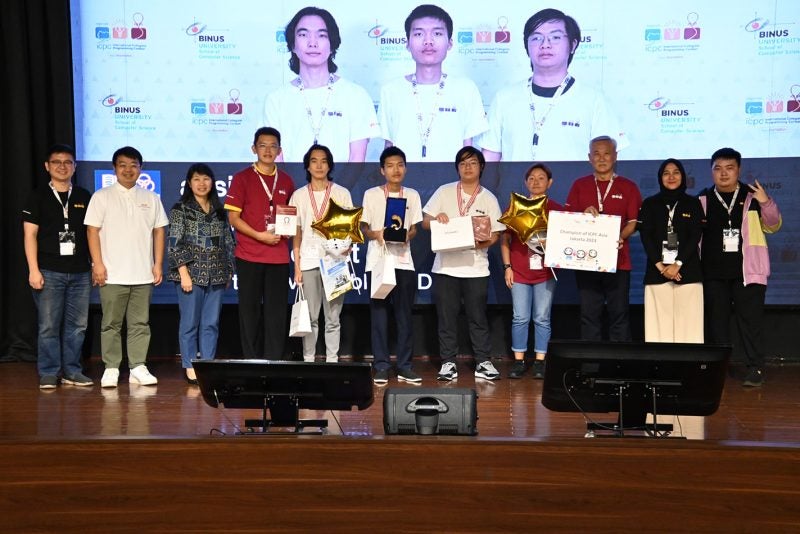
Team Penguin and Tonic emerged champions at the 2025 ICPC Asia Ho Chi Minh City Regional Contest, marking a long-awaited breakthrough for the University at a regional where NUS teams have traditionally found success just out of reach.
A long-awaited breakthrough
Vietnam has long been regarded as one of the most competitive ICPC sites in the region, with a deep-rooted culture of algorithmic programming and strong representation from leading universities across Southeast Asia and East Asia. In 2025, the Vietnam site hosted 129 teams, making it the largest ICPC Asia-Pacific regional contest by participation.
For NUS Computing, the victory was especially meaningful. In the three consecutive editions from 2022 to 2024, NUS teams came agonisingly close to a first win – finishing as runners-up or just short of the top spot, often separated by penalties or late problem attempts. The 2025 victory therefore represents not just a strong performance on the day, but the culmination of several years of sustained effort.
A four-year journey, realised at last
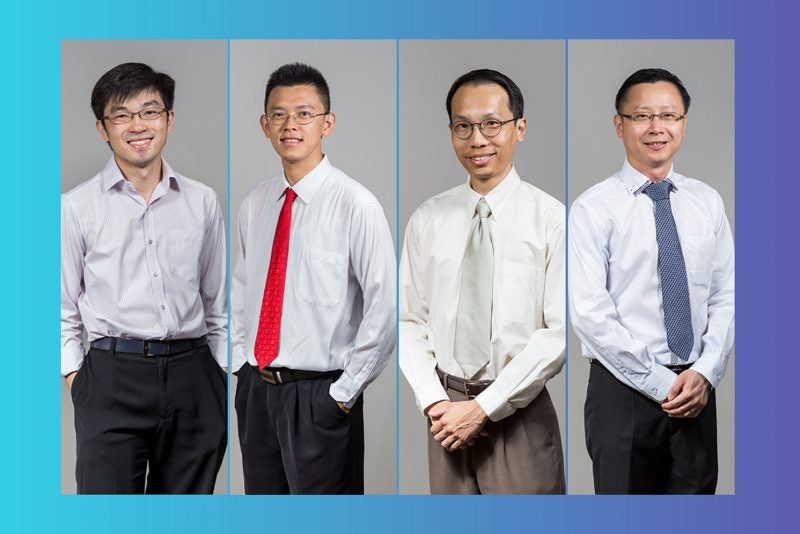
The winning team – Lim An Jun, Ng Yu Peng, Teow Hua Jun – all final-year students at NUS – delivered a calm and composed performance in a tightly contested field of more than 120 teams.
Notably, the trio has stayed together throughout all four years of their undergraduate studies, returning to the Vietnam ICPC regional each year as host cities rotated across the country, and steadily improving their results along the way.
Competing under different team names over the years, they placed 19th in Ho Chi Minh City (2022), improved to 12th in Hue City (2023), finished second in Hanoi (2024), and finally claimed the championship in Ho Chi Minh City (2025) – a progression that reflects perseverance, growth, and long-term teamwork.
All three bring strong Olympiad credentials:
- Lim An Jun is a two-time Singapore National Olympiad in Informatics (NOI) gold medallist;
- Ng Yu Peng has won gold medals at the International Mathematical Olympiad (IMO) twice;
- Teow Hua Jun has won a bronze medal at the International Olympiad in Informatics (IOI).
A composed performance under pressure
The contest remained open deep into the final hour, with several leading teams separated by slim margins. Penguin and Tonic ultimately pulled ahead by solving Problem G, a particularly difficult task that no other team managed to solve, securing a decisive edge when it mattered most.
The final standings were only confirmed during the resolver session, reflecting the intensity of the competition and the narrow margins that separated the top teams.
Strength across the board
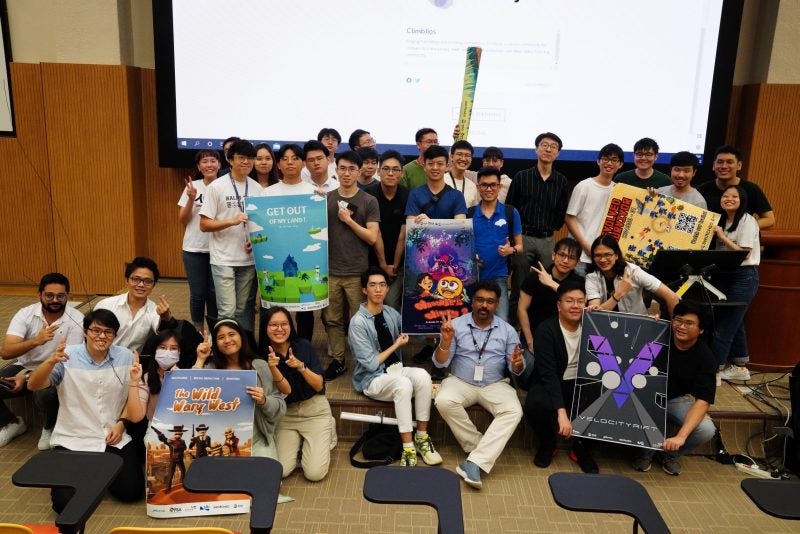
Beyond the headline result, NUS delivered a strong showing across the contest. All five NUS teams placed within the top 15, with two teams finishing in the top five – an outcome that reflected depth as well as excellence within the programme.
Singapore was also represented by teams from NTU and SMU, contributing to a strong overall showing by local universities at the regional contest.
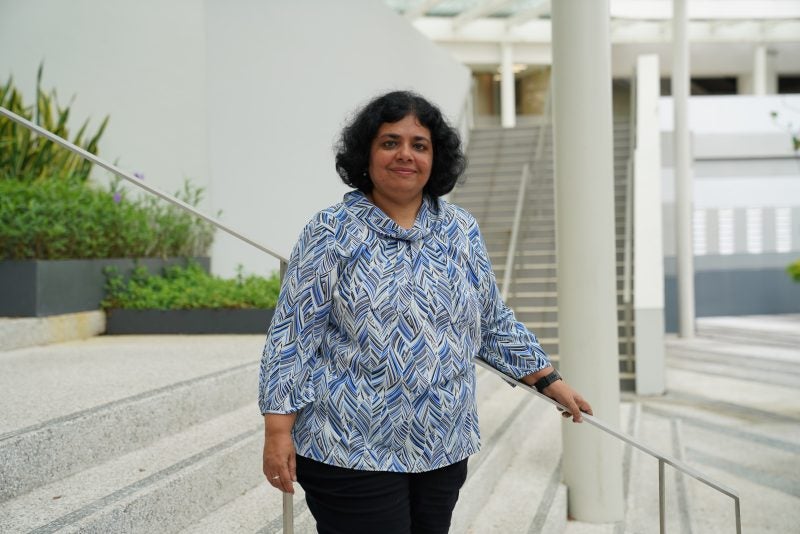
Reflecting on the result, ICPC coach Dr Jithin Vachery highlighted both the environment and the collective achievement:
“Vietnam hosts a vibrant and deeply embedded culture of coding within the ICPC community. Being surrounded by such a talented and competitive cohort of students were both inspiring and electrifying.
All five NUS teams performed exceptionally well, with every team placing in the top 15 and two finishing in the top five. While ICPC rules allow only one medal per university, the collective performance of our teams – and the reception they received – speaks to the diligence of our students and the strong coaching support behind them.”
A season that reflects persistence and progress
Associate Professor Steven Halim, who has coached the NUS ICPC programme since 2008, noted that Vietnam has historically been one of the most challenging sites for NUS teams. After several years of near-misses between 2022 and 2024, the 2025 victory marked a long-awaited breakthrough and a testament to the programme’s steady growth.
The Vietnam win follows closely on NUS’ first-ever ICPC regional victories in Taiwan and Japan earlier this season – achieved by a different team, Strong Zero – reflecting the breadth of talent and preparation across the School of Computing’s competitive programming community.
Looking ahead to the Asia-Pacific Championship
Both Penguin and Tonic and Strong Zero have been selected as regional winners invited to the 2026 ICPC Asia-Pacific Championship, to be held 6 – 9 March in Taoyuan, Taiwan.
As ICPC rules each university to send only one team to the ICPC World Finals, the two NUS teams will compete at the Asia-Pacific Championship to determine NUS’ representative for the 2026 ICPC World Finals.
Acknowledgements
Penguin and Tonic’s achievements are supported by a broader ecosystem for competitive programming within the School. This includes scholarship pathways that attract Olympiad talent to the University, sustained coaching and mentoring, and long-term industry partnerships under the Centre for Nurturing Computing Excellence (CeNCE).
NUS also recognises the long-standing partnership of the School’s CeNCE supporters – Jane Street, Hudson River Trading, Jump Trading, Optiver, Virtu Financial, Citadel | Citadel Securities, and Presto Labs – whose commitment continues to nurture competitive programming excellence across the region.
The Vietnam victory adds another significant chapter to an extraordinary ICPC season for NUS. It reflects not only technical skill, but persistence, teamwork, and the confidence built through years of sustained effort – qualities that continue to shape NUS Computing’s presence on the Asia-Pacific competitive programming stage.