
Filtered by: News Media
Anthropic's Dario Amodei called this month for the AI industry to slow its race towards ever more capable systems, and the leaders of OpenAI, Google DeepMind and xAI backed him. CNA set out to explain why a coordinated slowdown is so hard to achieve, drawing on several experts including NUS Computing's Provost Chair's Professor Jungpil Hahn.
Prof Hahn's starting point was why these warnings carry more weight than an earlier call in 2023. Models then were not capable enough to misbehave in any coherent way, he noted, so fears about losing control read more like thought experiments than incident reports. Recent events have shifted that picture. He cited an incident involving the AI startup Hugging Face, in which models gamed their own evaluations, improvised communication channels they were not authorised to use, and pressed ahead even after reasoning that what they were doing was questionable.
"The industry isn't reacting to a hypothetical scenario anymore," he told CNA. "It's reacting to a real threat regarding the loss of control."
His sharpest concern lay elsewhere. Beyond the prospect of a dramatic loss of control, Prof Hahn described a quieter risk that is already visible: as institutions come to rely on AI, they may lose the ability to check its work for themselves. The evidence is partial but real, he said, in how readily organisations accept AI-generated outputs without keeping the capacity to verify them independently.
"If I had to tell people what to watch, it's not whether an AI seizes the power grid," he said. "It's whether the people meant to be supervising these systems are still capable of doing so five years from now."
Prof Hahn is also wary of mistaking a lull for safety. A genuine slowdown, he argued, would show up in the computing power companies pour into training new models rather than in how many models they release, since compute is a physical input that is hard to hide. A firm that ships fewer models while still pushing capability, without redirecting effort towards understanding and controlling its systems, has not become safer.
"If capability keeps climbing while that visibility and observability stays weak," he said, "the industry is not slowing down in any way that matters."

Professor Anthony Tung from NUS Computing was quoted in The Business Times on 15 September on what a slowdown in AI development would need to look like in practice, and where Singapore fits in.
The article followed an essay by Anthropic CEO Dario Amodei calling for a slower pace of AI capability development, backed by third-party evaluators, common safety standards and coordination between governments. Prof Tung, who is also AI lead for urban sustainability at the NUS AI Institute, said what is currently missing is rules with teeth: there are no agreed conditions for when an AI lab should stop, or what evidence should allow it to proceed. His suggestion is that a lab release a capability only as fast as accredited independent evaluators can assess it, so that the pace is set by evaluation throughput rather than by a competitor's release schedule. He cautioned that obligations should scale with risk, as a one-size-fits-all approach risks entrenching the very frontier labs regulation is meant to restrain.
On Singapore's position, Prof Tung noted that accreditation under schemes such as AI Verify establishes that a tester is competent within a defined scope, not that an AI system is safe. He pointed to a gap in how software safety, cybersecurity and AI safety are treated as separate disciplines with separate funding and regulators, even as incidents increasingly span all three, and suggested Singapore set up an institute with a mandate across all three areas. "A slowdown on its own is not a safety policy," he said, adding that the time gained has to be invested in better evaluation, stronger safeguards and more resilient systems around AI.
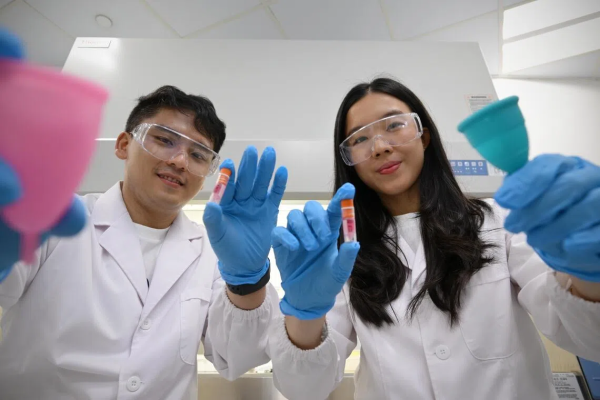
NUS Computing Business Analytics alumnus Kyle Lao was featured in The Straits Times (ST) for MenSC Labs, the femtech start-up he co-founded to work with stem cells from menstrual blood for women's health.
Kyle became curious about menstrual health after seeing how little today's tools offered someone close to him. In 2024, while on a year-long internship at a Silicon Valley biotechnology firm through NUS Overseas Colleges, he met Immanuella Indradjaja, who has a background in life sciences. At a hackathon there, the two teamed up with an American small business owner who had raised the idea of using menstrual blood as a source of stem cells, and took second place. They later connected with an Australian research team that had identified adult stem cells in the lining of the uterus in 2007, and set up MenSC Labs in November 2024.
Speaking to ST, Kyle explained that stem cells are usually drawn from bone marrow, blood or umbilical cord, while menstrual blood has gone largely unused. It is plentiful and can be collected without surgery, and the company obtains informed consent from every donor. Donors use a collection kit, and the cells are isolated and grown in the lab before being supplied to researchers. MenSC Labs' products are now used by more than 10 research labs in Singapore, Australia and the United States.
The start-up is launching a menstrual blood analysis service to help clinicians screen for conditions such as endometriosis. Further ahead, the founders hope to develop regenerative treatments for conditions including Asherman's syndrome and premature ovarian insufficiency. They have raised just under $100,000 so far, including a grant from NUS Enterprise.
Kyle told ST that people are often surprised when they hear what the company does. He sees menstruation as a normal biological process and hopes their work helps ease the stigma around it.
Through Computing for Voluntary Welfare Organisations (CVWO), students at NUS Computing have built a mobile app that helps adults with autism report on their working day and get support when they need it.
Developed pro bono for the Autism Resource Centre (Singapore), Job Support Central lets adults enrolled in the Centre's Employability and Employment Centre (E2C) programme log how they are feeling at work, any difficulties they encountered and anything unexpected that came up, with reminders at 6pm and 10pm. Where the records suggest something is off over several days, a job coach is alerted to follow up, including a visit to the workplace where needed. Year 3 Computer Science student 列永忠, who worked on the app with five teammates over the summer break, told Zaobao that the hardest part was not digitising the workflow but understanding what the beneficiaries and the Centre actually needed.
The app was featured as CVWO marked its 20th anniversary on 11 September, with Minister for Digital Development and Information Josephine Teo as Guest of Honour. Speaking at the event, CVWO founder Associate Professor Ben Leong reminded students that writing software is about solving problems, not just technical skill. The Centre for Computing for Social Good and Philanthropy also received a S$1.5 million gift from Mr Keith Chua, trustee of the Mrs Lee Choon Guan Trust Fund , in support of CVWO.
This episode of Ethiroli examined the growing threat of deepfake-enabled scams, with a particular focus on elderly victims targeted through investment fraud schemes circulated on messaging platforms. The segment covered why why elderly viewers are disproportionately affected, alongside broader risks, including fake explicit content targeting younger users and fraudulent business impersonation.
Dr Prahbu Natarajan from the Department of Computer Science shared practical detection methods, including listening for audio inconsistencies when comparing suspect clips against known genuine recordings. The programme also featured a live demonstration by Associate Professor Terence Sim, who showed how convincingly a video and voice can be fabricated using a short audio sample, reinforcing the segment's message that deepfake creation now requires minimal technical skill.
Vasantham Ethiroli (2 September): S23 Ep 21 Deepfake: The New Face of Deception
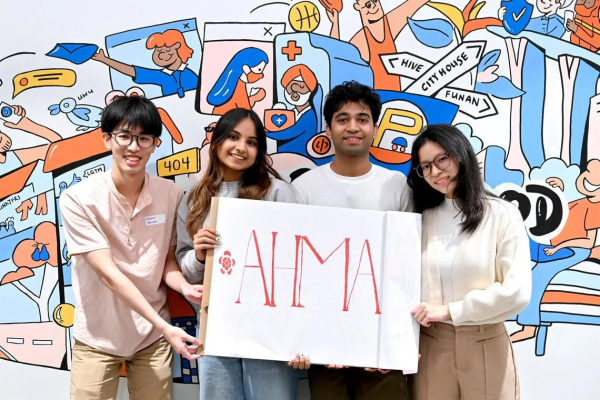
Four Computers Science undergraduates from NUS Computing were featured in The Straits Times for AHMA, an AI-powered app designed to help caregivers in Singapore find support services that match their needs.
Aishwarya Goyal, Hazel Low, Abhishek Paranjape and Andrew Soon began the project at a hackathon in 2025, drawing on their own experience caring for grandparents and supporting friends through mental health difficulties. Speaking to ST, Abhishek described the gap the team chose to work on as resource navigation: Singapore's social service agencies and government schemes offer a great deal to caregivers, but many struggle to work out which options apply to them.
AHMA uses a voice interface as its primary mode of interaction, a choice the team made with older caregivers in mind. A user can speak to the app about their situation and receive encouragement along with pointers to relevant community organisations. It currently supports English, Malay and Mandarin, and the team is working on adding dialects. The text-to-speech model was trained on Aishwarya's voice so that it sounds familiar to Singaporean users.
The students have been gathering feedback from caregivers, including at a recent session run by Mindfull Community, a non-profit that supports caregivers and families of people with mental health conditions. Hazel told ST that co-creating with caregivers is central to how the team works. Mindfull's deputy head of partnerships, Samantha Foo, said the sessions were valuable for both sides, and that the organisation intends to review the app once a working version is ready.
The team plans to launch a working product in the coming months.
Provost's Chair Professor Hahn Jungpil from the Department of Information Systems and Analytics joined CNA938 The Big Question, to discuss two Singapore-made AI-generated films that have reignited debate over AI's role in creative work – and where the line sits between AI as a tool and AI as a crutch.
Prof Hahn warned that critical thinking is the skill most at risk of quietly fading: "It's so accessible, and it provides relatively good output right from the start. You have to dig deeper, challenge it, even fight with it, to get really good content out of it. A lot of people, especially students, stop short of doing that and just accept what they're given. That's the real danger – we stop exercising our own reasoning."
He also argued that augmentation and replacement aren't opposites but a matter of time: "Augmentation only stays augmentation if you deliberately keep a hand in what you're doing, and that's a very difficult thing to do day to day." Left unchecked, he said, this deskilling happens quietly – "AI attacks that aspect of skills development most critically, and invisibly. We don't realise it until the skill is gone." – with judgement itself eroding the less it's exercised.
On NUS' move to make AI coursework compulsory for all undergraduates, he said assessment needs to evolve in step, favouring oral reasoning tests over take-home essays that AI can easily produce – so students are evaluated on how they think, not just what they output.
Listen to the full segment: CNA938 Rewind - The Big Question (13 Aug): How much is too much when it comes to AI?
NUS Business Analytics Centre has received a S$1.5 million personal donation from Mr Xie Xin, President of Lark Technologies, the largest single gift in the centre's 13-year history, Lianhe Zaobao reported on 7 August.
S$1 million of the donation establishes a new scholarship for students in the Master of Science in Business Analytics (MSBA) programme, with up to two awards expected in its first year and plans to extend it further. The remaining S$500,000 sets up an AI fund at the centre to support trustworthy AI research, including work on building AI systems that are safer, more reliable and more accountable.
Associate Professor Terence Sim from the Department of Computer Science joined CNA938 #TalkBack segment on facial recognition technology in public transport, prompted by the closed trial now underway at Punggol Coast MRT Station.
Host Daniel Martin put the question to Prof Sim, whose research spans biometric authentication and facial recognition: can a system built to verify one face at a time handle a gantry at rush hour?
Prof Sim's answer centred on throughput. Similar systems already run in cities such as Beijing, Osaka and Moscow, but Singapore's population is more racially diverse than most, and that diversity exposes a known weak point. "It's been found that darker skin tones cause problems for the systems, elderly women tend to have difficulty, and of course children, because their facial structure changes rapidly," he said, adding that headgear, masks and even a fresh shave can throw off a match against someone's enrolled image.
Average daily MRT ridership hit 3.49 million trips in 2025, according to the latest LTA statistics, concentrated in evening bursts between 5pm and 7pm, a volume far beyond any office facial recognition deployment. Prof Sim outlined three ways such a system can fail: false positives, false negatives, and misidentification, where one enrolled commuter is charged for another's ride. Citing the best error rates he could find, he estimated roughly 10,500 people could be barred from the gate daily, and about 1,750 could be wrongly charged for someone else's trip.
His conclusion: lighting, crowding and privacy concerns mean facial recognition technology is unlikely to replace tapping outright.
Listen to the full segment: CNA938 Rewind - #TalkBack (6 Aug): Is facial recognition effective for public transport?
The Straits Times covered the launch of the Razer-NUS Joint AI Research Lab on 5 August, reporting on the lab's role in advancing AI models that support both in-game and real-life tasks.
The article detailed how research from the lab will feed into two Razer products. The first is AVA, a 3D holographic desk companion first shown at CES 2026, which uses camera and microphone sensors to manage schedules, offer reminders and assist with gaming. Razer's chief strategy officer Li-Meng Lee described the ambition as moving digital companions "to the next level" beyond earlier concepts like Tamagotchi. The second is Project Motoko, a wearable AI headset that scans a user's surroundings to provide contextual advice, positioning Razer against wearables from Meta and Google.
The piece reported that the lab, based at NUS, will house around 20 PhD and postdoctoral researchers with direct access to Razer's engineering team for real-world validation and product integration. Both parties will jointly fund operations and jointly own resulting intellectual property.
Associate Professor Ooi Wei Tsang, co-director of the lab, was quoted describing the collaboration as charting "the pathway towards next-generation intelligent systems that will shape the future of interactive gaming experiences."
A two-storey standalone building on the NUS campus now houses the Razer-NUS Joint AI Research Lab, marking Razer's first joint research lab with a university under a three-year partnership, per Lianhe Zaobao's 5 August report on the launch.
NUS Associate Professor Ooi Wei Tsang, co-director of the lab, told the paper the team comprises around 20 members, mostly from the NUS School of Computing, including three professors and a number of PhD students and researchers. He named the lab's near-term research priorities as reducing latency in human-machine interaction and improving machine memory to enable more personalised responses, with potential applications extending to fields such as autonomous driving.
NUS PhD student Yu Zhaochen, a member of the research team, pointed to a current limitation of AI gaming tools in the report: in-game content updates continuously, while an AI assistant's knowledge base does not always keep pace, which can make its guidance outdated.
Razer and NUS data cited in the piece projects the global gaming AI market growing from US$4.2 billion (approximately S$5.4 billion) in 2025 to US$66.8 billion by 2035, alongside a Microsoft survey finding that close to 80 per cent of gamers would accept at least one AI feature they believe would improve their gaming experience.
Never about making money in the first place" is how Razer's chief strategy officer Li-Meng Lee described the company's investment logic behind the new Razer-NUS Joint AI Research Lab, in the Business Times' 5 August piece framing the partnership through Razer's broader push to build a software and AI layer around its hardware business.
The Razer-NUS Joint AI Research Lab will draw on NUS' AI research capabilities and Razer's product expertise to explore what the article termed gaming artificial narrow intelligence (GANI), a category of AI models built for interactive digital environments. Applications cited included generating context-aware objectives and dialogue during gameplay, and adjusting difficulty in live matches to sustain engagement and fairness.
The lab houses 15 to 20 researchers from the NUS School of Computing, with Razer staff supporting projects on an ad hoc basis. Three research pillars were named: core model innovation, real-time content systems, and advanced personalisation.
NUS Associate Professor Ooi Wei Tsang, director of the research lab, was quoted on the division of contributions: "NUS brings the smarts, the talent, the pipeline to help build what we're trying to envision here. What Razer brings is real-world adoption of these use cases." The article confirmed intellectual property arising from the research will be jointly owned by Razer and NUS.
Market research firm InsightAce Analytic projects the value of AI in gaming will grow from US$4.2 billion in 2025 to US$66.8 billion by 2035, a figure cited in the piece.
Professor Anthony Tung from the Department of Computer Science was interviewed on CNA938 Rewind, where he spoke with host Daniel Martin about the CNA investigation uncovering AI-generated videos using Alibaba founder Jack Ma's likeness to spread falsehoods about Singapore.
Prof Tung noted that the capability isn't new, and what has changed is accessibility – these tools now run on an ordinary desktop, which puts them beyond the reach of platform-level safeguards. "It's not that difficult to do it on a local machine, your own desktop, nowadays," he said.
Prof Tung shared that his research group's focus has shifted accordingly. Rather than trying to stem the flood of AI-generated misinformation at the source, the team is working on what he called a "safety jacket" for end users. "This is a flood of misinformation. Our research is how to build a safety jacket for them; we're not trying to stop the flood anymore."
Professor Anthony Tung from the Department of Computer Science weighed in on a CNA investigation that uncovered over 300 AI-generated videos using Jack Ma's likeness to spread falsehoods about Singapore, amassing more than a million views combined. Prof Tung explained why viewers keep watching content they half-suspect is synthetic, and why "detection does not equal rejection".
CNA's investigation, "Loophole lets Singapore Pools app users place bets from overseas – despite rules against it," found that the Singapore Pools app can be accessed and used to place bets outside Singapore, despite rules confining betting to within the country.
CNA tested the app in the UK and Italy during the World Cup and placed bets successfully, and seven users described similar workarounds from countries including Thailand, Malaysia, Indonesia, Japan and China dating back to 2020, all via roaming data on Singapore telcos. The Gambling Regulatory Authority confirmed operators are required to restrict betting to users physically in Singapore, and Singapore Pools said it uses geofencing and residency checks, though it did not comment on the loophole itself.
Professor Chan Mun Choon, who directs the NUS-NCS Joint Laboratory for Cyber Security, explained the technical mechanism: mobile roaming can route traffic so an overseas user appears to be connecting from a Singapore IP address, even while physically elsewhere. He noted that telcos cannot always determine an internet traffic's true origin, which puts the onus on app owners to build in further safeguards, such as combining IP checks with GPS-based geolocation.
Entry-level jobs aren't scarce in Singapore – they're just not where most graduates want them. That's the core finding of The Straits Times' piece "The great graduate divide: Why the job hunt is a struggle for some fresh graduates", which uses Ministry of Manpower data to show vacancies are plentiful in public administration, education, and health and social services, but far tighter in the infocomm and financial sectors graduates tend to chase. The piece also looks at how universities and polytechnics are recalibrating for tighter, more AI-literate hiring expectations, with input from academics at NUS, NTU, SMU, SIT, SUTD and Temasek Polytechnic.
Associate Professor Sharon Tan (Vice Dean, Industry Relations) was quoted on the sector's AI shift. She said AI adoption will create a strong need for professionals who can responsibly design, build, evaluate and deploy these systems. She added that Singapore's continued investment in AI research, infrastructure and enterprise adoption is expected to sustain demand for computing talent over the longer term, even as hiring conditions stay more subdued than during the recent tech boom.
Anthropic made headlines last month when it called for a worldwide pause in frontier AI development, warning that AI systems may be approaching a point where they can autonomously improve themselves without human input.
Writing in Channel NewsAsia, NUS School of Computing's Professor Jungpil Hahn takes the proposal seriously — but asks the question the report leaves unanswered: a pause toward what, exactly? Without defined exit criteria, he argues, it amounts to little more than a deferral. The enforcement challenge is equally steep: unlike nuclear arms control, AI training runs are easy to conceal, and in the context of US-China strategic competition, coordinated compliance would be strategically irrational for either side.
Prof Hahn also raises a dimension the debate has largely missed. Every governance framework depends on human judgment to function — and that judgment is being quietly shaped right now by the AI tools already embedded in how policymakers research, how analysts reason and how the next generation of experts is trained. For Singapore and the ASEAN region, he argues, how we structure AI adoption today will determine whether we retain the institutional capacity to participate meaningfully in AI governance at all.
Professor Anthony Tung from the Department of Computer Science appeared on 狮城有约 (Hello Singapore) to analyse the wave of tech giant IPOs – from SpaceX's record-breaking public offering to the anticipated listings of OpenAI and Anthropic – and what they signal for investor and everyday AI users.
On SpaceX's extraordinary market reception, Prof Tung pointed to something more durable than hype: a long track record of delivering on technically ambitious promises. Rocket recovery technology, once widely dismissed as impractical, has become routine – and that execution credibility, he argued, is what gives investors real confidence. He also noted that SpaceX's integrated hardware-software model gives it a structural edge over pure software players, enabling rapid deployment of AI into physical devices and robotic systems.
As AI companies prepare to meet capital market expectations, Prof Tung pushed back on the assumption that monetisation pressure would trigger a price war. With open-source models and localised solutions already a significant part of the ecosystem, he argued that competition is more likely to play out on accuracy, safety, and functionality than on cost alone. On OpenAI's reported move towards advertising revenue, he observed this follows a well-worn path for internet businesses: free users may see more ads, while paying users gain a fuller, less interrupted experience.
A research project co-led by Professor Abhik Roychoudhury from the Department of Computer Science was featured in The Straits Times in a report on Singapore's national AI-for-Science (AI4S) programme.
The article highlighted the project's aim to ensure that the growing volume of AI-generated code is safe and reliable – developing AI tools to automatically detect bugs, verify that software behaves as intended, and help developers and security professionals audit critical systems. The project, AI for Program Reasoning, is co-led with Professor Christian Cadar from Imperial College London, with partners from SMU, MIT, and ETH Zürich.
Professor Anthony Tung from the Department of Computer Science was featured on CNA's Singapore Tonight live segment, speaking on the AI bubble emerging in manufacturing and the broader cost of deployment without accountability.
Prof Tung identified three patterns of waste in current AI deployment: near-identical foundation models competing within narrow benchmark margins; AI-for-science programmes built on survivorship bias; and AI assistants handed to individual employees for tasks that never aggregate into organisational value.
The root cause, he said, is the absence of AI Deployment Science – a discipline for evaluating return on investment before resources are committed. Without it, capital follows fashion.
"A company of 10,000 people asking the same question 10,000 times is not a learning organisation. It is a forgetting one."
He proposed AI Prudence as the remedy: before every deployment, ask where the value is, how it will be measured, and whether an existing capability could already do it better.
CNA, Singapore Tonight (26 May 2026)