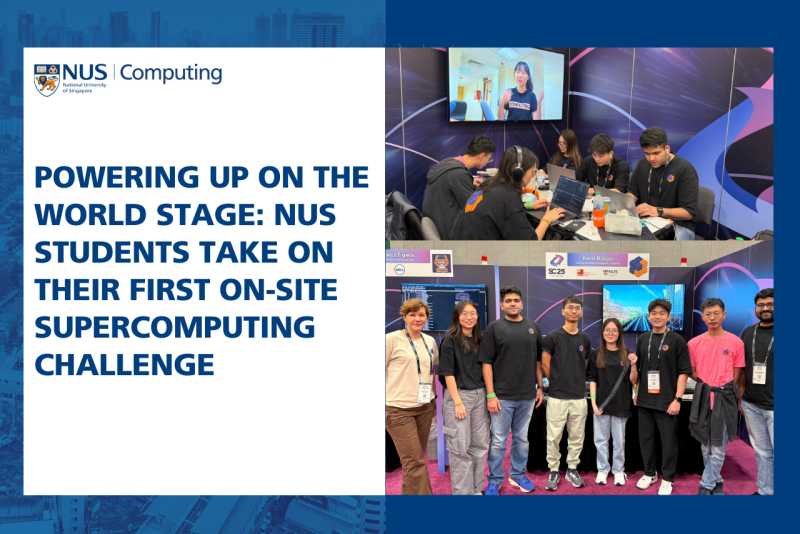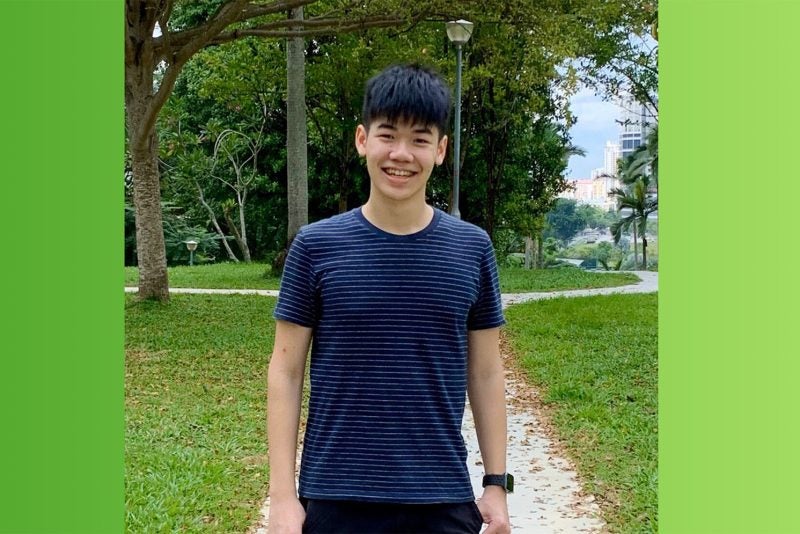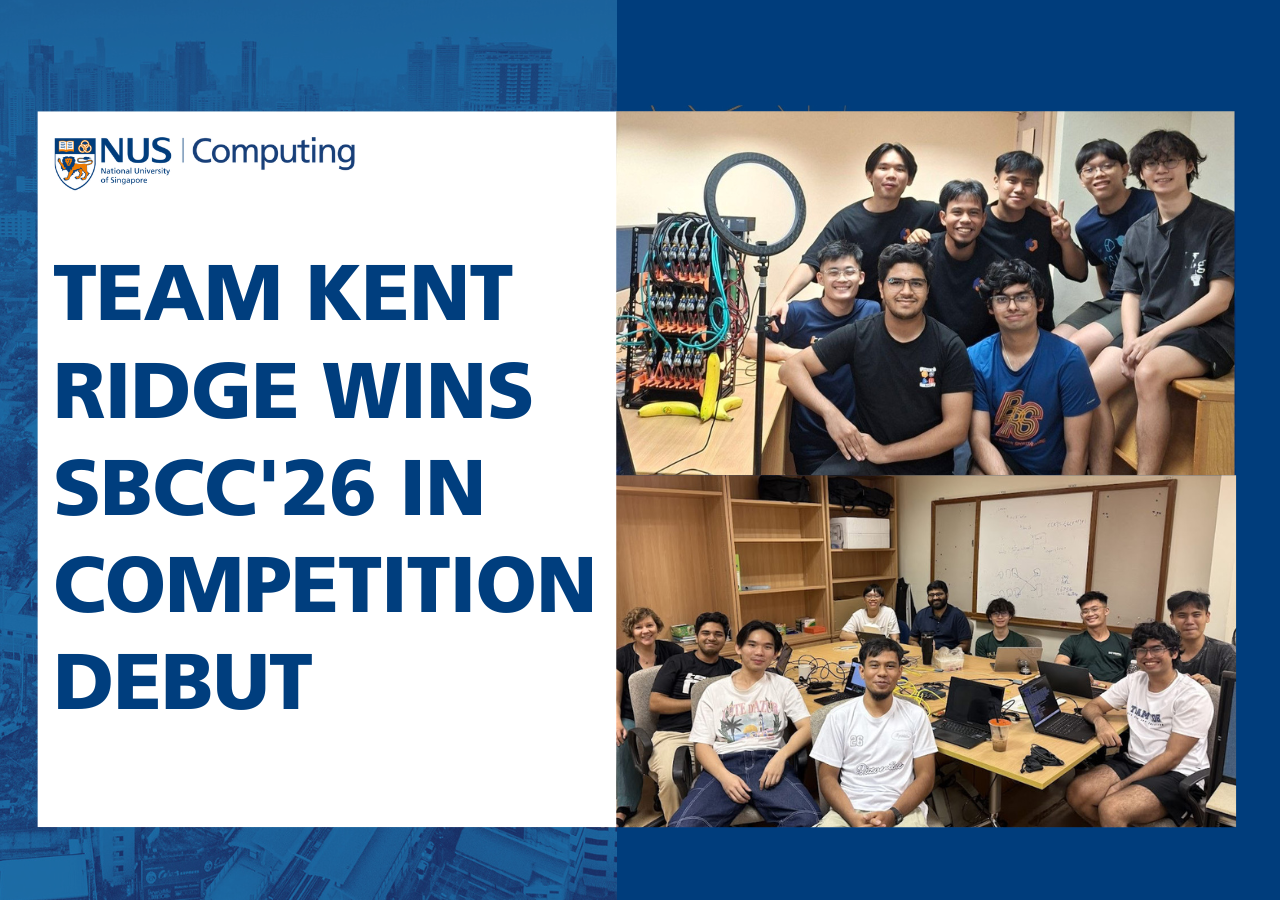
Muhammad Asyraf bin Abdul Rahim is a Year 1 Computer Engineering student. Until about 10 weeks before the Single-Board Cluster Competition 2026 (SBCC’26), he had never heard of high-performance computing (HPC). None of his seven teammates had, either.
And yet, 10 weeks later, they stood at the top of the podium.
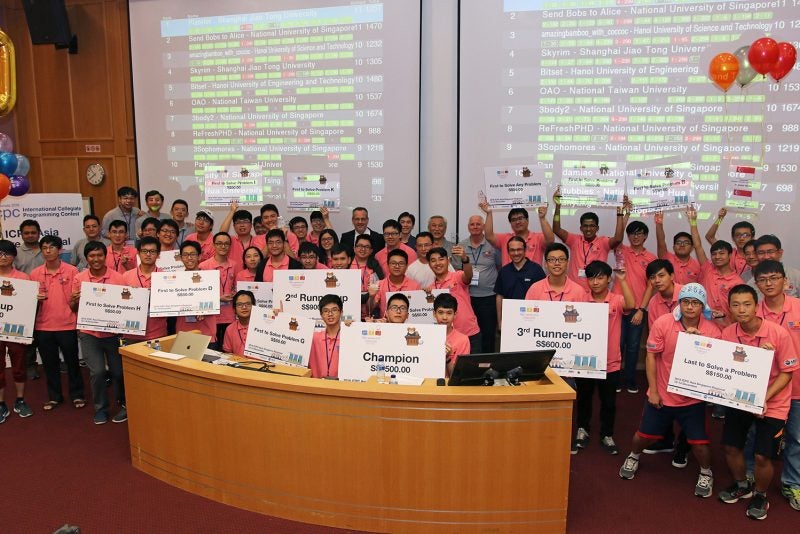
Competing as Team Kent Ridge, the eight NUS Computing students secured first place overall at SBCC’26, outperforming 13 international teams, many of which had prior competition experience and established HPC backgrounds. It is a result that stands on its own merit: a technically demanding, high-pressure competition won not by incremental advantage, but by a team that had to build both its system and its expertise from the ground up.
SBCC is hosted by the University of California, San Diego, and open to undergraduate teams worldwide. The format is deceptively simple: design, build, and run a cluster of single-board computers on a budget of under US$6,000 and a power ceiling of 250 watts. Then use it to complete a series of HPC tasks over 48 continuous hours – live-streamed, around the clock across time zones. The challenge spans the full stack: hardware assembly, system configuration, storage design, workload optimisation, and rapid debugging of unfamiliar applications. Many competing teams arrive with years of accumulated knowledge from prior competitions, such as Student Clusters Competitions(SCC) at SC and ISC.
Getting to the Start Line
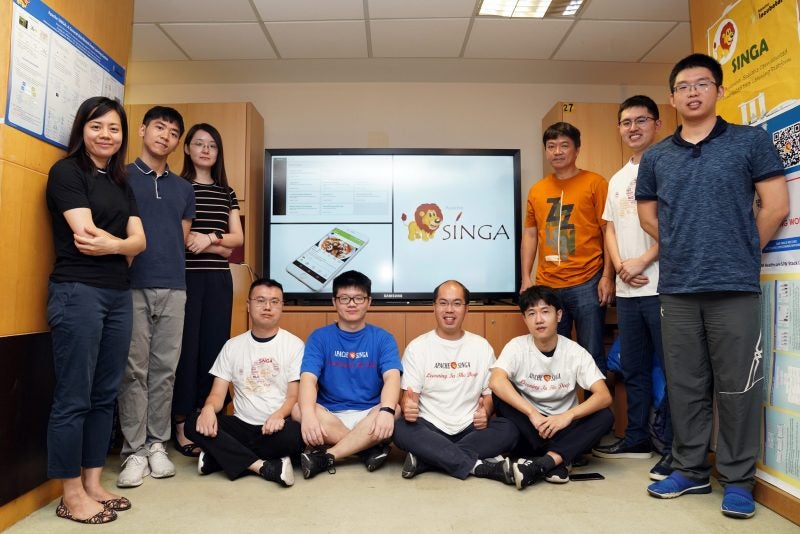
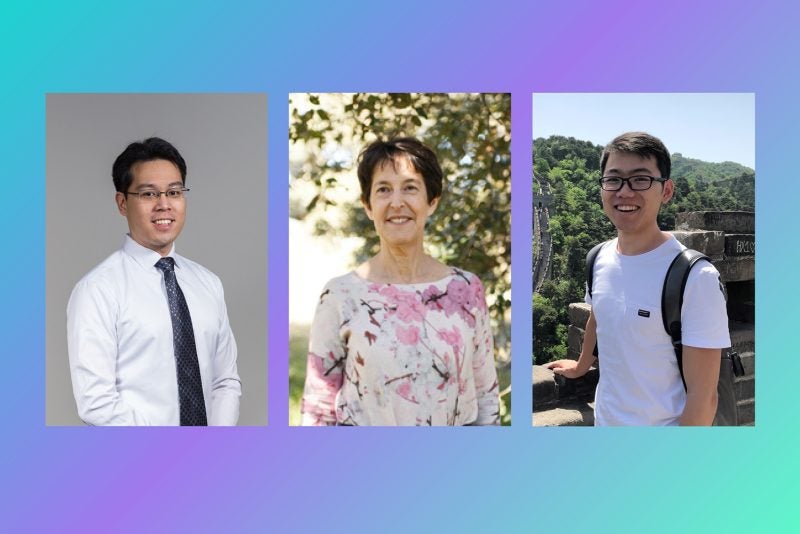
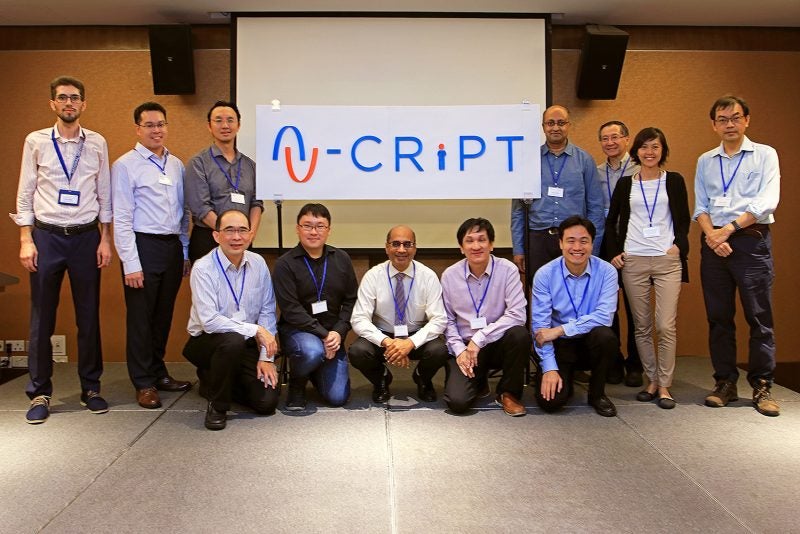
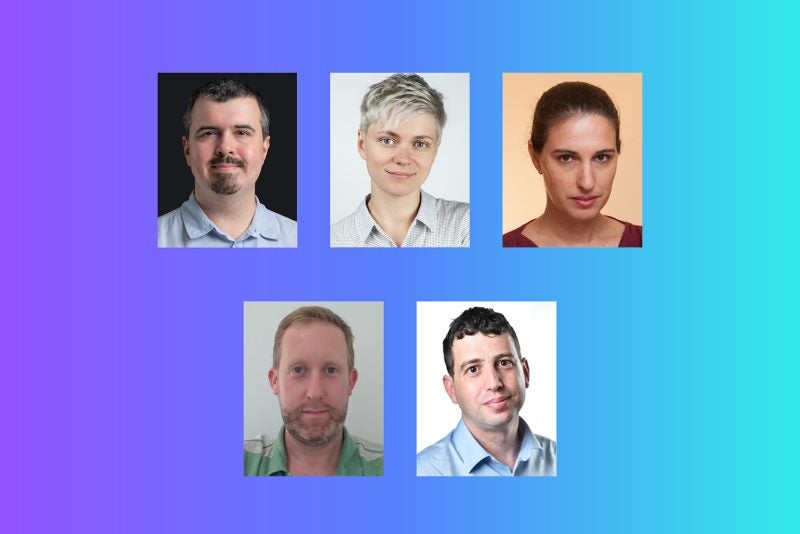
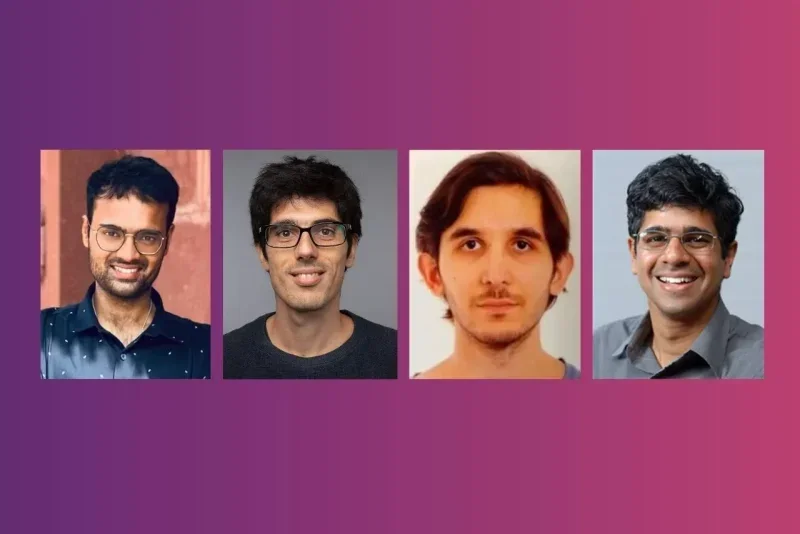
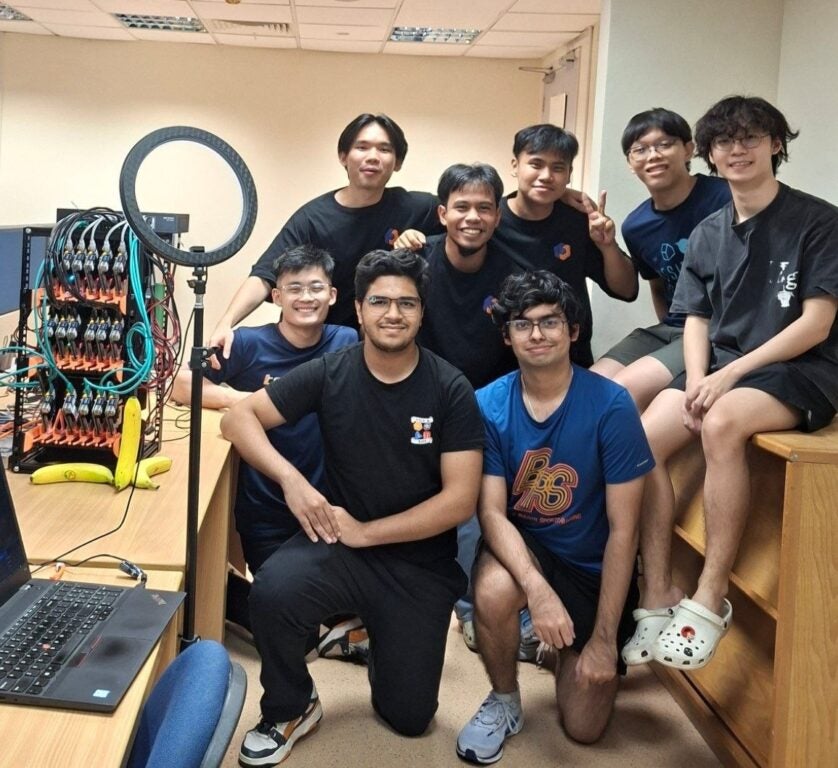
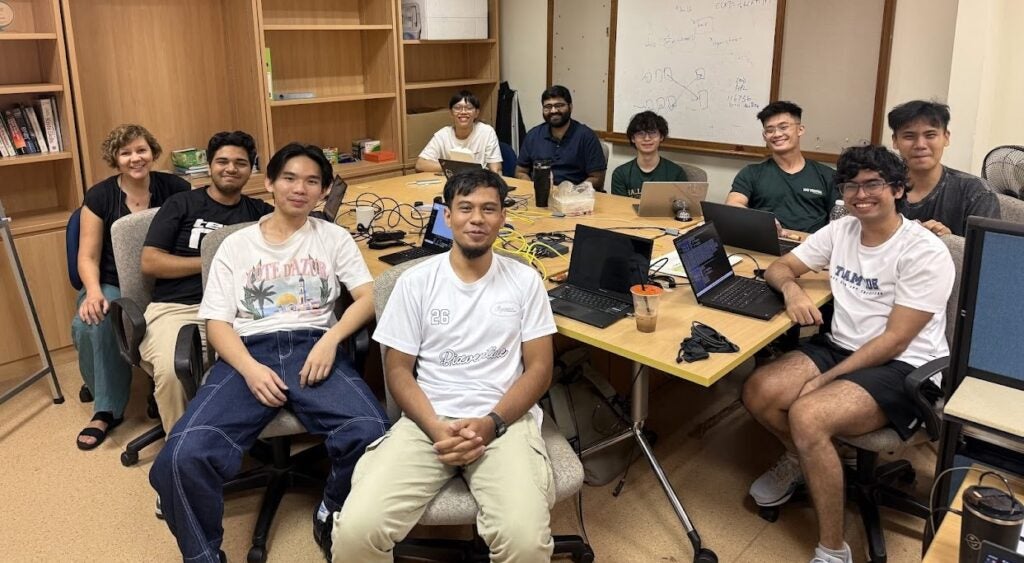
As the competition rules were published, the team came together quickly, bringing together six Computer Engineering students and two Computer Science students, most of whom were encountering HPC concepts for the first time. Dr Sriram Sami and Dr Cristina Carbunaru from the Department of Computer Science recruited and mentored the team. With their support, the team designed and assembled a working cluster, learned the tooling required to orchestrate and monitor it, and developed strategies for handling the kinds of workloads they would face in competition.
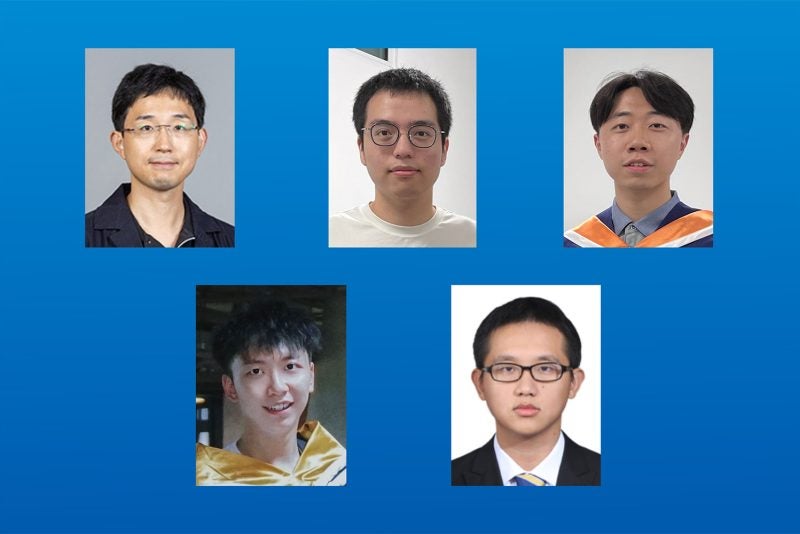
The team:
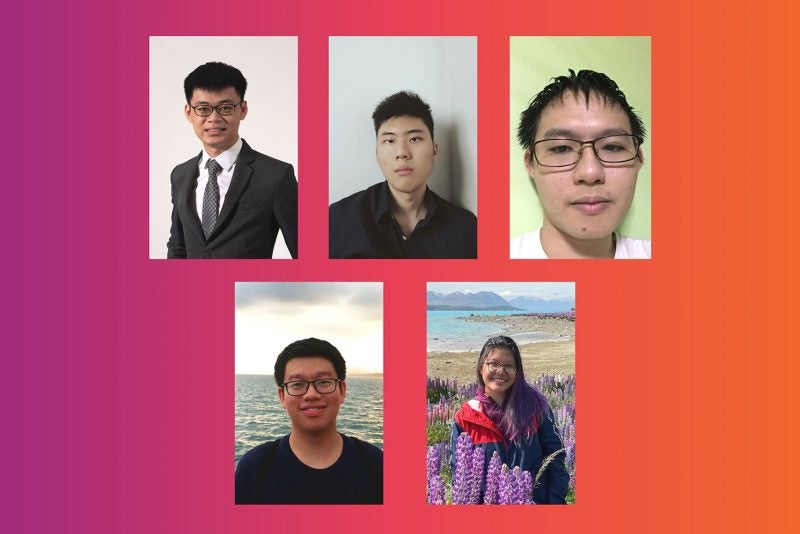
- Muhammad Asyraf Bin Abdul Rahim (Team Lead) – Year 1, Computer Engineering
- Mande Neil Ashvinikumar – Year 1, Computer Engineering
- Lau Zhe Wen – Year 1, Computer Engineering
- Tan Yong Xiang – Year 1, Computer Engineering
- Koh Tze Rui – Year 2, Computer Engineering
- Gabra Shubhan – Year 2, Computer Engineering
- Chan Dong Jun – Year 2, Computer Science
- Joel Chong – Year 2, Computer Science
“We spent most of the 10 weeks rushing to create our competition cluster from scratch, learning everything we could about HPC tools and software, and figuring out our individual strengths,” Asyraf said.
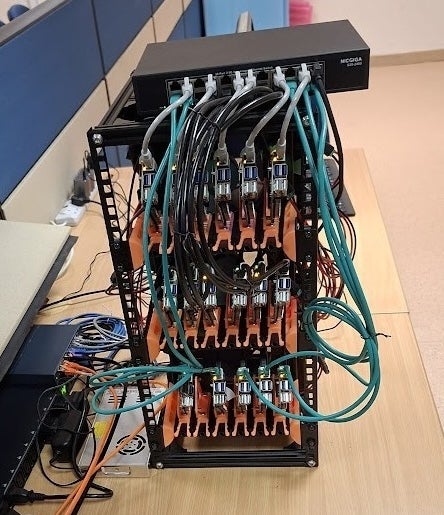
What distinguished them was not simply how quickly they learned, but how they approached the unknown. Without prior exposure to “standard” solutions, they experimented freely. Their cluster design reflected this: an ARM64-based system built on Orange Pi nodes, paired with an unconventional storage configuration combining Intel Optane and NVMe drives. It was not a design inherited from past teams or established practice, but one arrived at through iteration and testing.
That same approach carried into the competition itself.
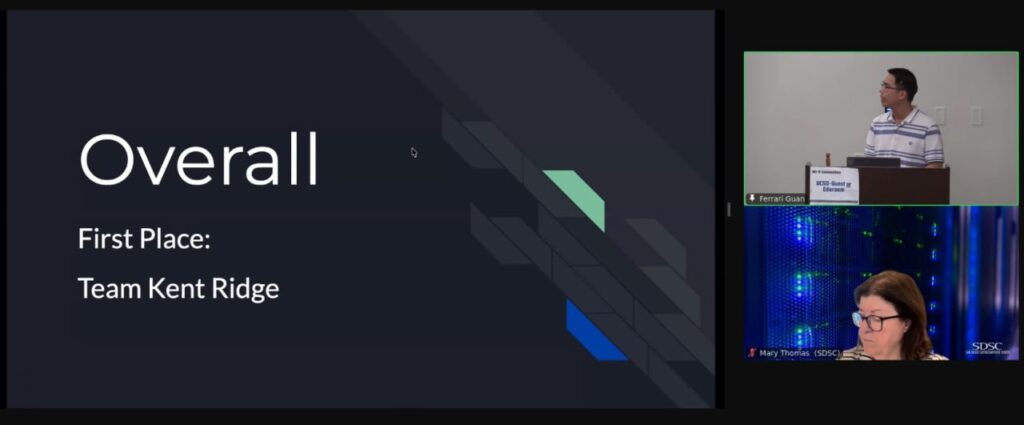
The team delivered consistently strong outcomes across all categories. They placed first in DLLAMA, MDTest, and Systems (joint), second in HPL, and third in the mystery application ICON. Across all six categories, they reached the podium in five, accumulating the highest overall score and securing the championship.
Where 48 Hours Made the Difference
The 48-hour run began with immediate setbacks. “The most stressful time for me was when the storage system mysteriously failed the day before the main competition day,” Asyraf said. “A few of us stayed up through the night to rectify the issue.”
They got it working. Then came the harder part: day two’s tasks included complex applications the team could not fully prepare for in advance. The mystery application, ICON, landed and the team split up on instinct – Dong Jun and Joel on Task 1, Tze Rui, Shubhan, and Neil on Task 2, with Asyraf, Zhe Wen, and Yong Xiang filling in wherever they were needed. They got results just before the deadline.
There was also an interview component on HPC applications, where Zhe Wen presented on IQ-TREE, a phylogenetic analysis tool. He had only started learning the application three weeks earlier. When questioned by the judges on its technical details, he demonstrated a clear and confident understanding, holding his own in discussion despite the limited preparation time. His performance stood out and drew positive attention from the judges.
Where Inexperience Became an Advantage
Their lack of prior experience, far from being a disadvantage, became a defining strength. Without assumptions about what should or should not work, they explored both conventional and unconventional approaches. This willingness to test ideas quickly and adapt under pressure gave them an edge in a competition where flexibility often matters as much as preparation.
“The lack of experience was the biggest differentiator in pushing us ahead,” the team said. “We were keen to explore unorthodox solutions because we were unsure of what works and what doesn’t. We experimented with different ways – conventional and unconventional – which gave us the edge when it came to implementing bleeding-edge ideas.”
What Made It Possible
Part of it was the team’s make-up. Three members – Asyraf, Zhe Wen, and Yong Xiang – came from polytechnic backgrounds, and their hands-on instincts showed when it came to physically building and wiring the cluster. The Computer Engineering students brought electronics skills that mattered as much as any software optimisation.
Two of the team members – Joel and Dong Jun – from Computer Science, were concurrently enrolled in CS3210 (Parallel Computing), and brought with them an emerging understanding of parallel programming models, performance considerations, and the structure of HPC workloads. While their exposure was still at an early stage, it provided a useful conceptual anchor for the team, particularly when approaching unfamiliar applications and reasoning about scalability, resource utilisation, and execution behaviour.
AI tools played a meaningful role in accelerating the team’s progress, and the students were open about how they used them. Tools such as Claude helped streamline cluster orchestration, from configuring Grafana and Prometheus to setting up Ansible and SLURM, and supported rapid exploration of unfamiliar software by identifying performance flags, prototyping code, and generating job scripts. This was not a matter of outsourcing understanding. Rather, AI tools acted as force multipliers, allowing the students to traverse a steep learning curve in a compressed timeframe. They still needed to validate, adapt, and reason about every component they deployed, but with AI assistance, they were able to iterate faster, test more ideas, and respond more effectively under competition pressure.
Continuing the Journey
The team plans to compete at SCC@SC’26 and SCC@ISC’27 next. But rather than returning to SBCC as experienced hands, they want to recruit a new batch of Year 1 students and let them have the same experience.
“We believe that it’s a great experience for freshmen to be a part of, as it teaches core engineering principles and develops problem-solving skills at an accelerated rate,” the team said.
The experience extended well beyond the final result. Over 10 weeks and a continuous 48-hour competition, the students developed practical systems skills that are rarely acquired in such a compressed timeframe. They built and deployed a distributed system, debugged failures under time pressure, optimised performance across hardware and software layers, and coordinated as a team in a high-stakes environment. These are the realities of large-scale systems engineering, encountered not in isolation but as an integrated, lived experience.
The competition’s relatively modest budget – the entire cluster could be funded from existing resources – and a simple office room at NUS Computing, which served as the team’s base, made the whole thing possible without heavy institutional overhead. For Dr Sriram and Dr Cristina, who’d taken a chance on fielding an untested team, the result was a welcome vindication.
Asyraf put it more simply: “It’s better to try than to give up. What we achieved was thanks to the relentless effort of the team despite many setbacks.”