
Designed for the Teacher: How NUS Computing Students Built an AI Tool That Makes Personalised Feedback Scalable
Eu En Wong was tutoring General Paper to a hundred students at one point. He wanted to give each of them proper feedback — the kind that is specific enough to act on, personal enough to land. At that scale, there simply was not enough of him to go around.
That experience became the founding logic of Ren.
“Teachers are buried in marking, so students wait too long for feedback that’s often too thin to act on,” says Natasha Koh, CPO and co-founder of Ren Education. “The most personalised attention goes to the few, not the many.”
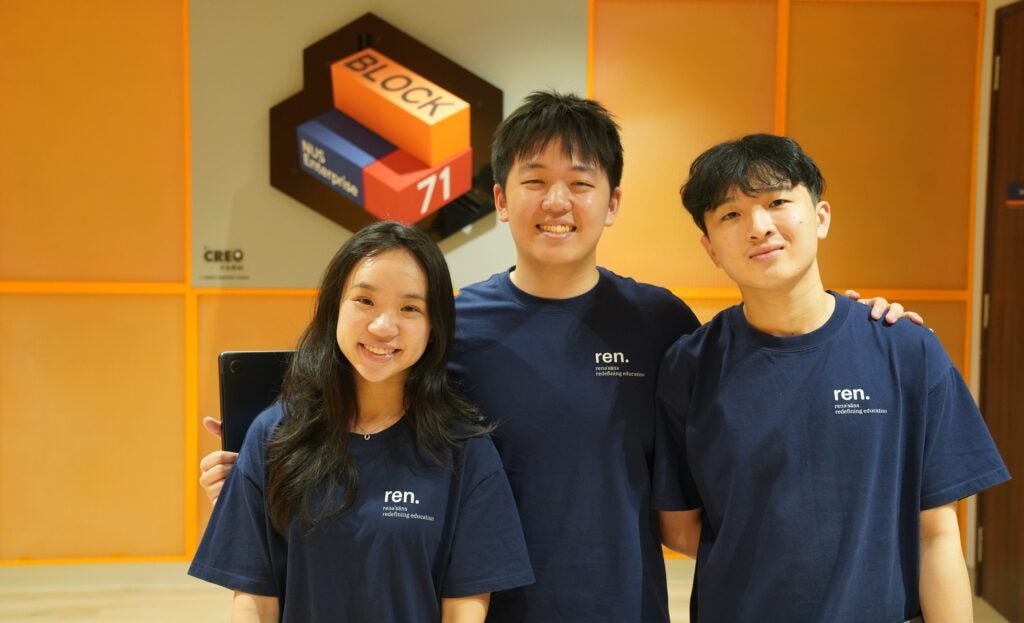
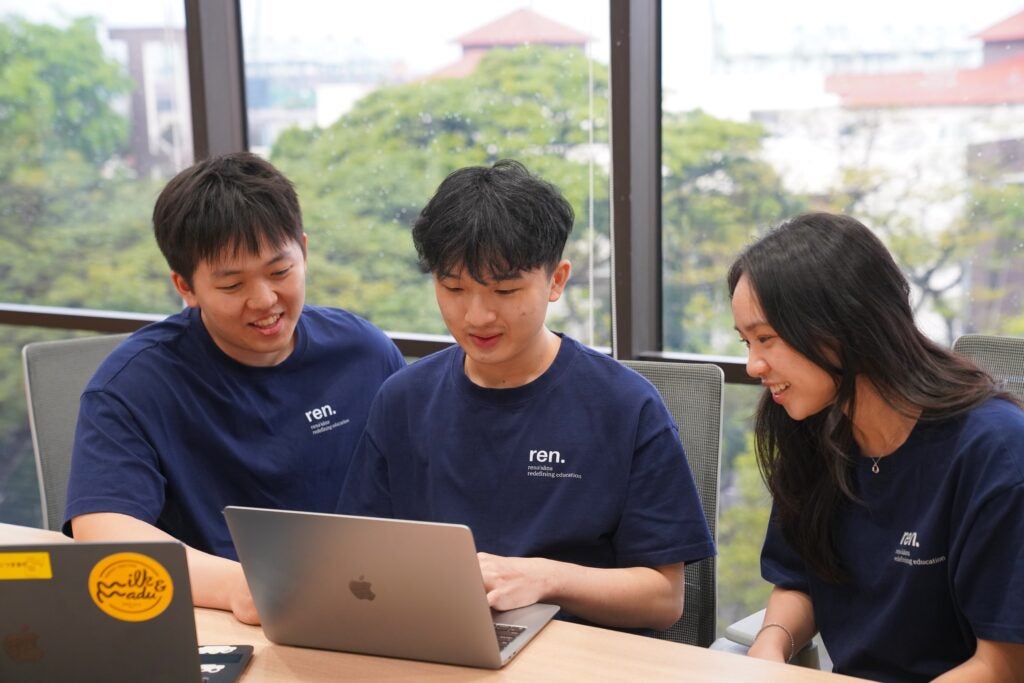
The founding team
Natasha graduated in May 2026 with a Bachelor of Computing in Information Systems. Eu En Wong, the co-founder who first experienced the problem, is a Year 2 Computer Science student, still in school. The third co-founder, Justin Cheah, is in his final year reading a double degree in Computer Science and Business Administration.
Eu En brought Justin in – his friend from junior college – to build a first version. The two of them met Natasha at N-House, NUS Enterprise’s live-in entrepreneurship community. The team won the N-House Pitch Night 2026 Odyssey Track before incorporating Ren in March 2026.
Eu En built the first version with Justin and used it himself.
“It felt transformational – like this was how marking was supposed to work all along,” Eu En said. As more teachers tried it and started reporting hours saved and changes in how they taught, the decision to keep building became easier.
Designed around the teacher
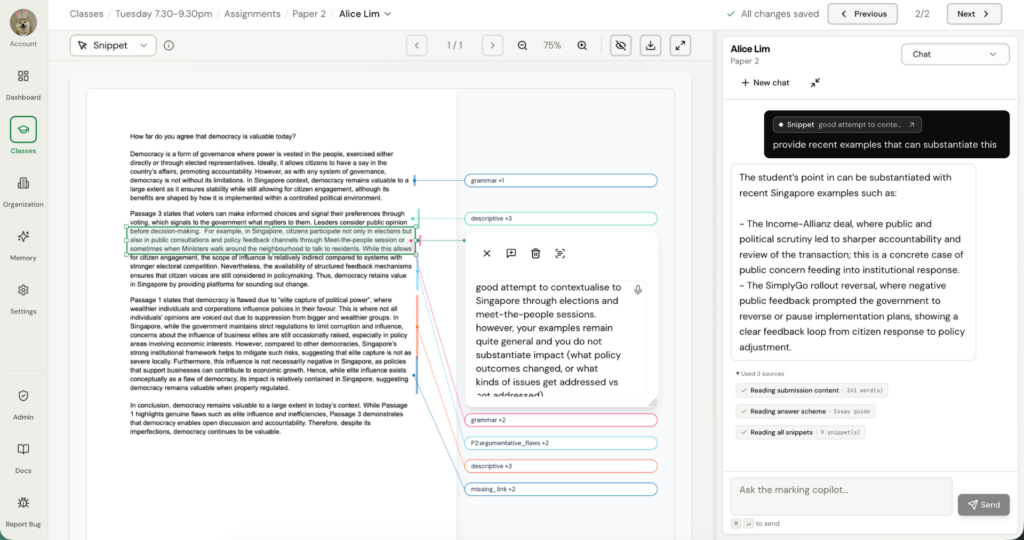
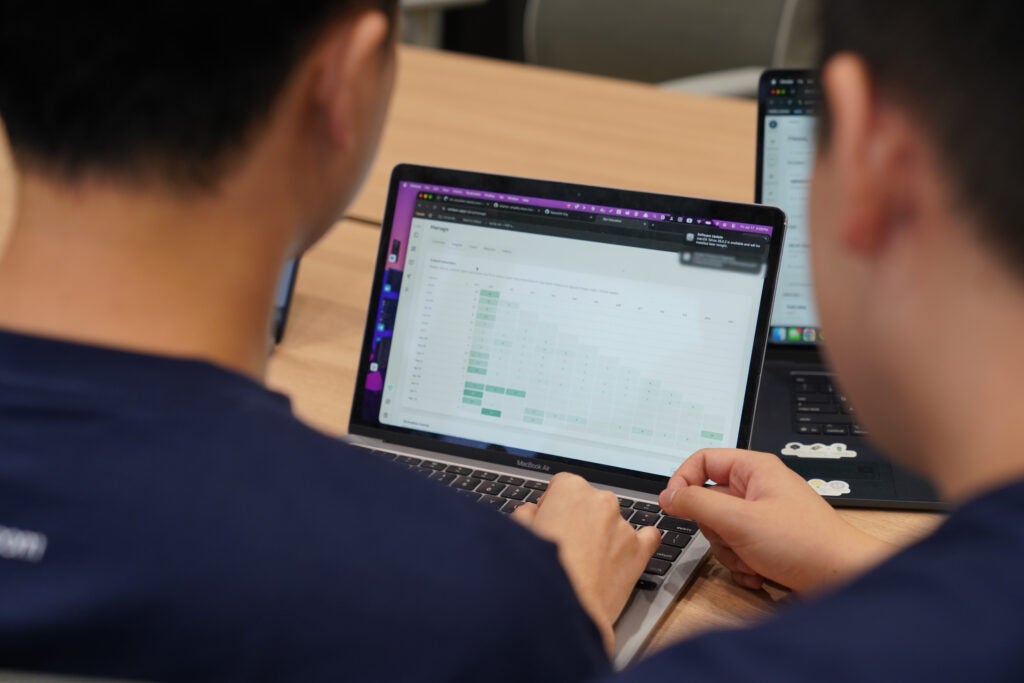
A teacher uploads what they already have – student scripts, an answer scheme, past marked work. Ren drafts marks and personalised feedback for each submission. The teacher reviews, edits, accepts, or rejects before anything is released.
Nothing reaches a student without the teacher’s sign-off.
“If a teacher agreed with Ren on every single script, we’d treat that as a flag, not a milestone,” Natasha says.
The decision to build around existing materials was deliberate. Teachers already have notes, past papers, marked scripts, and answer schemes that encode years of professional judgement. Ren uses those to calibrate to each teacher’s standards and their school’s frameworks. In practice, a teacher typically reviews five scripts to orient Ren to their marking style, then lets it draft the rest of the batch. Every action – edit, rejection, acceptance – becomes a signal that sharpens Ren’s understanding over time.
The workflow also generates analytics: class performance breakdowns, topic insights, longitudinal tracking of individual students. For students, the change is more immediate. They receive specific feedback on their own work, rather than a grade with little context attached.
What teachers said
Many came in expecting to manage the AI closely. Most stopped needing to, faster than they expected.
“They were struck by how closely the drafts matched their own judgement once Ren had learned their style,” the team says.
Grading time among early users fell by around 65% in the first few assignments, and by roughly 80% once Ren had calibrated to a teacher’s preferences, according to Ren’s internal data. On structured work, Ren’s marks align with human graders up to 98.4% of the time. Ren now works with more than 50 educators and 5,600 students across 12 institutions in Singapore, from junior colleges to universities.
Among their earliest institutional partners: Senior Lecturer Lee Boon Kee and the IS1108 module (Digital and AI Ethics), here at NUS Computing.
Beyond the classroom
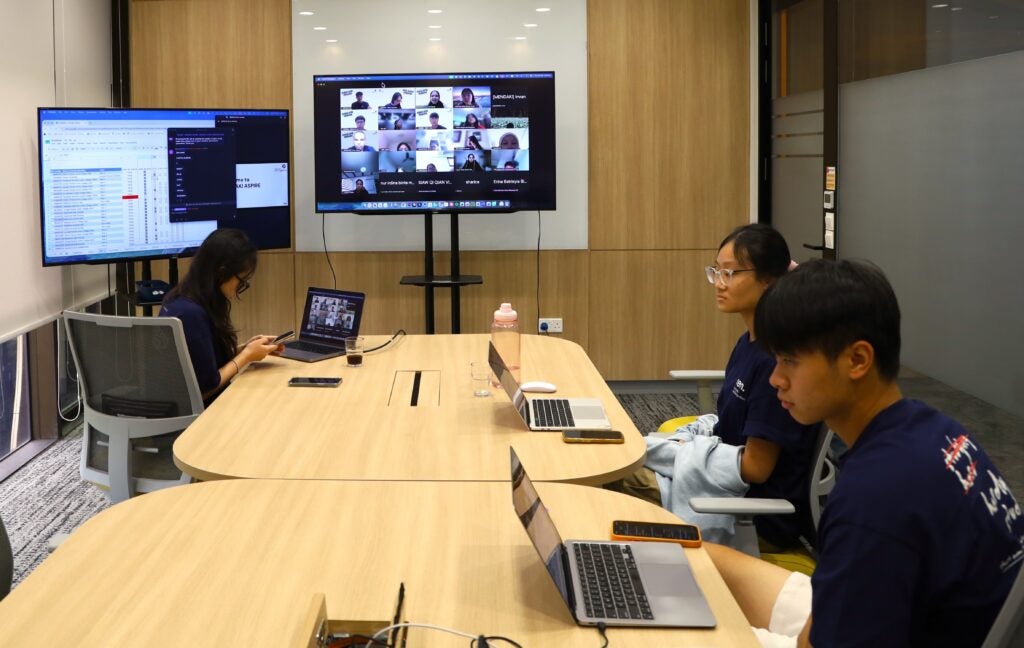
In May 2026, Ren became the learning platform behind MENDAKI ASPIRE, the first JC-level programme run by Yayasan MENDAKI for the Malay-Muslim community, spanning seven A-Level subjects across two runs. The partnership came through a teacher introduction and a conversation that quickly found common ground.
“We believe quality education should be a baseline, not a luxury,” Natasha says. “That shared conviction is what led to Mendaki Aspire.”
Ren is now in advanced discussions with CDAC to bring personalised feedback to their beneficiaries at scale. The challenge is one that community organisations across Singapore know well: classrooms full, qualified tutors stretched thin, and students who still need and deserve meaningful feedback on their work. Ren’s personalisation works from each student’s own submissions, building a picture of that student that persists across classes and tutors over time.
On AI in Education
The team is clear-eyed about where AI sits in the classroom.
“A lot of AI in education either tries to replace the teacher or bolts a generic chatbot onto the side of the classroom,” Natasha says. “That’s also how you end up with teachers rubber-stamping AI output until their own judgement goes rusty.”
Ren’s position is that the teacher’s expertise is the thing worth scaling. AI handles the parts of the process that volume makes unsustainable – the drafting, the consistency, the hours. The decisions stay with the teacher.
What Comes Next
The team is focused on deepening the product and expanding into more schools. They are also looking at harder territory: assessments that have historically been difficult to evaluate well, where the feedback gap is widest.
NUS Computing is part of that future, they say.
“We’d love to bring more university modules on board,” Natasha says. “We’re excited to push into the harder, more human frontiers of assessment.”
Eu En’s original problem – a hundred students, one tutor, and not enough hours to give each of them what they needed – has not disappeared from Singapore’s classrooms. But the team working on it has grown, and so has the ground they cover.







Assistant Professor Yair Zick: Ethics in Artificial Intelligence