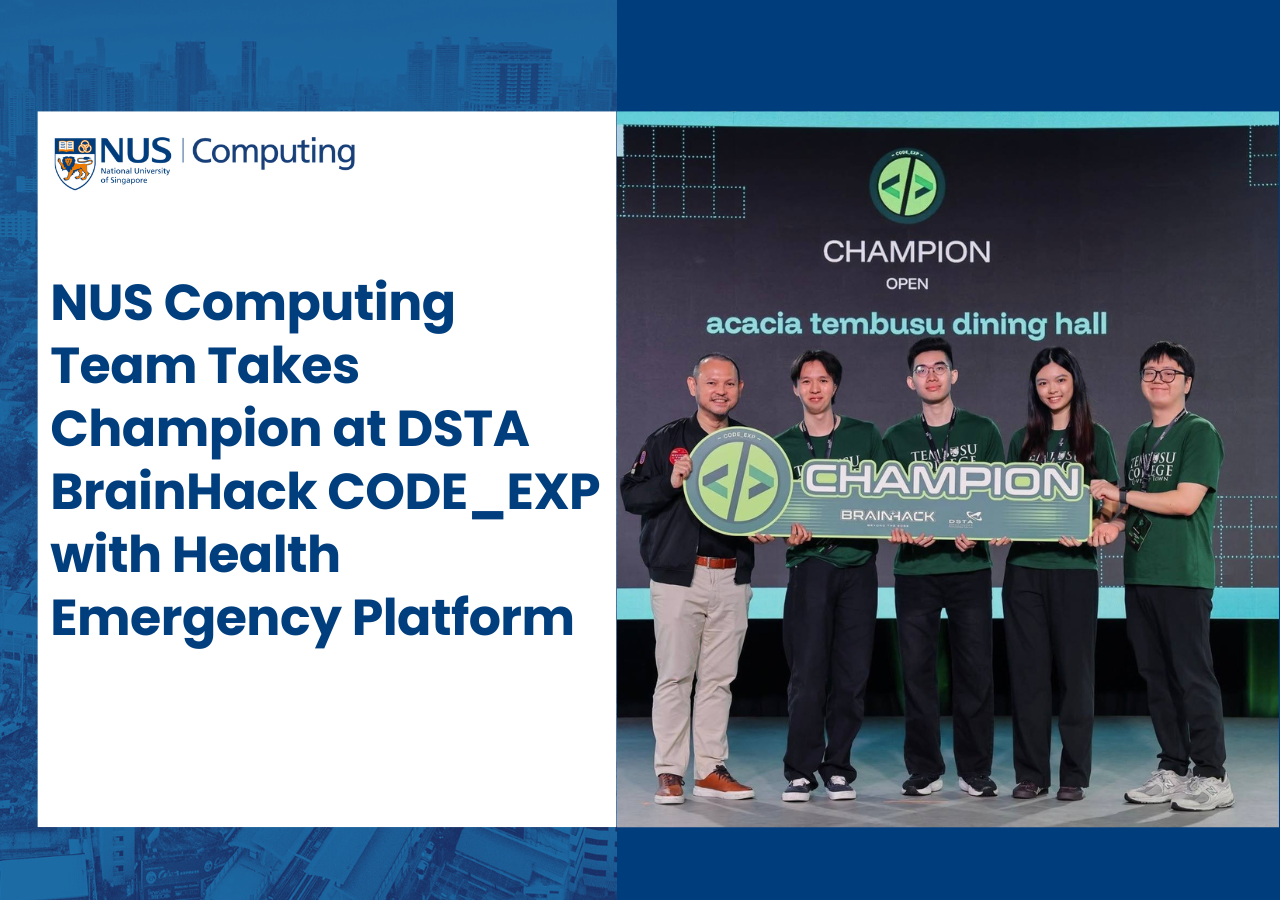
NUS Computing Team Takes Champion at DSTA BrainHack CODE_EXP Open with Health Emergency Platform
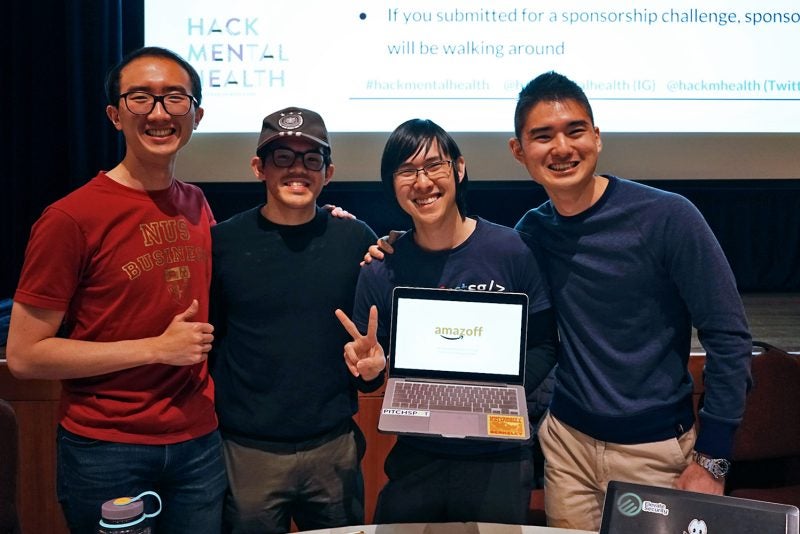
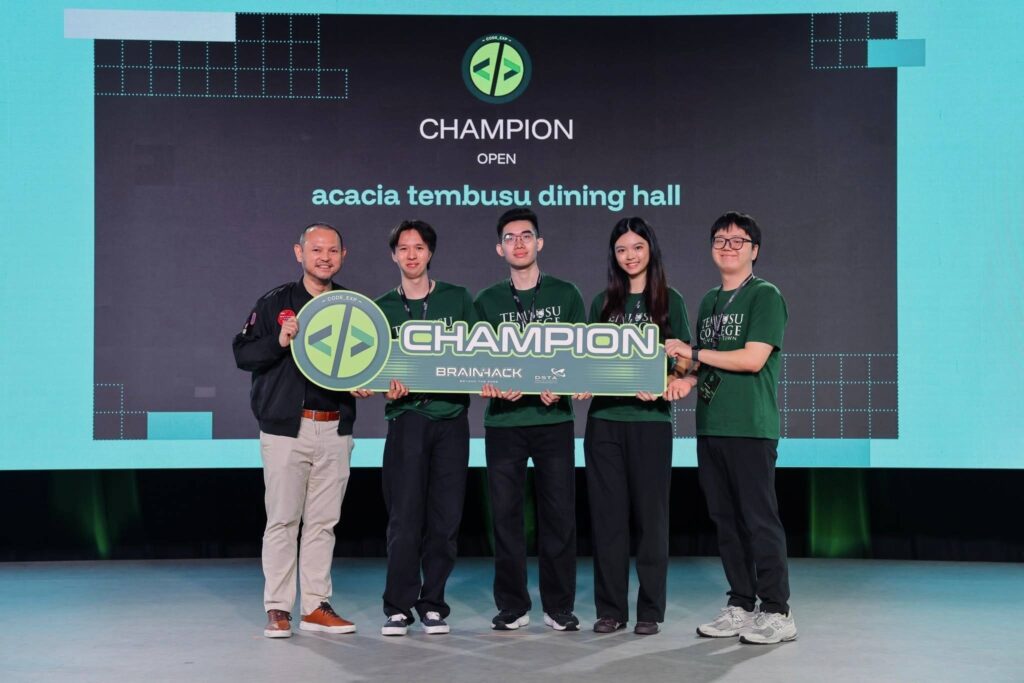
Last year, NUS Computing students Chloe Chua (Year 3, Computer Science), Kang Jie Cheong (Year 3, Business Analytics), Justin Goh (Year 3, Business Analytics), and Wei Jie Chew (Year 3, Computer Science) left DSTA BrainHack CODE_EXP with first runner-up. They registered again, picked a harder problem, and built something bigger.
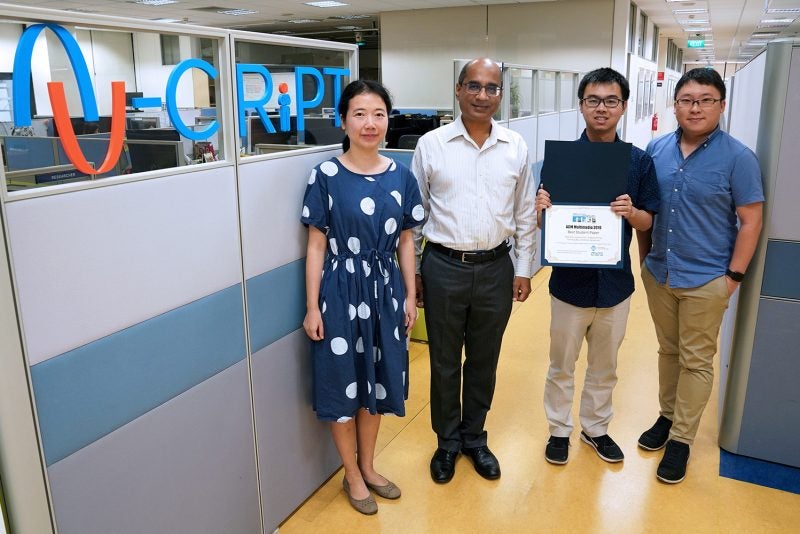
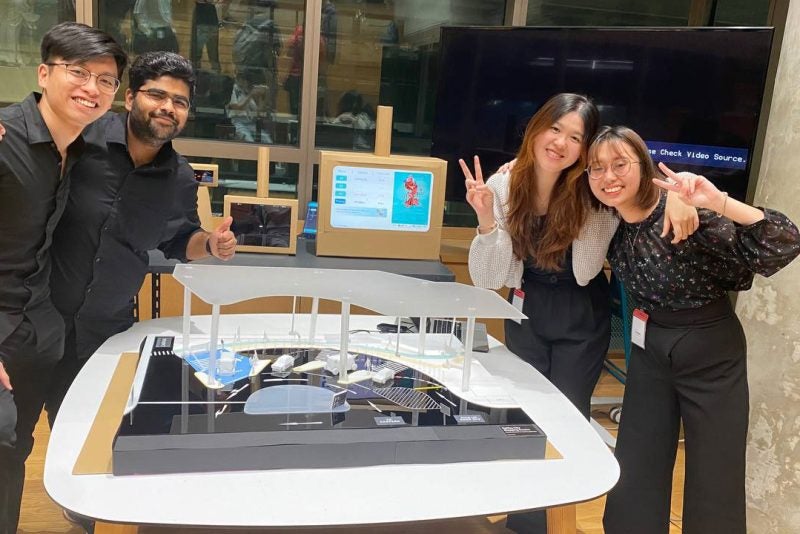
This year, competing as Team acacia tembusu dining hall, they won the CODE_EXP Open championship.
The problem statement asked teams to help Singapore respond faster and smarter during public health emergencies. The team spent their early hours mapping who actually bears the load when a crisis hits. Authorities manage the outbreak. Community organisations coordinate resources. But caregivers of elderly family members – the people closest to the most vulnerable – are often left navigating the response chain without clear guidance, support, or any obvious way to escalate.
ORCA – Outreach, Resource and Caregiver Assistance – was built around that.
The system runs across three integrated platforms.
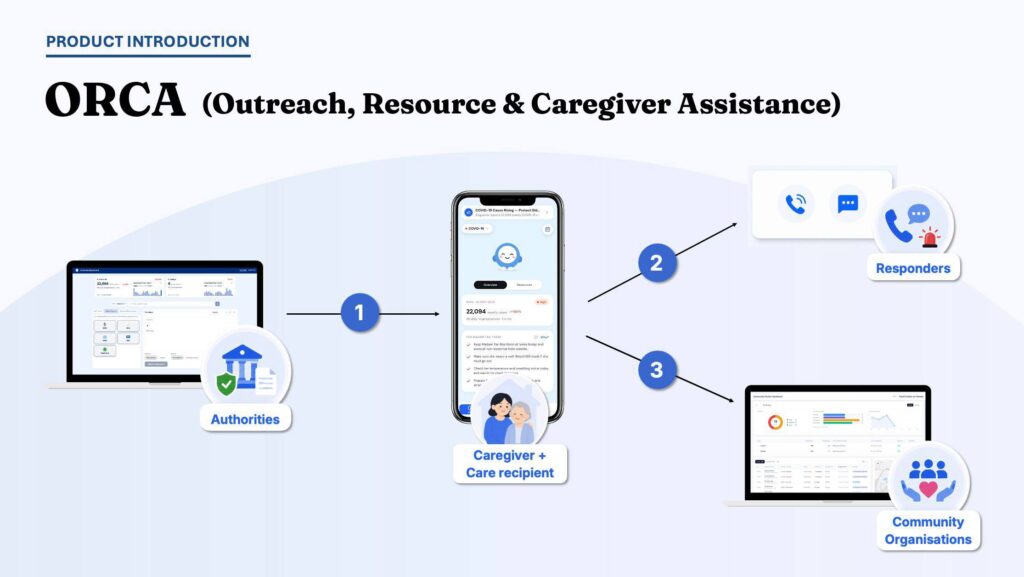
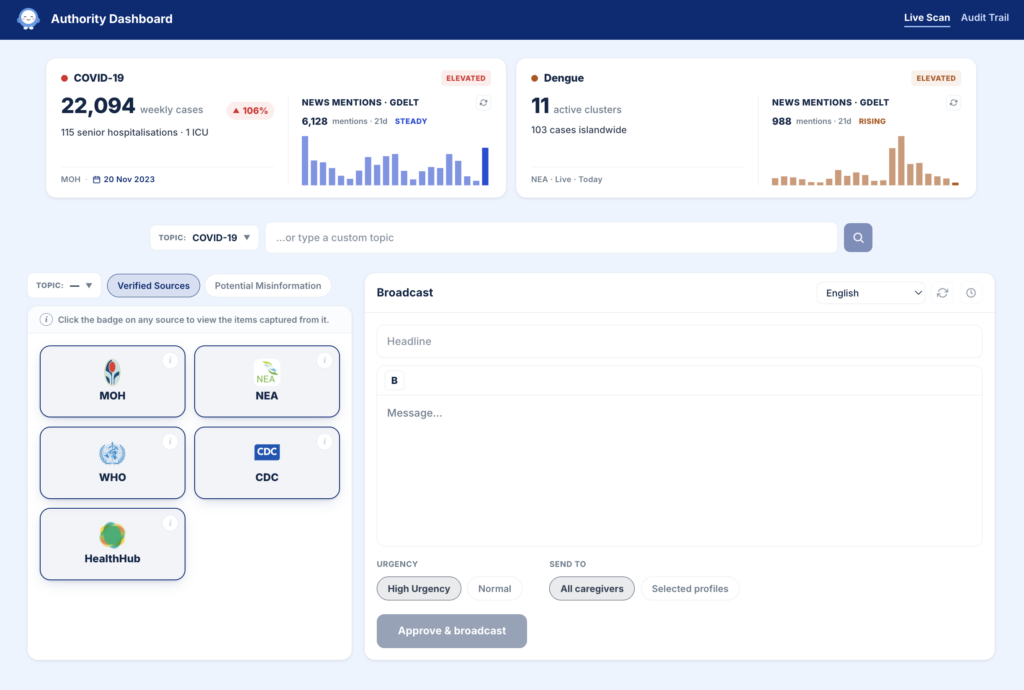
The Authority Dashboard pulls live outbreak data and rising media signals via GDELT, flags potential misinformation, and enables targeted multilingual advisories to be broadcast to specific caregiver profiles.
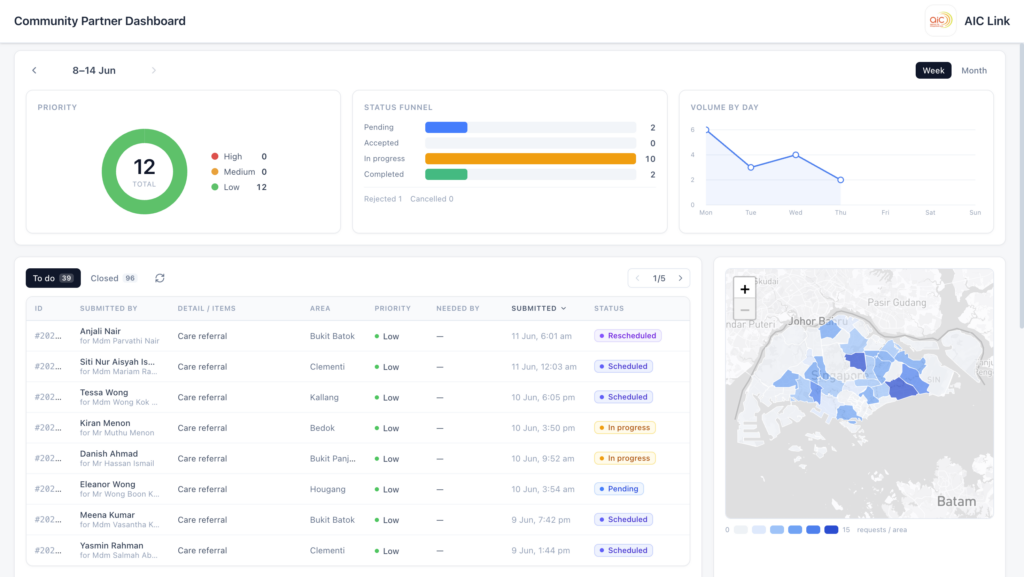
The Community Partner Dashboard gives ground-level organisations a live picture of support requests, inventory levels, and manpower, with a heatmap showing where demand is concentrated.
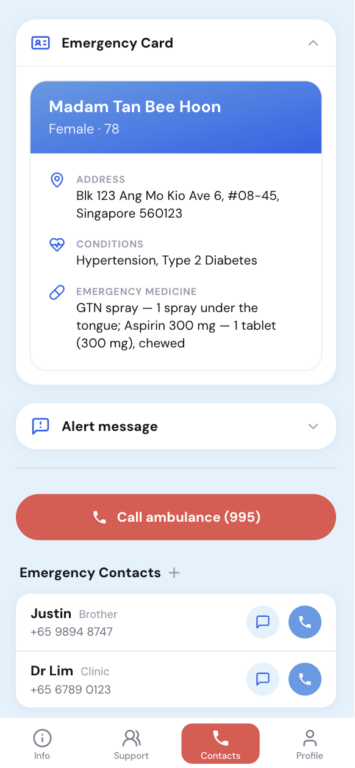
The Caregiver Web App sits at the centre – taking official guidance and translating it into personalised, actionable steps for whoever is doing the caring.
Three platforms was an ambitious scope for a hackathon, and the team considered pulling back. But as Chloe explains, the fragmented flow of information between different parties was the core issue, and a system built around only one stakeholder group would not have solved it.
Inside the caregiver app, they built offline compatibility through Progressive Web App support and multilingual access across seven languages – practical decisions rooted in the reality that stable connectivity and English fluency cannot be assumed during a crisis.
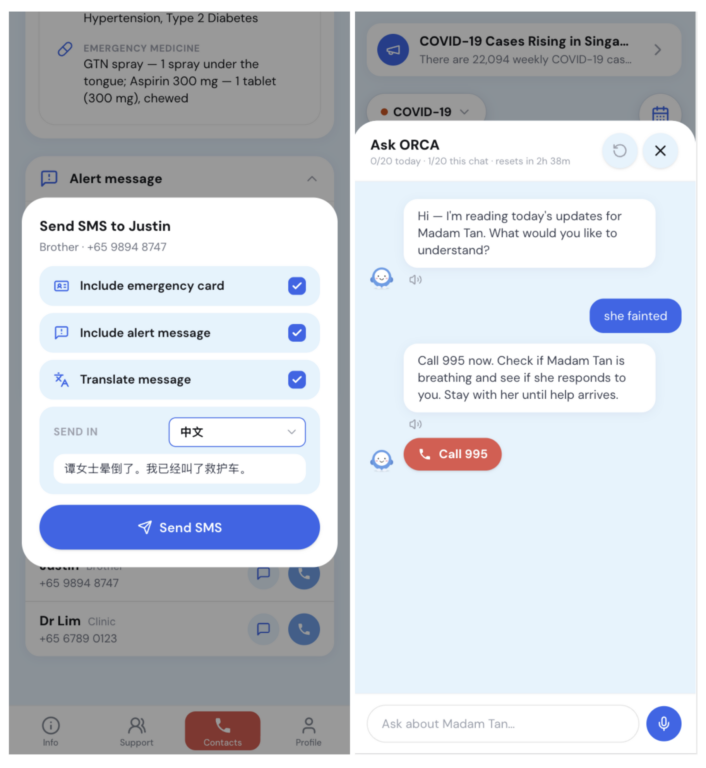
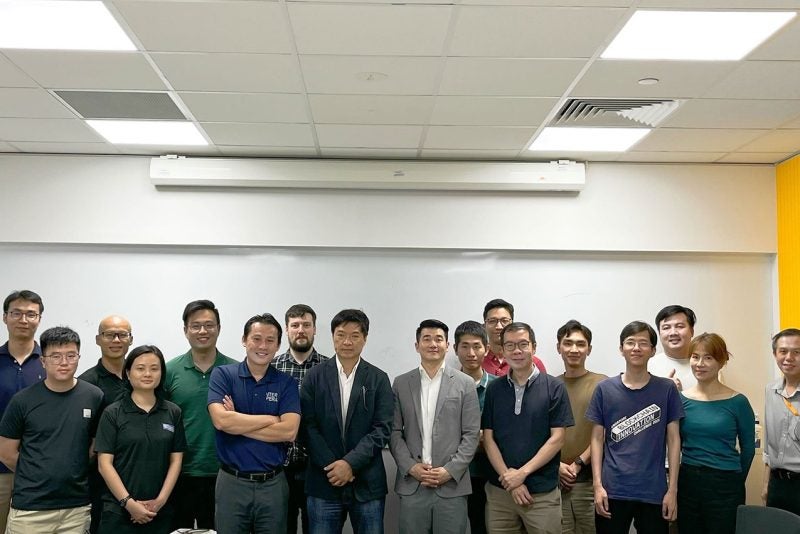
At the competition, Team acacia tembusu dining hall had five minutes to walk judges through all three platforms and make the full stakeholder journey legible. The judges noted, among their feedback, that caregivers are a particularly underserved group in emergency response planning.
Compared to their first CODE_EXP run, the team pushed further on the technical side – integrating OpenAI, Google BigQuery, GDELT, data.gov.sg, OneMap, and Mapbox into a system built to reflect real-world conditions rather than a contained demo environment. The attention to user experience and flow they had developed the year before carried over.
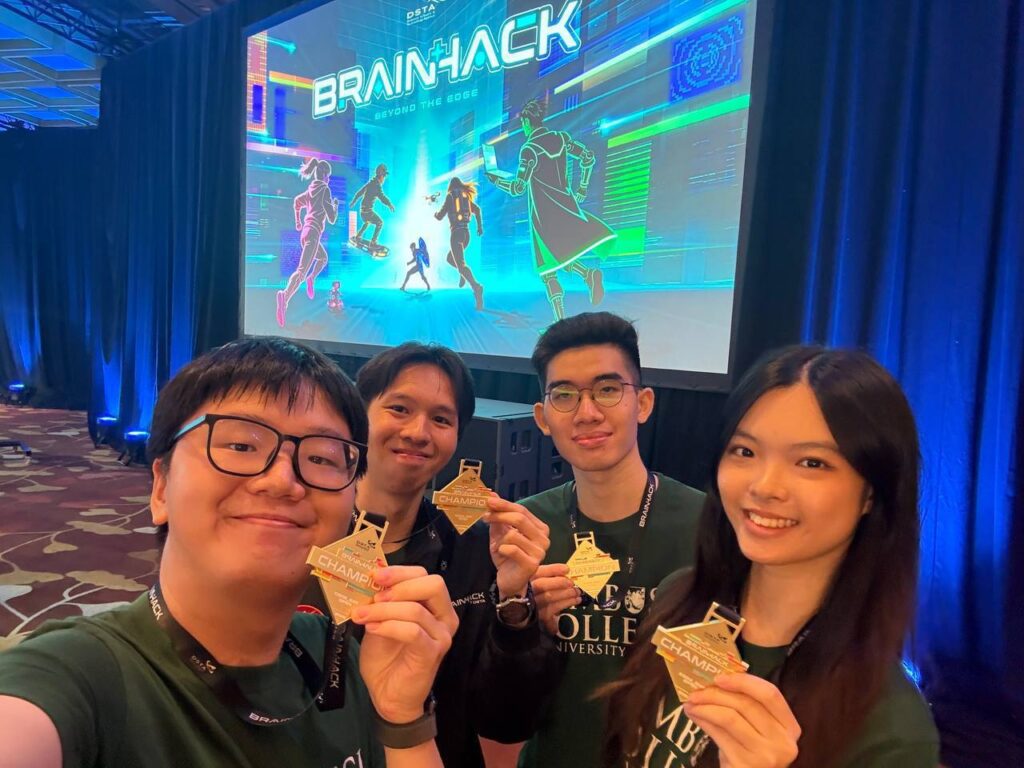
The team is already mid-transition. Chloe and Kang Jie have left for NUS Overseas Colleges in Shenzhen, Justin heads to Washington for the Student Exchange Programme, and Wei Jie, to Waterloo.
ORCA stays behind as a prototype – one the team hopes to develop further with input from caregivers, community partners, and people working in emergency response.