Teaching in the Age of AI: Inside Three NUS Computing Projects Rethinking What AI Leaves for Teaching to Do
When Assistant Professor Yi-Chieh Lee looked at what a computer science degree actually trains students to do, he found that generative AI could already perform many of the programming tasks students spend years learning. His work is one of three efforts at the NUS School of Computing to work out what AI leaves for teaching to do. Elsewhere in the school, researchers are using AI simulations to let students rehearse difficult conversations before they meet them for real, and building short-form courses for adults studying around a full-time job.
Teaching what to build
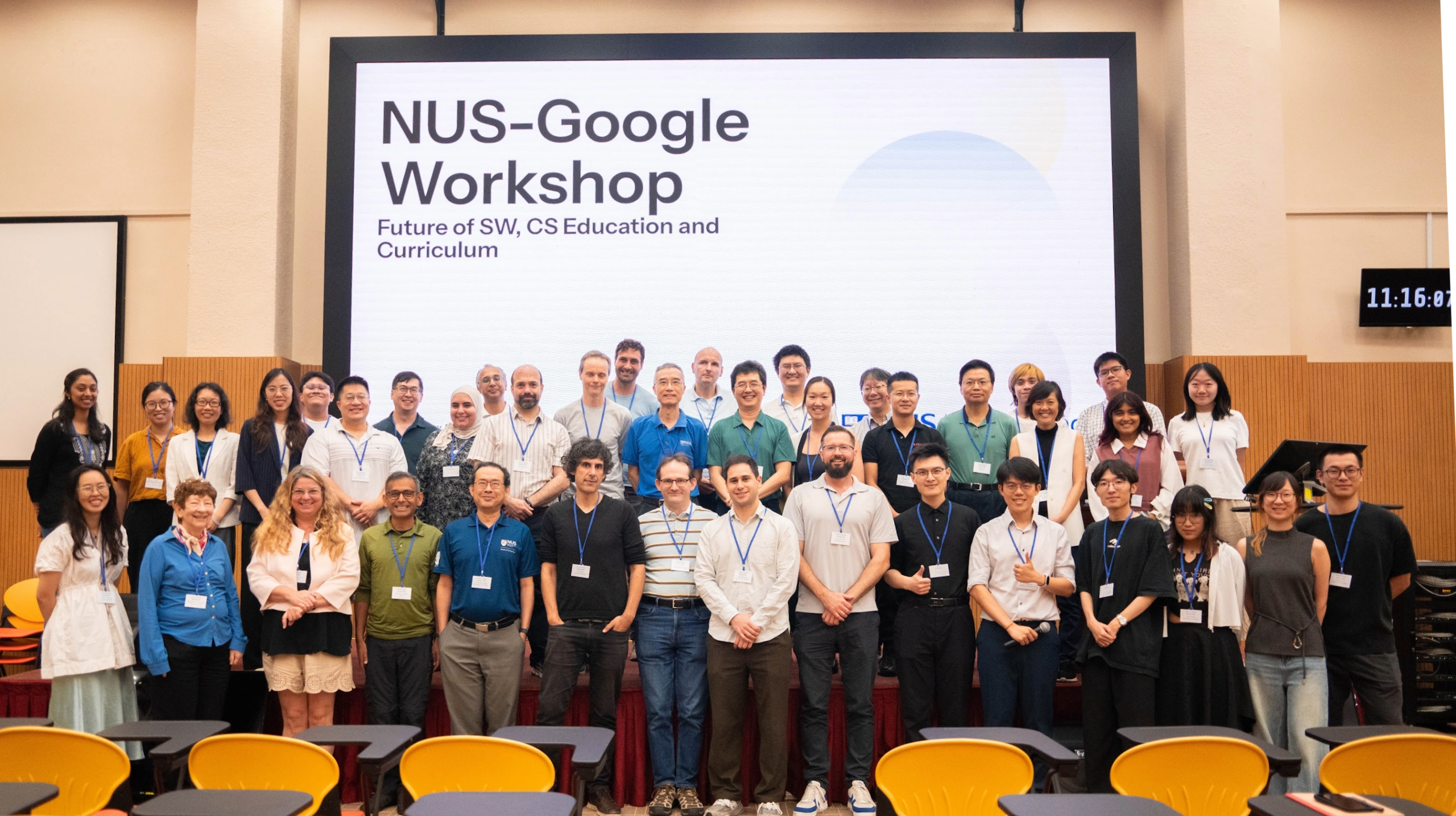
Asst Prof Lee put his answer into a white paper, Reshaping Undergraduate Computer Science Education in the Generative AI Era, developed with Google through a series of international workshops with faculty, industry practitioners, and students. It argues for greater emphasis on the judgement surrounding the use of AI: deciding what is worth building, evaluating whether an AI-generated solution holds up, and determining who is accountable when it does not.
A few workshop attendees have since started internal conversations at their own institutions about redesigning their curricula, using the paper’s criteria as a starting point. Asst Prof Lee is careful about what can be concluded from that. “These are early stage deliberations rather than adopted reforms,” he said, “deliberately so, since the paper itself argues for validation before wholesale change.”
The paper also identifies limited industry input as a gap in its current evidence. After the team shared it with industry partners, several expressed interest in collaborating, giving the researchers a route to bring more industry perspectives into the next stage of work.
For now, the paper focuses on computer science. Asst Prof Lee and his collaborators are using the discipline to develop and test criteria for AI competency and AI-native skills, with the longer-term aim of examining whether the framework could apply more broadly.
Practising the hard conversation
Associate Professor Ben Leong’s team is using AI to give students more opportunities to practise situations they may eventually face outside the classroom. ScholAIstic, developed by NUS’ AI Centre for Educational Technologies (AICET), has been used in courses including law, nursing, social work, and dentistry. AICET built the platform; each partner faculty shaped the scenarios and content for its own students.
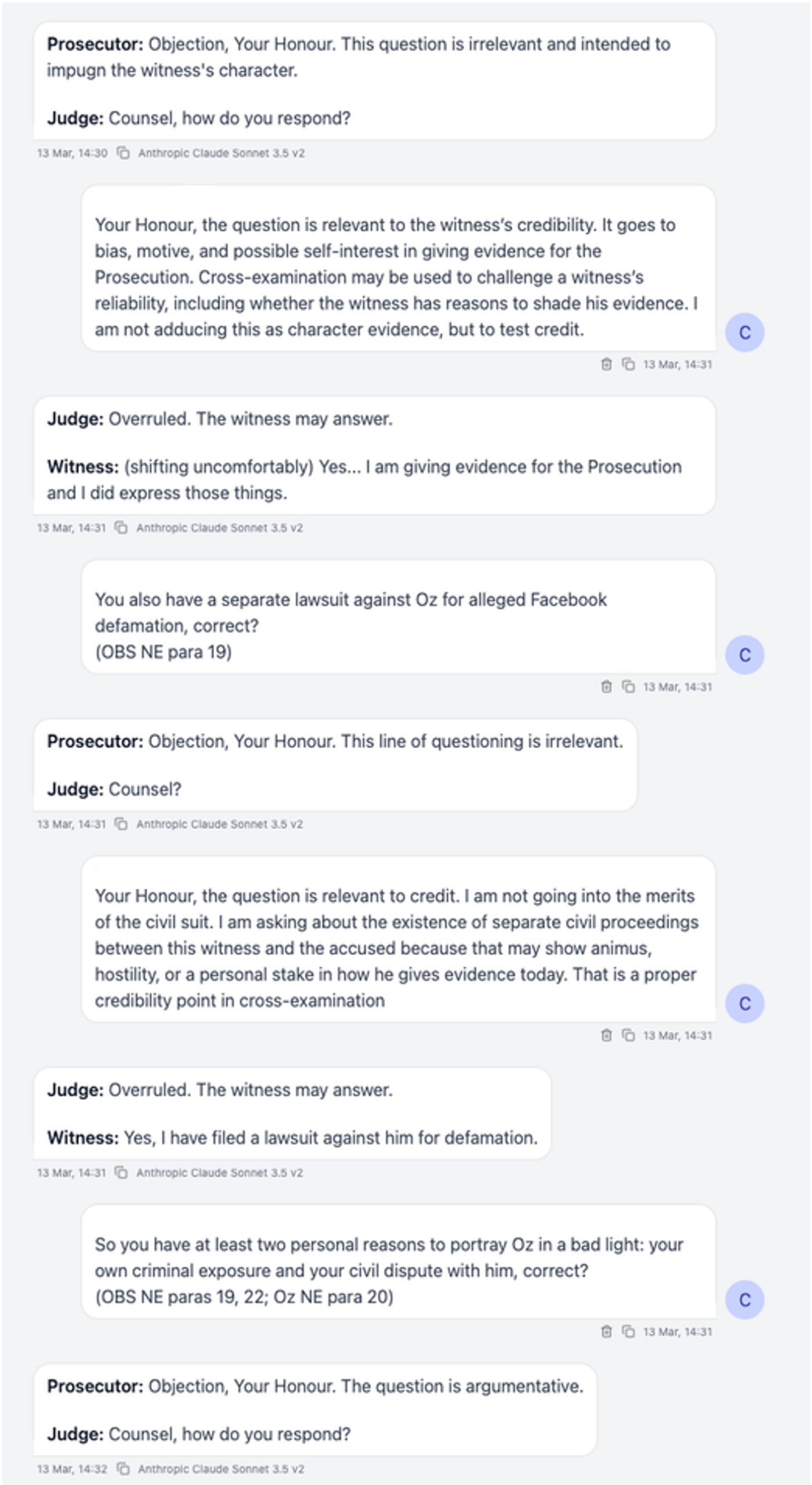
In law, ScholAIstic allows students to practise trial advocacy through simulated courtroom scenarios. Students act as defence counsel, cross-examining AI witnesses that may respond evasively or defensively, while other AI roles, such as the judge and opposing counsel, intervene where appropriate. This gives every student repeated opportunities to develop questioning sequences, identify inconsistencies, and adapt their approach in real time. More than 85% of students rated the chatbots’ usefulness four out of five or higher, with many highlighting the realism of the experience.
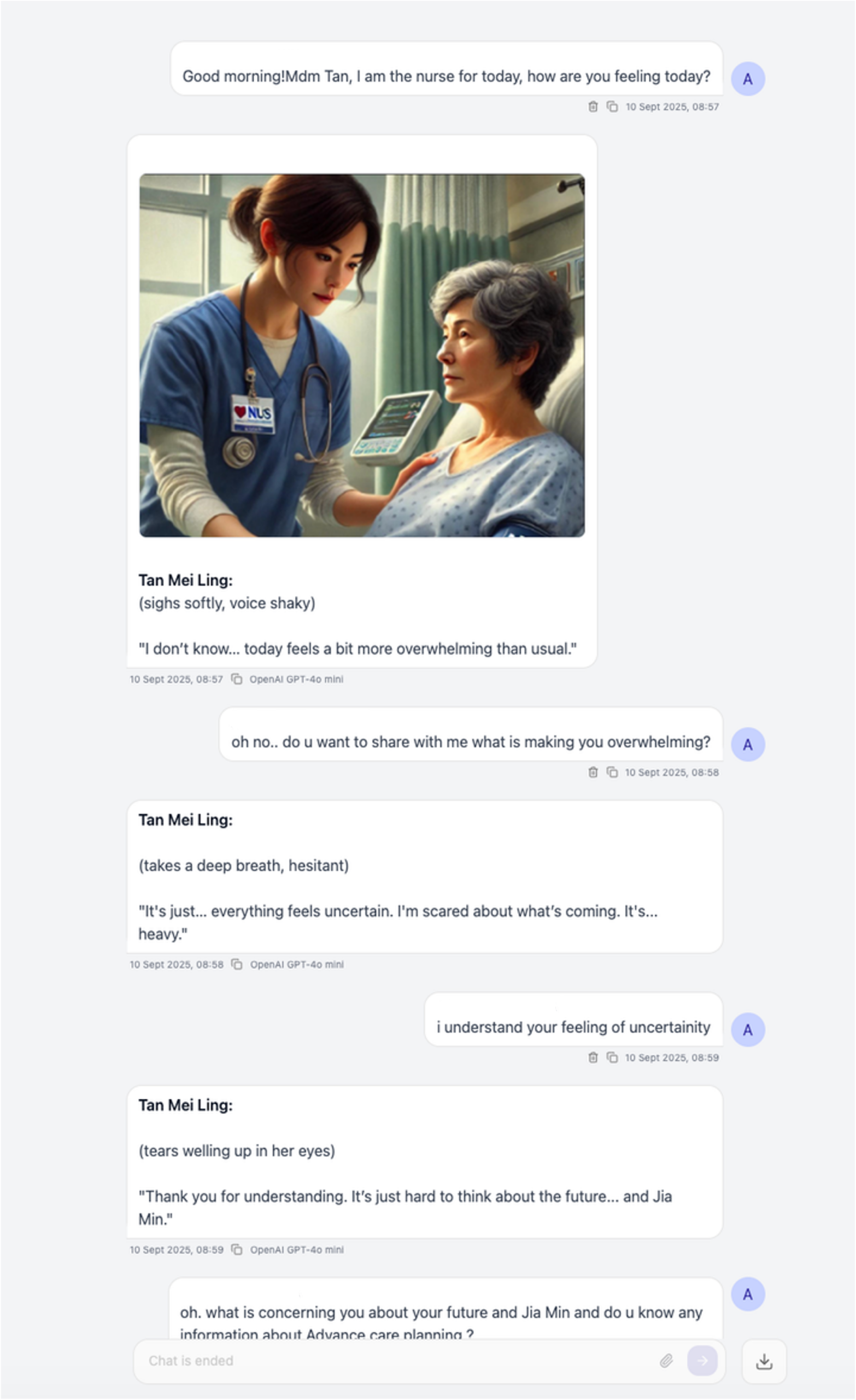
For nursing students preparing to work with terminally ill patients, a chatbot simulated a patient’s emotional responses while an AI evaluator gave structured feedback based on a recognised communication framework. Students could work through conversations they would eventually have with real patients before entering a clinical setting. The simulation was highly rated for realism; instructors also observed increased engagement, especially among the quieter students in the room.
In Social Work, ScholAIstic gives students repeated opportunities to respond to different client situations. Its client scenarios, developed in collaboration with NUS Social Work, simulate clients with complex needs, allowing students to practise communication, empathy, and decision-making. In dentistry, the platform is used as a tutor, guiding students through learning activities and providing personalised feedback.
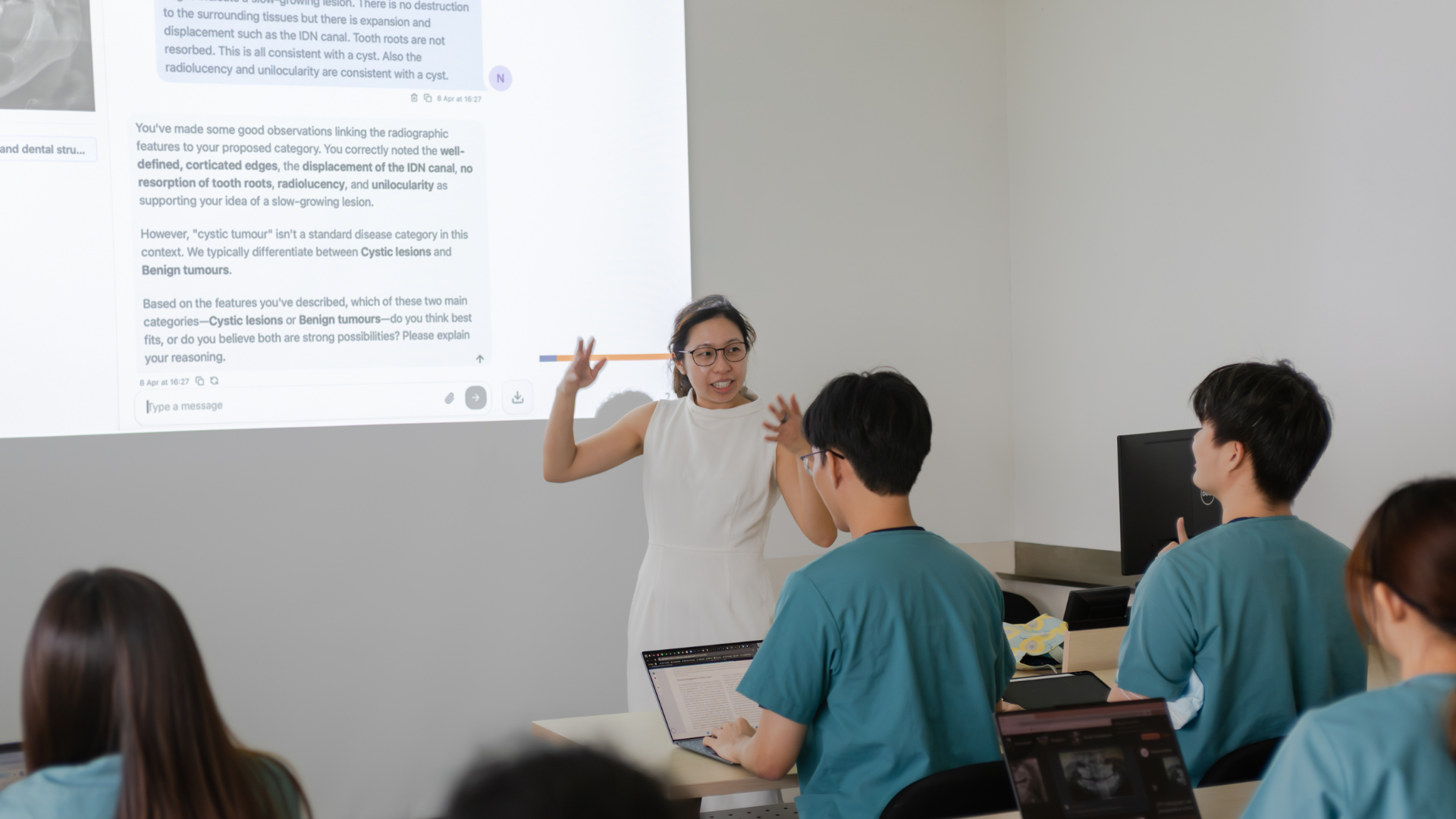
Since its 2024 launch, ScholAIstic has supported more than 20 courses and reached over 2,400 learners across 15 disciplines at NUS, from law to social work to healthcare. The platform won the OpenGov Asia Recognition of Excellence Award in May 2026.
Reaching the learner off campus
At NUS Centre for Holistic Inquiry into Lifelong Learning (CHILL), Associate Professor Suranga Nanayakkara’s team works on Continuing Education and Training, aimed at people trying to fit upskilling around a full-time job and everything else that comes with one.
Their platform, SPARK, breaks conventional course material into short, narrative-driven video modules delivered through a standalone app.
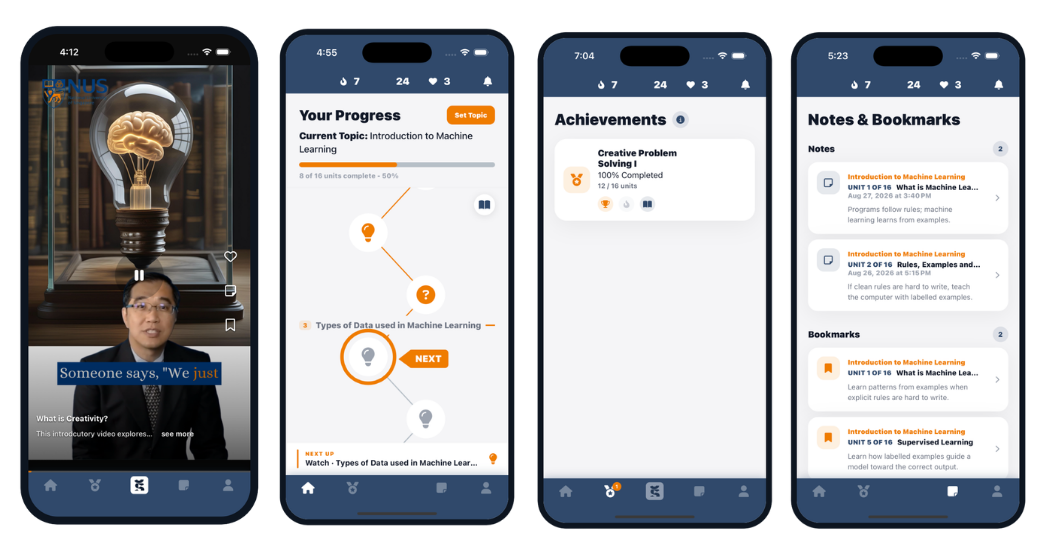
The structure behind it – a proprietary framework the team calls MELD (Microdrama-Enhanced Learning Design), with a provisional patent filed through NUS’ Technology Transfer and Innovation office – takes its cues from short-form drama: each module opens with a hook, builds a moment of tension, delivers its content, then ends on a cliffhanger meant to pull the learner back for the next one.
Across NUS Computing, AI is treated as part of how teaching itself works. All three projects are still gathering evidence, and none claim to have settled what AI-era teaching should look like. But they share a starting point: that judgement, communication and adaptability – the things that AI still cannot do for a student – are becoming the actual substance of a computing education, not a soft add-on to it.