NUS Computing Graduates Among Singapore’s Highest Earners
and Most Employable, GES 2025 Shows
Graduates from the NUS School of Computing (SoC) continue to rank among the most employable and highest-earning fresh graduates in Singapore, according to the 2025 Joint Autonomous University Graduate Employment Survey (JAUGES).
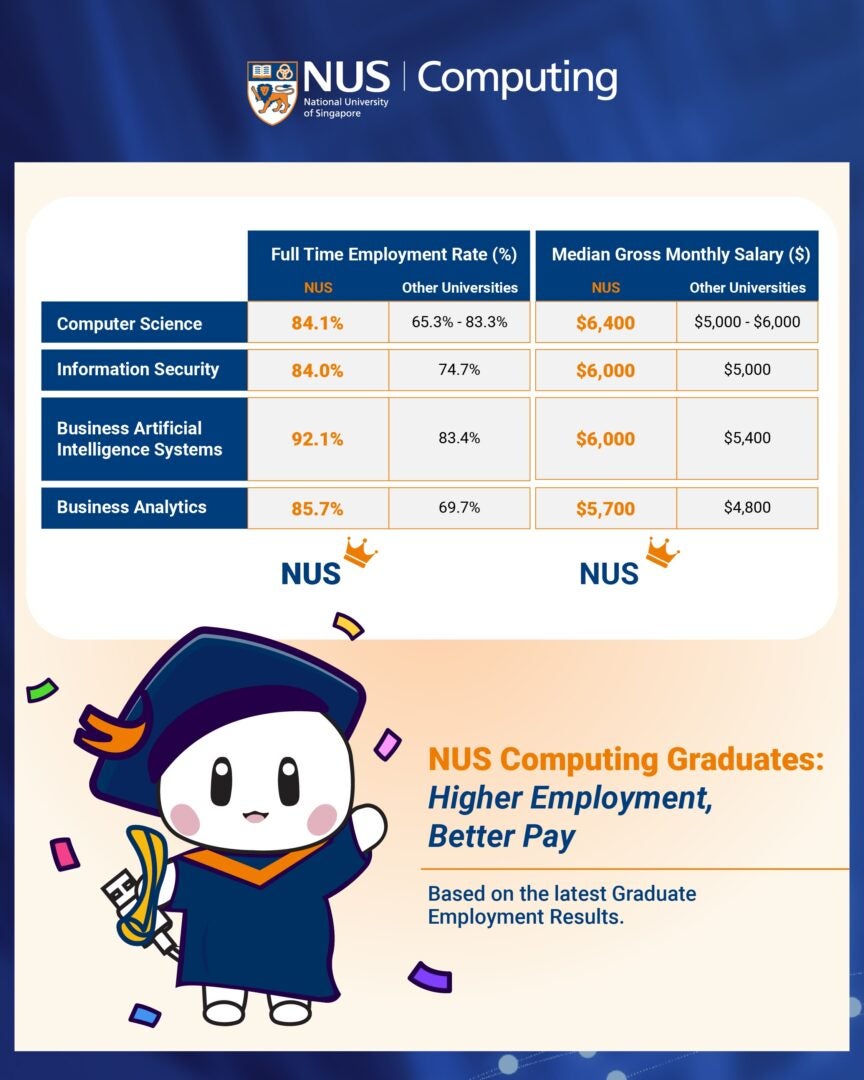
Across all four undergraduate programmes – Business Analytics, Business Artificial Intelligence Systems (previously known as Information Systems), Computer Science, and Information Security – more than 88% of graduates secured employment within six months of completing their final examinations, with full-time permanent employment rates ranging from 84% to 92%.
Salaries that reflect industry demand
The salary outcomes speak to sustained, strong employer demand for computing talent in Singapore’s economy.
Computer Science graduates recorded a median gross monthly salary of S$6,400, while Business Artificial Intelligence Systems and Information Security graduates earned medians of S$6,000 each. Business Analytics graduates came in at S$5,700 – among the highest figures recorded across NUS programmes.
Across all four programmes, median gross monthly salaries ranged from S$5,700 to S$6,400, reflecting both the breadth of career pathways available to computing graduates and the depth of employer confidence in what they bring.
A rapidly evolving industry – and graduates ready for it
The results come at a time of significant change in the technology sector, as organisations accelerate their adoption of AI and recalibrate their talent needs accordingly. The fact that SoC graduates continue to command strong outcomes in this environment speaks to an education designed not just for today’s roles, but for the ones still taking shape.
NUS Computing has been deliberate in keeping pace. In March 2026, the School announced a collaboration with OpenAI to deepen the integration of advanced AI technologies across its curriculum. Across more than 70 undergraduate courses, students work with a range of advanced AI tools, building practical AI fluency without losing sight of the computing fundamentals that underpin it all. This approach equips students with both the technical skills and the adaptive mindset needed to thrive in the rapidly evolving world of AI.
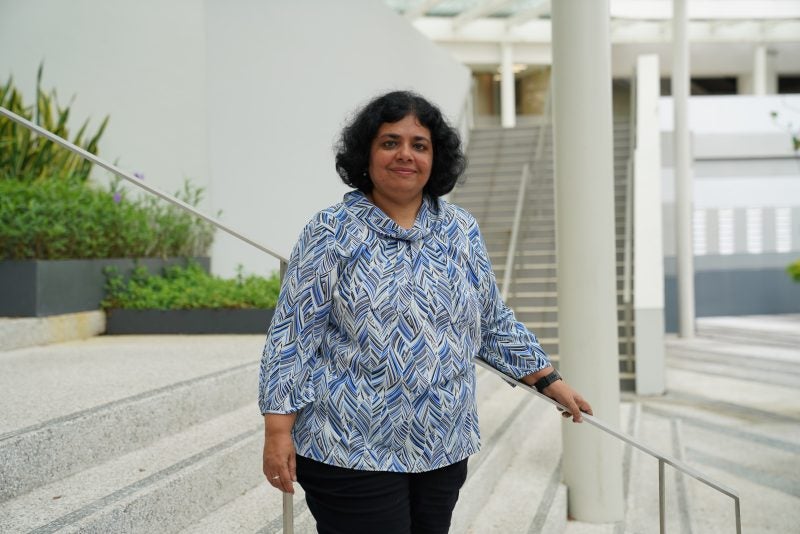
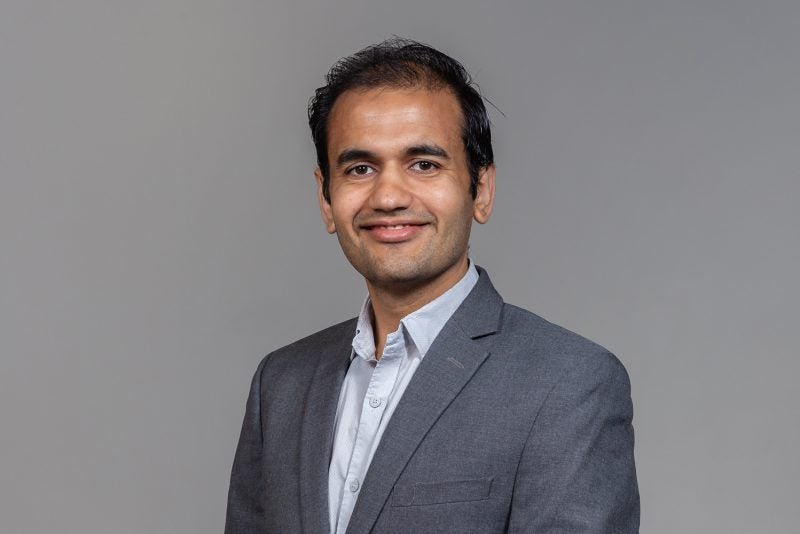
Professor Tulika Mitra, Dean of NUS Computing, emphasised: “Even as AI reshapes the technology landscape, strong computing fundamentals remain essential. Mathematical foundations, algorithms, and systems thinking form the grammar of computing. At NUS Computing, we build on these enduring foundations with hands-on experience using advanced AI technologies — so our graduates develop strong practical AI fluency and are equipped to design, build, deploy, and lead the next generation of intelligent digital systems.”
Looking ahead
As Singapore deepens its investment in digital infrastructure, AI governance, and technology-led economic growth, the demand for computing talent is expected to grow – not just in headcount, but in the complexity and seniority of roles on offer.
NUS School of Computing remains committed to producing graduates who are technically excellent, ethically grounded, and ready to lead in a world being remade by technology.
The 2025 Graduate Employment Survey was jointly conducted by NUS, NTU, SMU, SUTD, SIT and SUSS. Employment rates refer to graduates employed approximately six months after completing their final examinations.