Building an AI-Powered Operating System for the Gym Floor:
Two NUS Computing Graduates Rethinking How Fitness Businesses Run
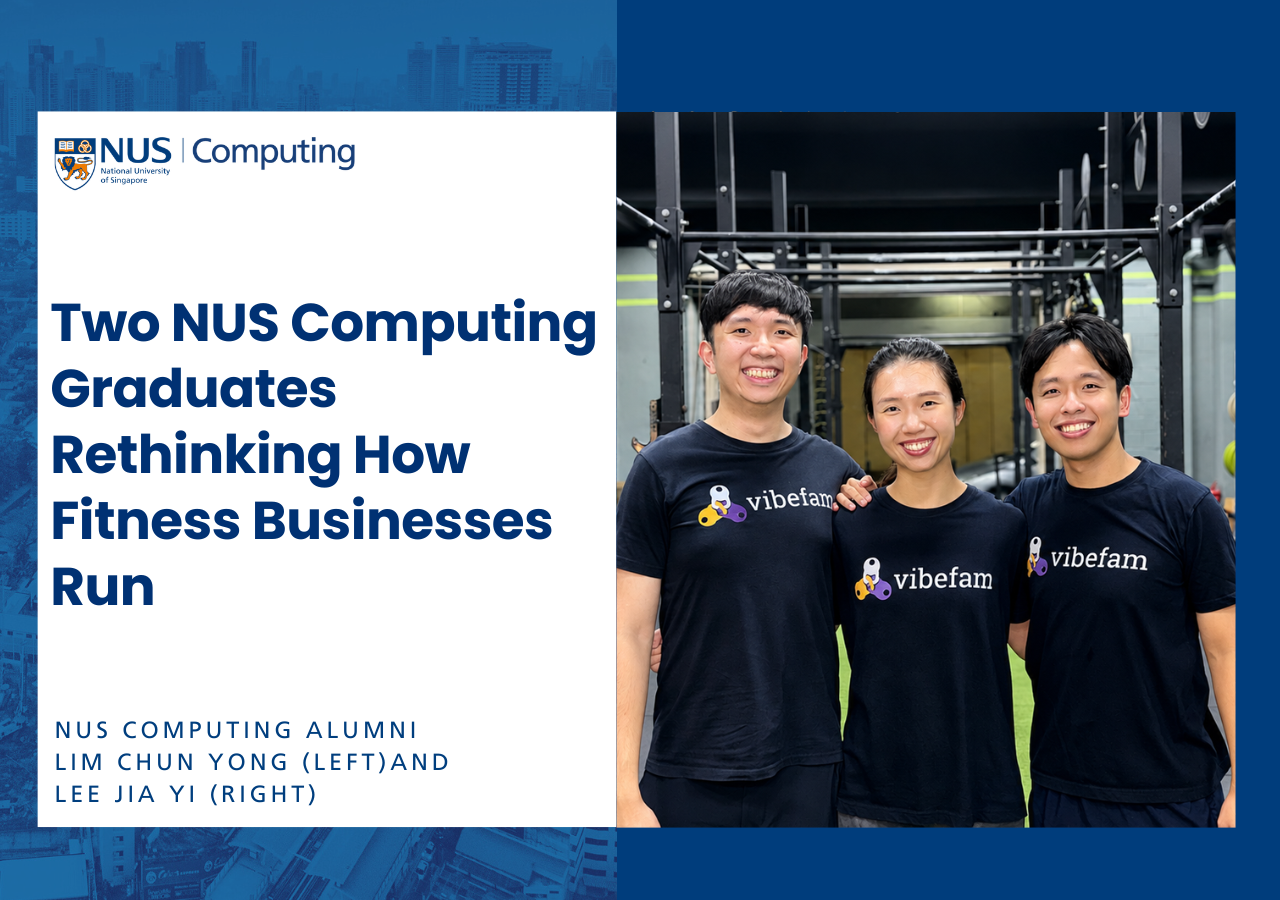
Two NUS Computing alumni co-founded Vibefam, a platform now powering 700+ fitness locations worldwide. In June 2026, the company closed a US$1 million seed round to accelerate its next chapter.
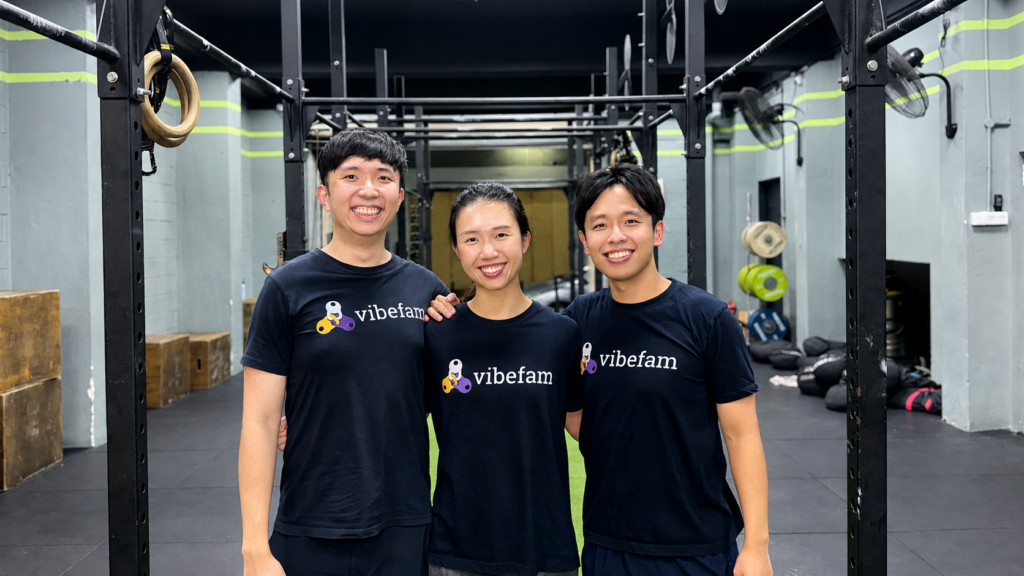
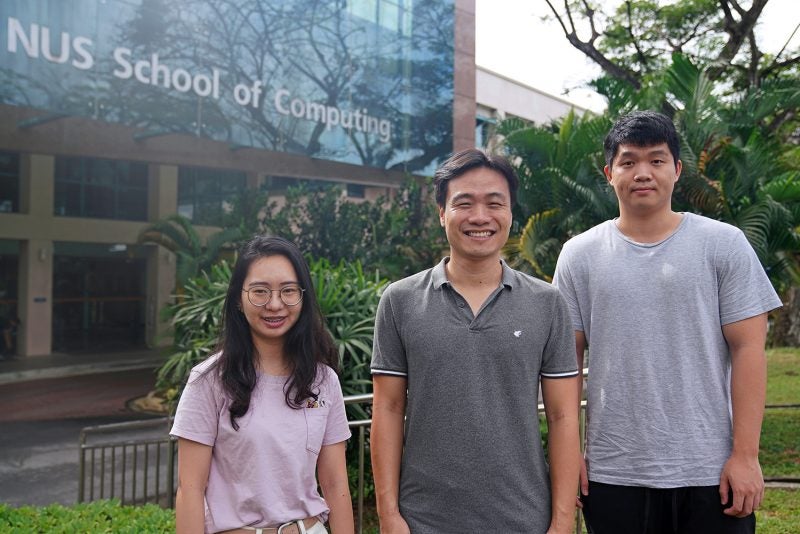
and Lee Jia Yi (CPO)
Vibefam’s earliest studio operators converted from trial to paid quickly and stayed active. They kept sending feedback. And then, without any prompting, they started referring other gym owners.
“That gave us an early flywheel – more feedback, faster iteration,” says Lim Chun Yong, co-founder and CTO of Vibefam. “From the inside it was deeply motivating. It was proof that we were solving something real.”
That was 2021. Vibefam now powers more than 700 fitness locations and serves over 500,000 end users. In June 2026, the company closed a US$1 million seed round backed by a Singapore-based family office. Hustle Fund and Ignite Asia had previously backed Vibefam in an earlier round. The capital will go towards AI development and embedded finance – two areas the team has been building conviction around for some time.
A Problem Found On the Gym Floor
The idea came from being customers.
Chun Yong, along with co-founders Serene Lim (CEO) and Lee Jia Yi (Chief Product Officer) – a friend from NUS Computing they met through startup events on campus – were regulars at boutique studios and gyms around Singapore. What they kept noticing was how much of the operation ran on pen and paper, spreadsheets, or software built for a different era and a different market.
“The problem didn’t come from a meeting room,” says Chun Yong.
They got to know the operators. Many of those early contacts are still customers today.
When they began building, the initial plan centred on social and community features – fitness is community-driven, and a lot of people show up for exactly that. Then they sat down with the operators.
“They told us about the real pain: bookings, payments, and the operational headaches underneath,” says Chun Yong. “So we pivoted toward solving those, built a prototype fast, and shipped it.”
What started as a summer break project quickly became an intense daily routine: mornings spent building and reaching out to studios, afternoons spent listening to studio owners and instructors describe the problems they dealt with every day. Even before there was a polished product to show, people were willing to share what was broken.
The NUS Computing Years
Both founders were still students when the company began. Separately, Jia Yi also spent time in Silicon Valley through the NUS Overseas Colleges programme.
One module Chun Yong points to is CS3216 – Software Product Engineering for Digital Markets, taught by Associate Professor Soo Yuen Jien.
“It was built around shipping real iterations week by week, with a large focus on getting real users and traction,” he says. “That drilled in a ‘ship first’ mentality. It gets you past the ‘build forever’ trap. You release early, learn, and let real feedback tell you what to do next instead of polishing in private.”
The ambition to start a company crept up gradually. He liked building, but he didn’t yet have a problem worth committing to. The intent, he says, grew as he spoke to more aspiring founders, entrepreneurs, investors, and advisors – many of those connections made through the school.
In 2021, Vibefam was awarded the NUS Venture Initiation Programme grant of S$10,000. With it came mentors: Professors Pete Kellock and Francis Yeoh, who helped the team iterate faster and opened doors to investors and advisors. When the company formally incorporated in 2023, they joined BLOCK71 Singapore, the startup hub developed by NUS Enterprise – another node in the same ecosystem that had been shaping the team since the beginning.
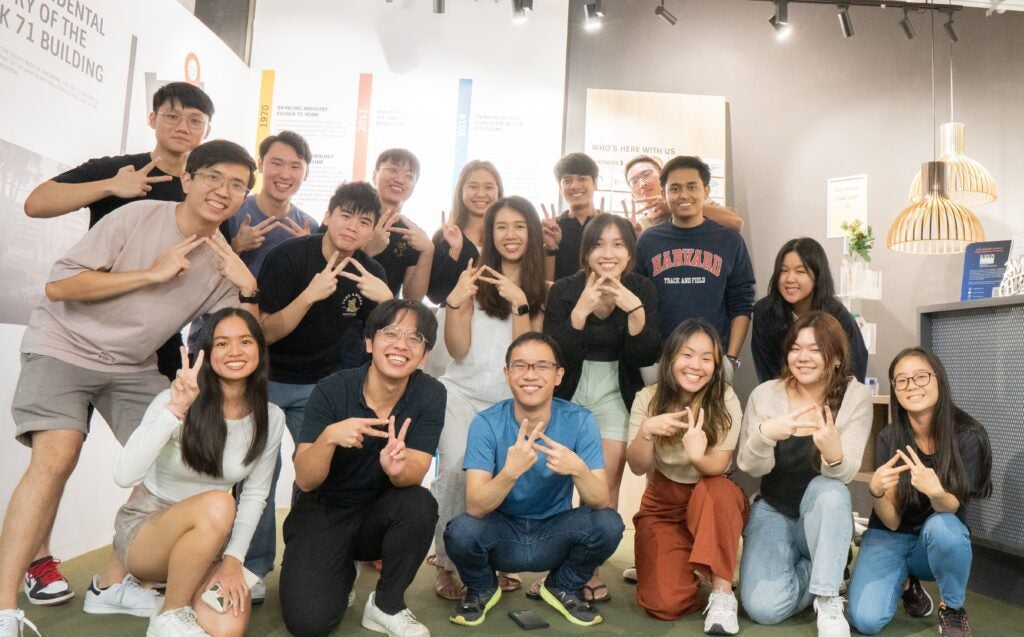
Their lead investor – met at a networking event organised by NUS – carried out what Chun Yong describes as hands-on, product-first due diligence: downloading the app, booking classes with Vibefam’s clients, attending sessions, and speaking directly with studio owners.
“The cheque mattered, of course,” he says. “But alignment on how to build the company for the long term, and how we wanted to work together, mattered even more.”
Finding the Right Backers
Chun Yong is straightforward about what fundraising looked like.
“Investors don’t typically come knocking on your door. There is a lot of work involved in sourcing introductions, scheduling meetings, and running a disciplined process within a relatively tight timeframe.”
The team spoke with dozens of investors. A recurring concern was market size – whether Southeast Asia was early in its software adoption curve and whether SMB operators had sufficient willingness to pay.
“Those were all valid questions,” says Chun Yong. “They pushed us to think more deeply about the long-term opportunity and where we could create the most value.”
The pushback sharpened their thinking on global expansion and on building a broader product suite that deepens the platform’s relationship with customers over time.
The Next Layer
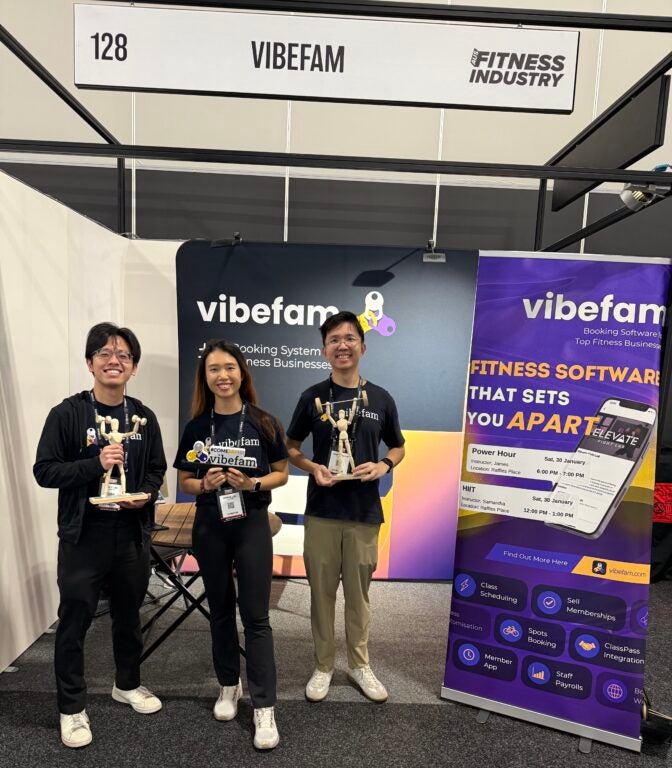
Serving one industry deeply, Chun Yong argues, creates a different kind of product opportunity and a different set of responsibilities.
“Our customers ask for things deeply specific to how their studio runs, and no two studios run the same way,” he says. “Historically, the industry solved it with two bad options: build every requested feature until the product becomes a bloated mess, or hand customers developer tools and hope they can afford to pay someone to build on top. AI is opening a third path.”
That path is Vibe AI, launching in July 2026 – an AI booking agent purpose-built for boutique fitness studios. It lives on messaging channels like WhatsApp & SMS, the channel members already use, and handles class bookings, cancellations, schedule browsing, and package inquiries around the clock – no app download, no portal login, just a conversation. When a class is cancelled or a session ends, Vibe AI automatically reaches out to affected members with rebooking options, turning a moment of friction into a retained visit. Studios get a unified inbox to see every AI-handled conversation, with instant escalation to a human when needed.
Chun Yong describes it as part of a broader AI suite they’re building to give independent studios the operational leverage that only large chains have had until now. Each agent is trained on the studio’s own data – its class schedule, packages, policies, and brand voice – and customisable without writing code.
The customer service scenario Chun Yong describes captures the idea simply. A member who’s been away for a few weeks messages the studio at 10pm: “Any classes tomorrow evening?” Vibe AI recognises she’s been away, welcomes her back, checks her remaining credits, and books her into a slot with her usual instructor once she confirms. For the owner, the enquiry, recommendation, booking, and member re-engagement happened without any work on their end.
The second area is embedded finance. As the system of record for a studio’s bookings and payments, Vibefam holds data on how these businesses actually operate – in a way a generic lender would not. That becomes the basis for offering capital access to operators who have historically been underserved.
“SMBs are chronically underserved here,” says Chun Yong. “We can use data already on the platform to offer financing these operators couldn’t otherwise access.”
From Here
The goal, as Chun Yong puts it, is straightforward: become the default operating system for boutique fitness and wellness businesses – the thing an owner reaches for the day they decide to open a studio.
“An intelligent platform that helps them acquire customers, automate operations, access capital, and make better decisions every day,” he says. “So they can spend their time on the reason they started: their members and their craft.”
To current SoC students sitting on an idea, his advice is short:
“Take the plunge, build, and iterate quickly. Don’t be afraid of launching and failing. Keep talking to prospective customers to find the real problem, even when it turns out to be different from the one you set out to solve. The first version of Vibefam looked nothing like what we run today. And that is the case for most startups.”