From Temasek Hall to Times Square: How Two NUS Computing Friends Won Columbia Divhacks
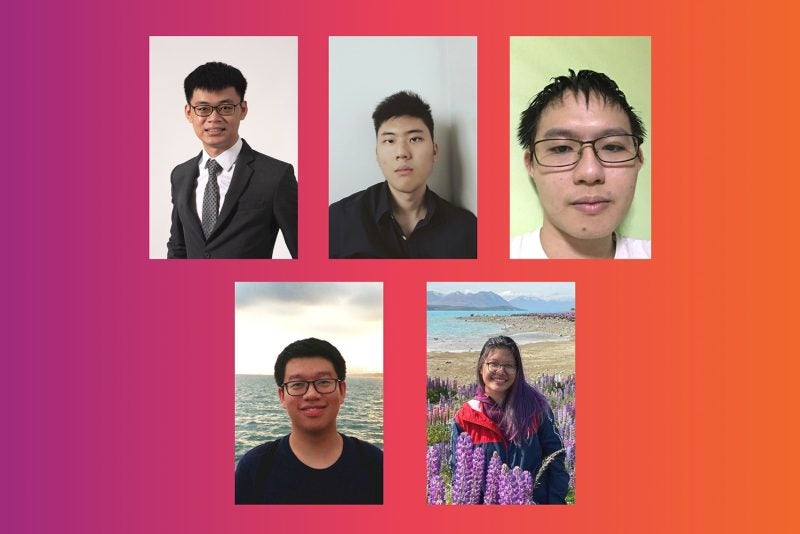
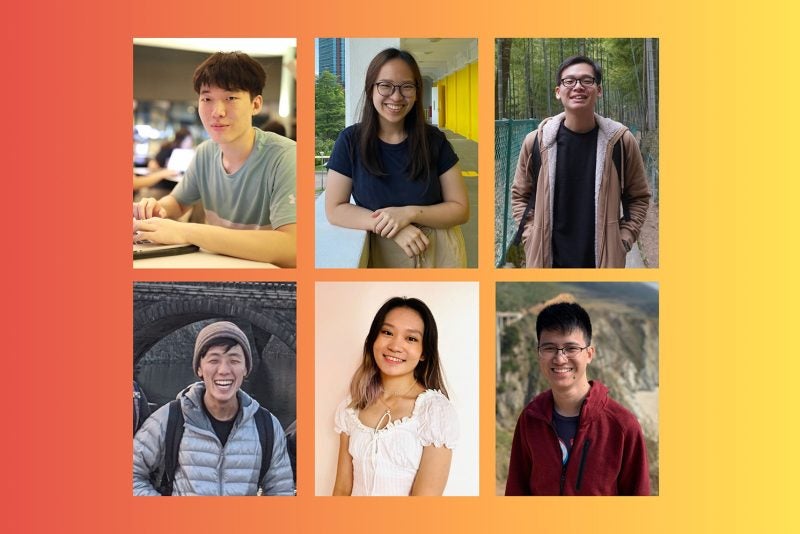
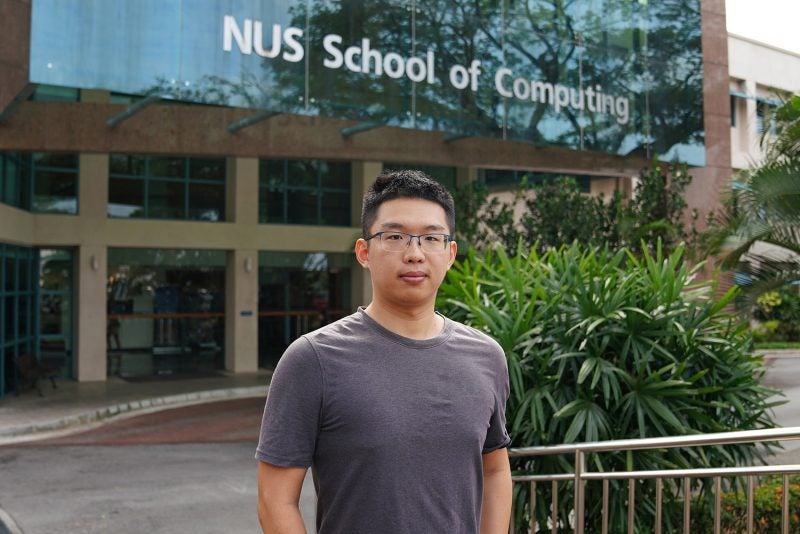
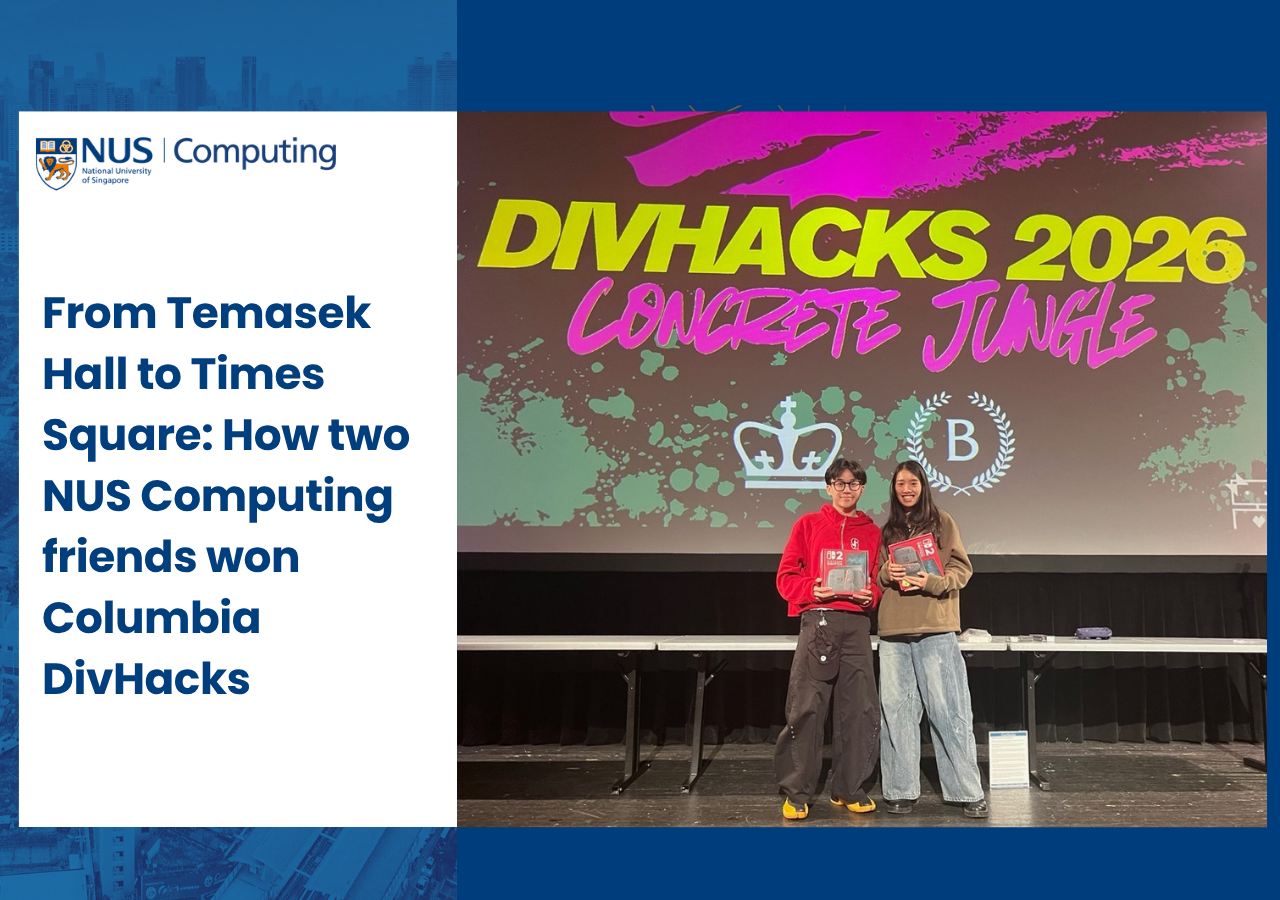
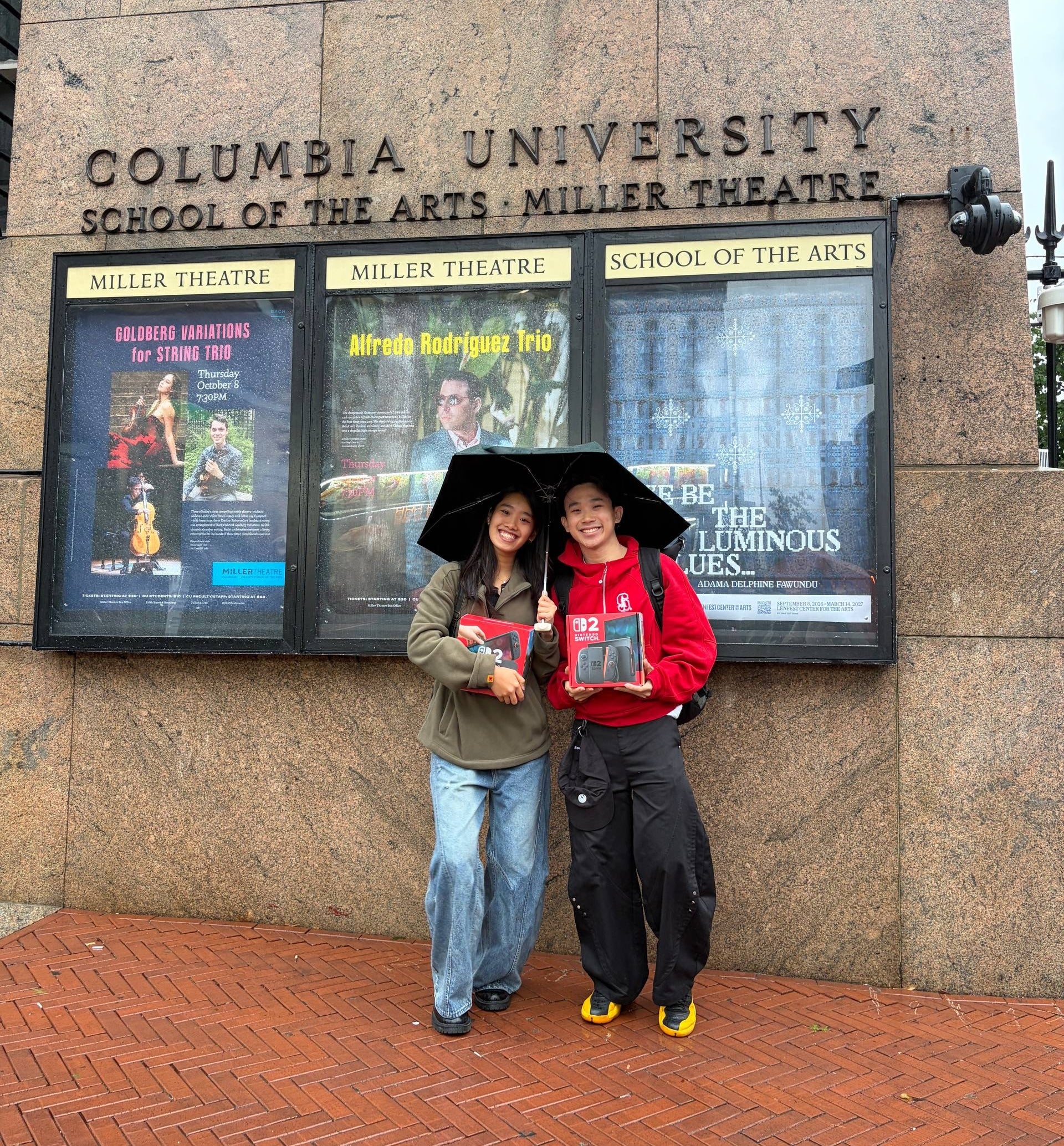
They met as blockmates in Year 1. Two years later, NUS Computing students Kwok Zheng Feng (Year 3, Computer Science) and Julia Lim Jia Yi (Year 3, Business AI Systems) were filming a demo in a New York storm, for an app that would win the Grand Prize at Columbia DivHacks.
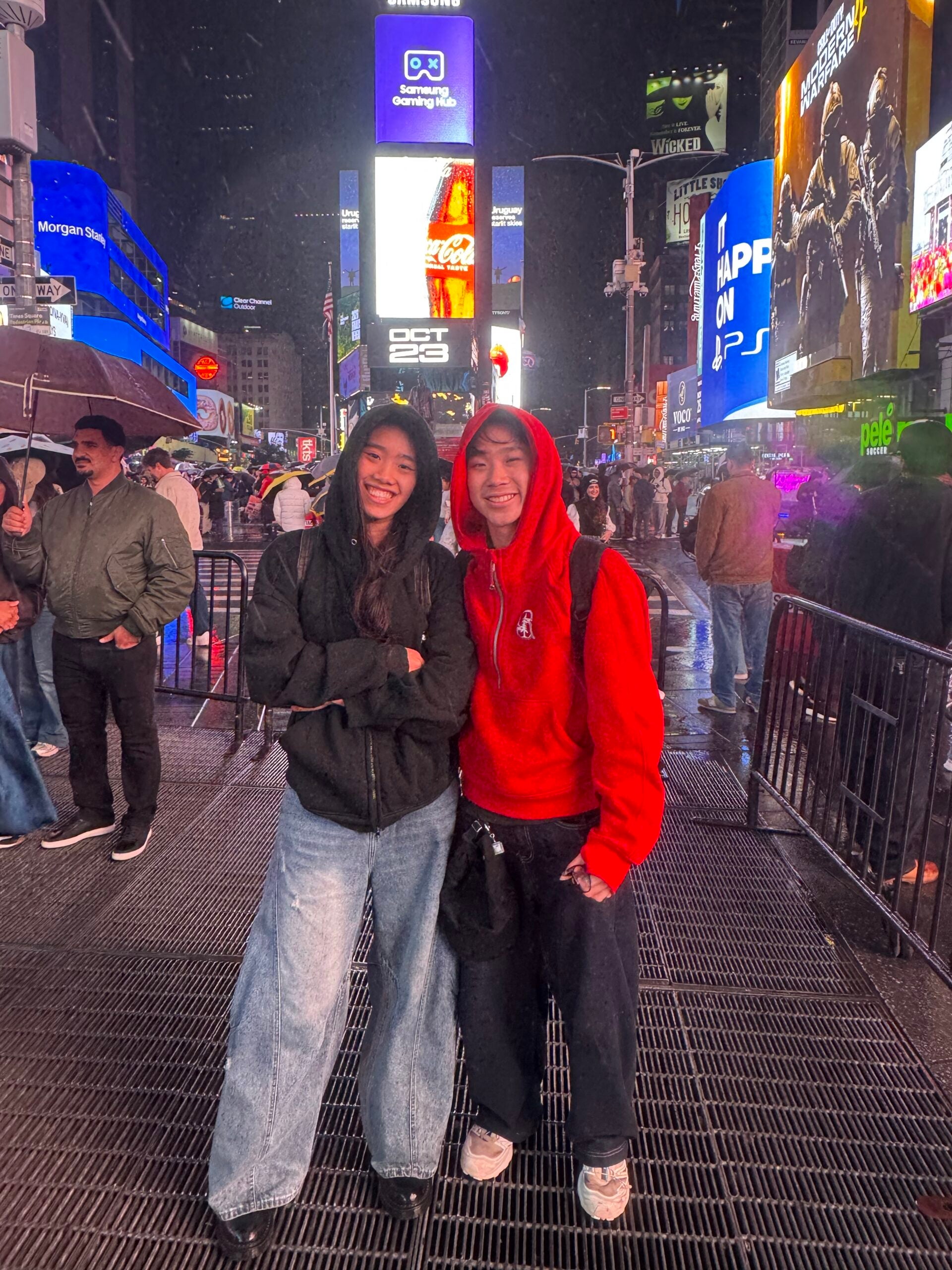
A nor’easter was blowing through Times Square on the night Zheng Feng and Julia filmed their demo.
“Super crazy storm,” Zheng Feng recalls. “We had to brave through the weather and film, and we were drenched.”
As they tried to get the shot, a father and son offered to help them take a picture. “It was pretty wholesome, and definitely a core memory.”
Julia remembers the noise. “The rain and wind were so loud I could barely hear my own voice,” she says. “We were pretty soaked, but we found the whole thing hilarious.”
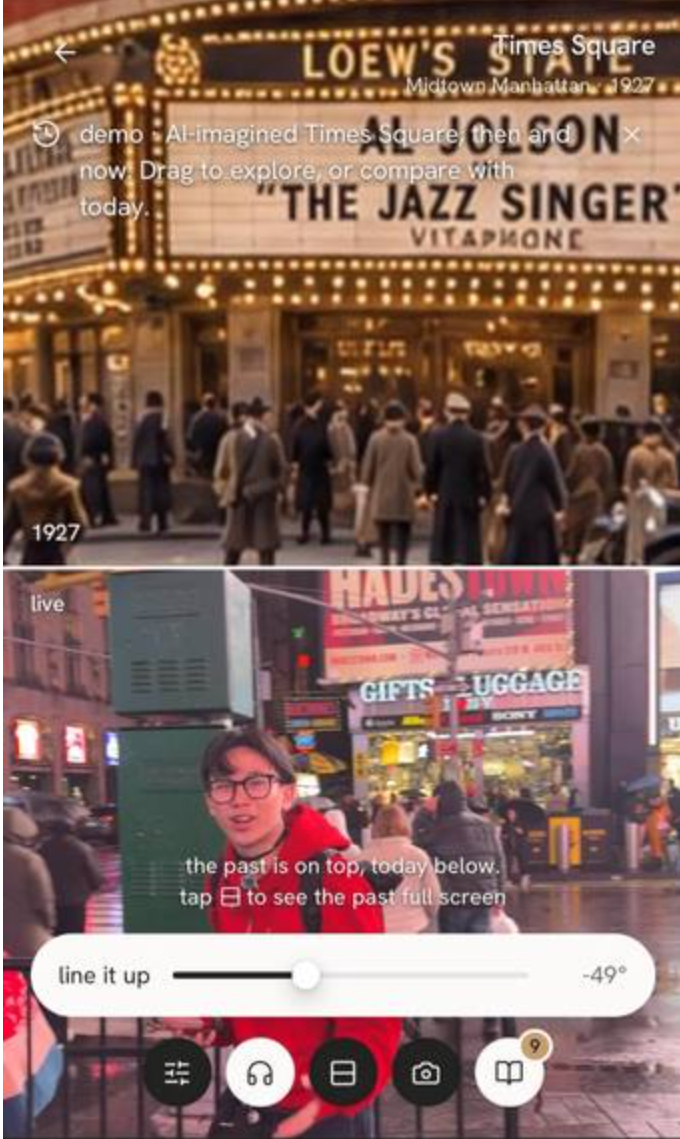
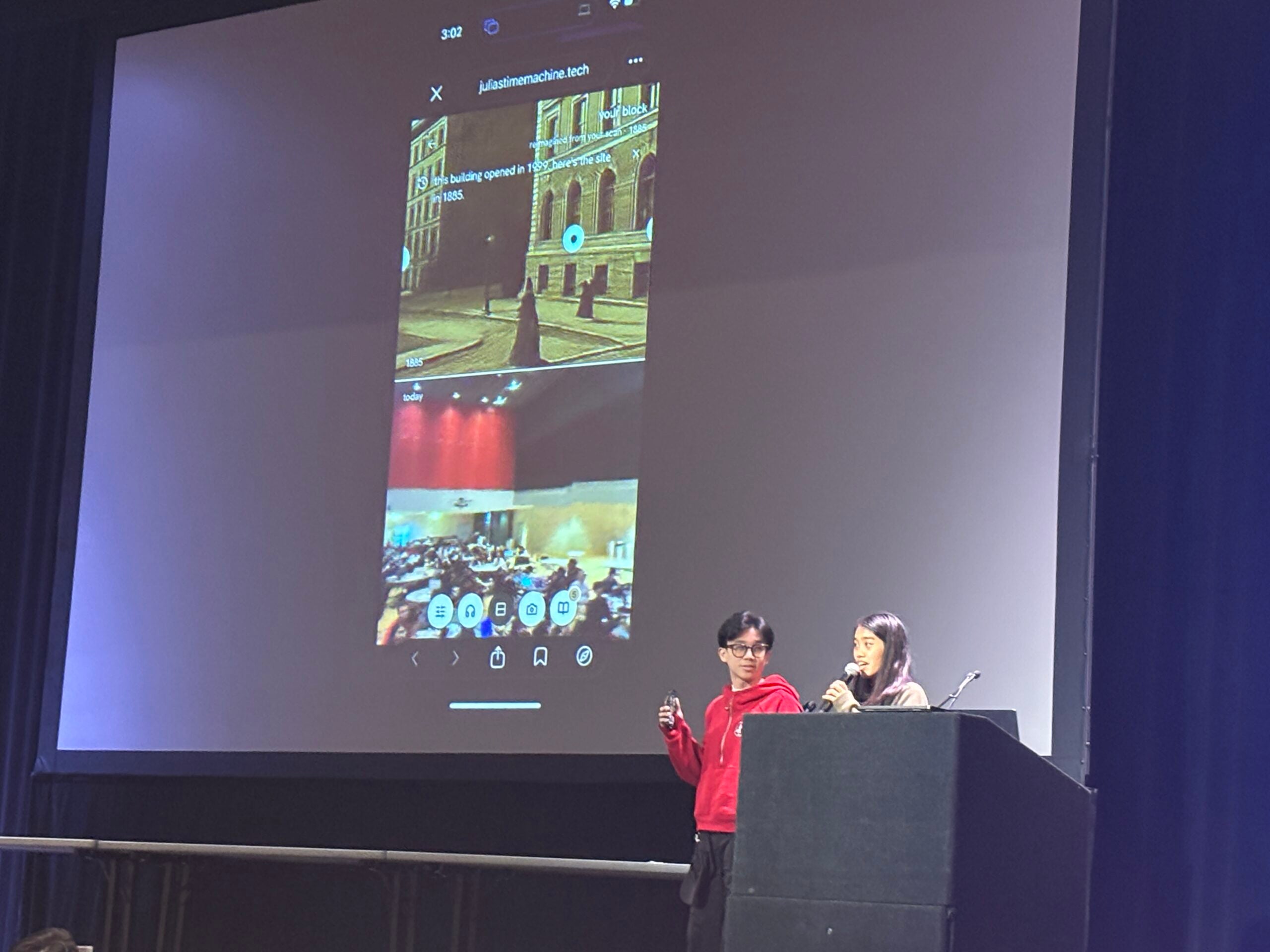
On their phones was Julia’s Time Machine, which they had built over the hackathon and would submit at 5am. Point it at Times Square, take a panorama, and choose a year. The app stitches the photos into a 360-degree image and redraws the scene as it may have looked then, with historical facts pinned to the buildings around you. If a building had not been built yet, you see an empty lot.
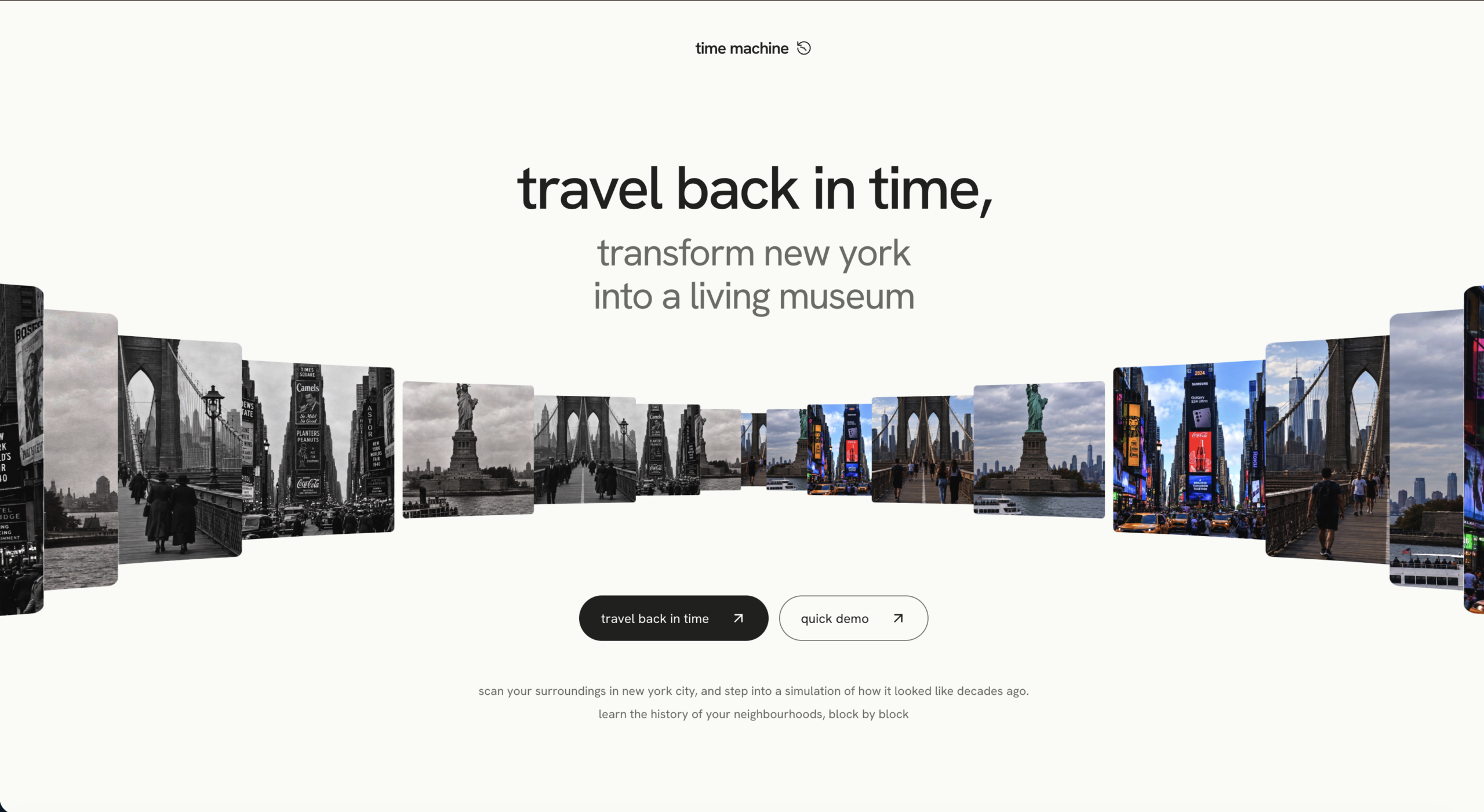
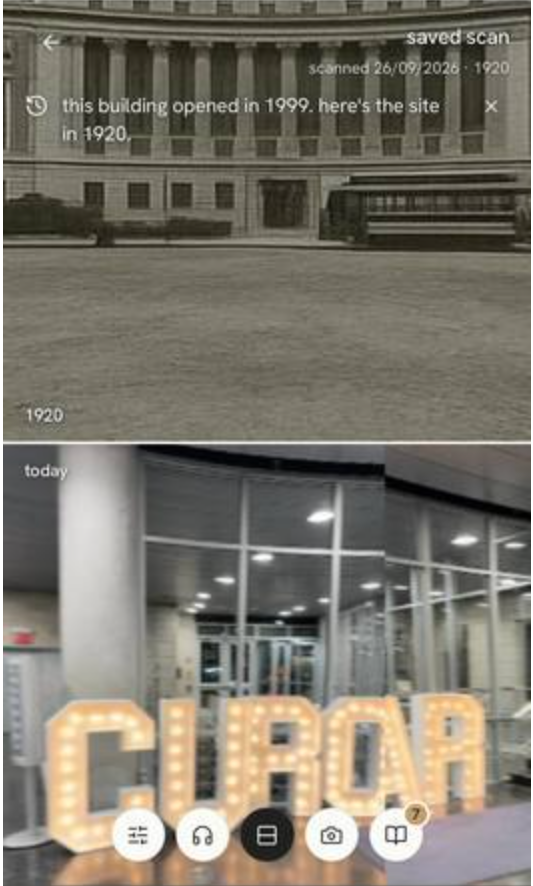
The redrawing is done by generative AI, seeded with information from two public sources: Wikipedia articles tagged with map coordinates within about 400m of the user, and New York City’s PLUTO dataset, which records the year each building was built. Each fact links back to where it came from.
“To keep the AI honest, Gemini only gets the evidence we retrieved, and every line it writes has to point back to a specific source,” Zheng Feng says. If the model cites a source that does not exist, the app throws out its output and shows the sourced facts on their own. The redrawn scenes are labelled as illustrative reconstructions. For the Times Square demo, the pair wrote the facts by hand from the Times Square Alliance’s history pages.
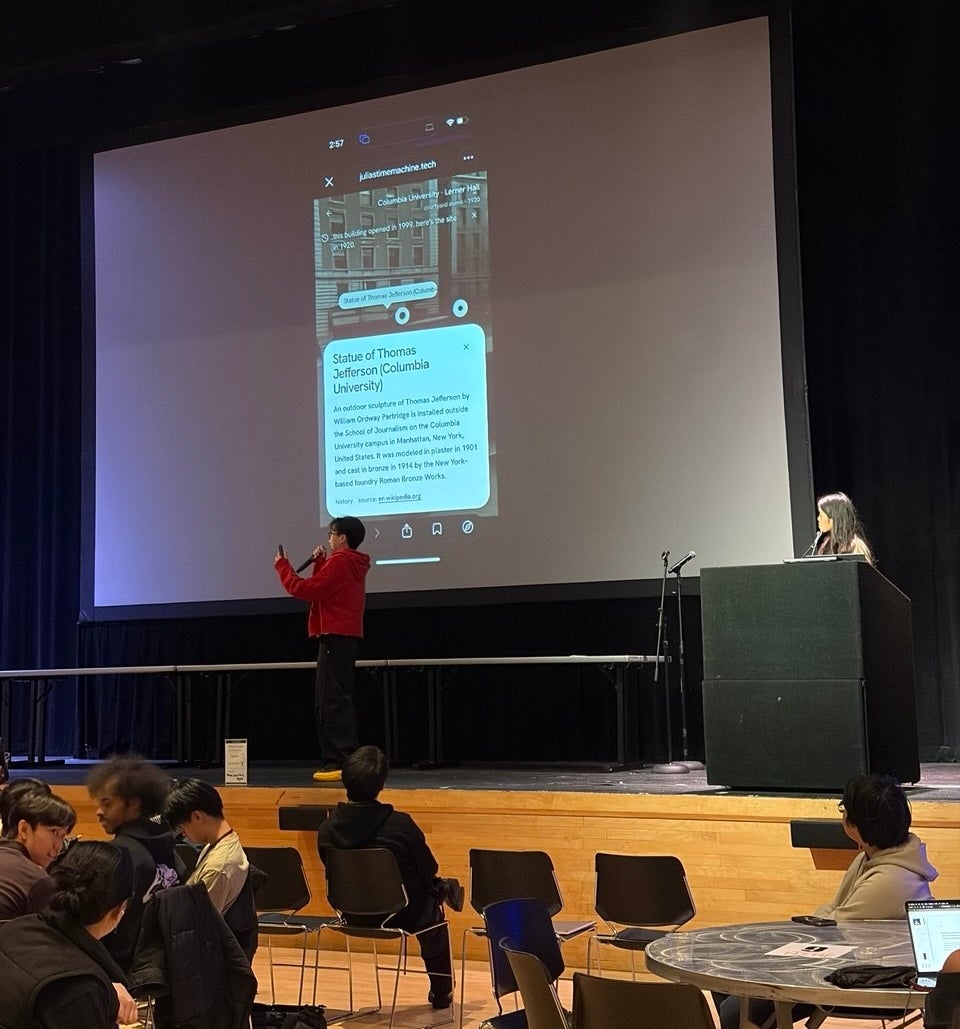
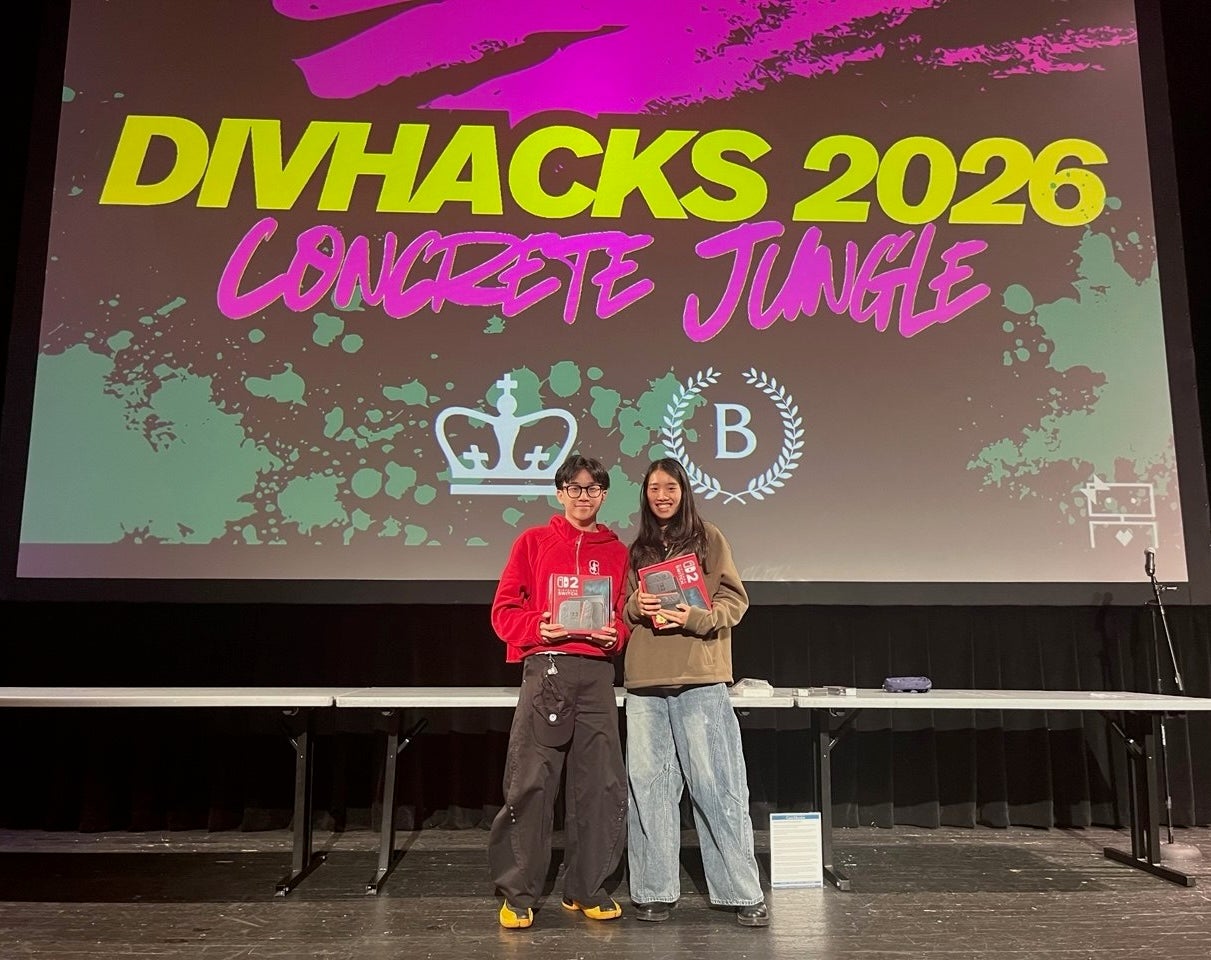
The app went on to win the Grand Prize at Columbia DivHacks, the student-run diversity hackathon at Columbia University, held last month.
Friends on opposite coasts
Temasek Hall put them on the same block in Year 1. Last year, they shared a house in Hanoi during a three-month NUS Overseas Colleges (NOC) stint. This year, NOC placed them on opposite coasts of the US.
Julia slept on the floor for her first five days in New York while she waited for her bed to arrive. “The new environment with no real space to unwind and [in-person] support really affected me more than I thought it would,” she says.
She had gone back to NOC to push herself out of her comfort zone and adapt to somewhere new. “In Hanoi, I believe the pace is much slower and people focus a lot more on connections. In New York, it is like the epicentre of good chaos, things move fast.”
She interns as a forward deployment engineer at an AI startup, building formal models of how organisations handle processes such as hiring or a month-end close, so that AI agents can act on them. When she answered our questions, she was in San Francisco on a two-week visit, staying with five different homes including NOC Silicon Valley friends and a local who offered to host her. “It’s honestly been a blast meeting all these new people.”
Zheng Feng’s weekdays in Silicon Valley usually start with a meeting at 8.30am and end at around 7pm at the startup where he works as a software engineer. On Tuesdays and Thursdays, he heads to Stanford University for classes on growing a business. He is also building Intuition, which turns a codebase into a course that updates as the code changes. “AI coding agents now write code faster than people can read it,” he says. “The bottleneck has moved from writing code to understanding and reviewing it.” He says Intuition has about 100 beta users. It received S$10,000 from NUS Computing’s Venture Initiation Programme (VIP@SoC).
He flew to New York a few days before the hackathon. “I wasn’t thinking too much about teaming up,” he says. “I mostly wanted to meet up and hang out again.”
The stories behind the sights
They did the rounds of the city’s famous spots. “When we visited popular spots like Times Square or Central Park, we realised most people just took a picture and left,” Zheng Feng says. He admits he does the same in San Francisco, and even in Singapore. “Many people nowadays don’t even know the culture of where they stay because they’re just that busy, yet go on vacations.”
Julia had a list of her own. “Central Park used to have Seneca Village, which had the city’s largest concentration of free African American property owners before the Civil War,” she says. “Another was how a street next to Times Square was called the ‘sleaziest block in America’ by Rolling Stone magazine for its high crime rate back in 1981.”
As for the name, Zheng Feng keeps it simple. “It’s a time machine, but that’s a super boring name. So we just decided the Time Machine is Julia’s.”
They shared the engineering and the pitch, and didn’t always agree, including on where to film the demo video. “Our different opinions are great because we can weigh them against each other and discuss, and from there on come up with a cooler solution,” he says.
“Zheng Feng is passionate,” Julia says. “When he feels something really works, he will pitch it with enthusiasm and work on it immediately.” She calls him a hackathon veteran, someone who sees a project the way the judges will.
“I think the build wasn’t tough,” Zheng Feng says. “It was demoing it and packaging it into something understandable and punchy that was tough.” He now plans around the demo first, starting with what the judges see in the first 30 seconds and building backwards from there. At DivHacks, they demoed the app live in Times Square, turning a panorama of where they stood into a historical scene of the same spot.
Before the time machine
Zheng Feng started Upcycler Studios in 2022 because he wanted an upcycled Nike crewneck. Making one meant taking apart four, which left spare material, so he had more pieces made in similar designs and sold them on Carousell. He had no background in fashion design or sewing. “Failing is a bad outcome, but never trying and learning is the worst,” he says.
Before university, Julia co-founded Azen Labs, an edtech startup that built gamified tools to help educators keep students engaged. Edtech still interests her, particularly for skills that schools don’t teach. “Like how to rent an apartment, what’s a credit score, understanding culture and people,” she says. “All these life skills are an important way to expand perspectives, learn independence and empathy.”
Zheng Feng’s first hackathon, NUS GameCraft in 2023, ended in a win with a game called Sliggy the Slime. Back then, he went in trying to win. “I would put a ton of pressure on myself and my teammates to push the best possible product, which was extremely tiring when it didn’t go the way I wanted.” Now he goes in expecting to learn something and meet interesting people. “Julia is one of my closest friends as well,” he says. “And we have an excuse to hang out and learn something new together.”
He is still friends with his project group from CS2103T, a software engineering module. “It really showed me that software engineering can be fun and enjoyable when you’re with the right people.”
Julia worked as a volunteer on Roti Proa, a solar- and wind-powered sailing boat, with Associate Professor Martin Henz from the Department of Computer Science, who has worked on the project since the start. “He inspires me in his passion to build things (an entire solar-powered boat at that!) no matter the obstacles.”
Asked how she works, she keeps it short. “Creative and fun! I want to enjoy building and ideating.”
Closer to home
“I have been approached by people to launch it on the App store, so I’m definitely considering that,” Zheng Feng says.
The app has already travelled. When friends in Singapore tried it, the pair could see the panoramas their friends had made on its interactive map, which lets users explore each other’s scans. “So it wasn’t limited to just New York, which was really cool!” Julia says.
She would point it at Chinatown and Little India first, “to see how their history shaped what we see today”.
Zheng Feng would start closer to home. “Honestly? My house!” he says. “It would be amazing to find out what my HDB flat looked like in the past.”