Teaching Robots Sleight of Hand: Asst Prof Duan Jiafei Comes Home to Build Singapore’s Embodied AI Community
A Singaporean roboticist who led MolmoAct2, a fully open robot foundation model, has joined NUS Computing and secured a multimillion-dollar national grant for his next project
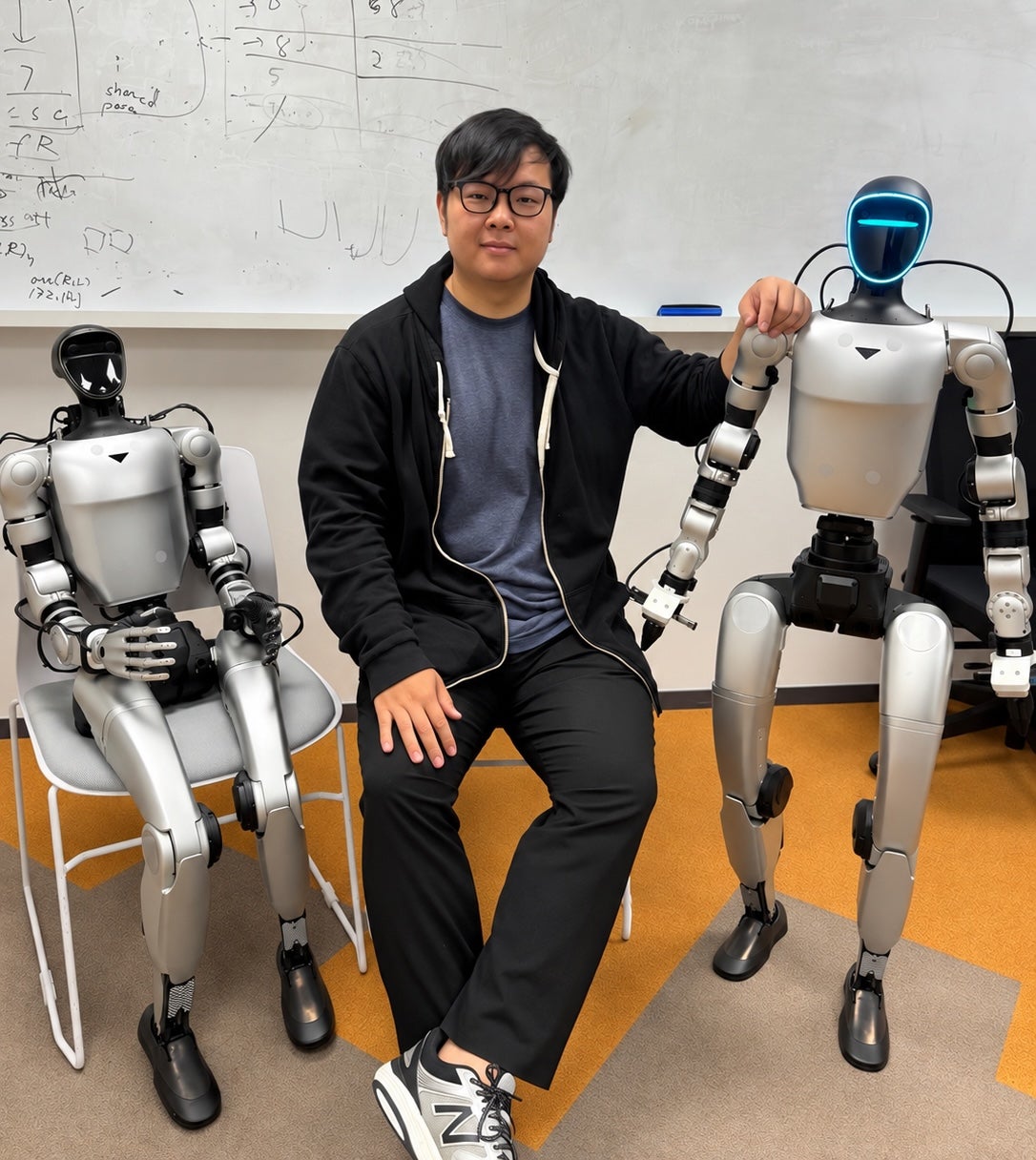
The hobby gave his research group at the NUS School of Computing its name, MAGIC Lab, and he still shows tricks to his students and team.
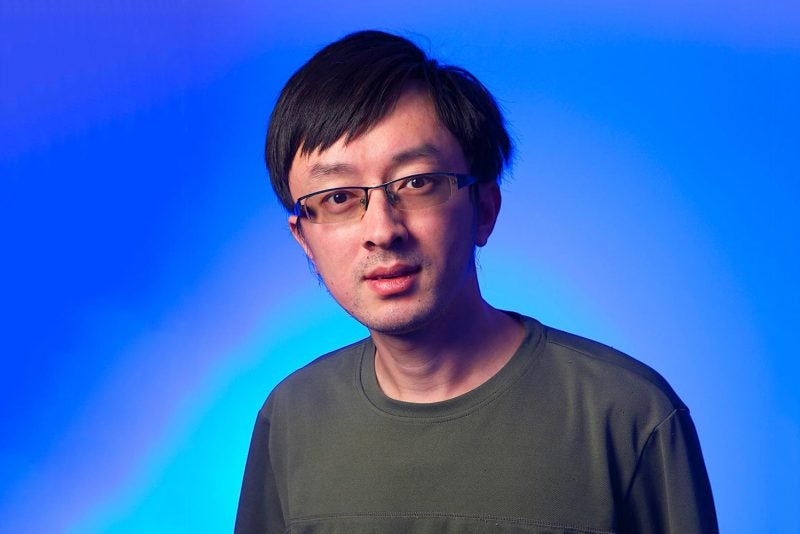
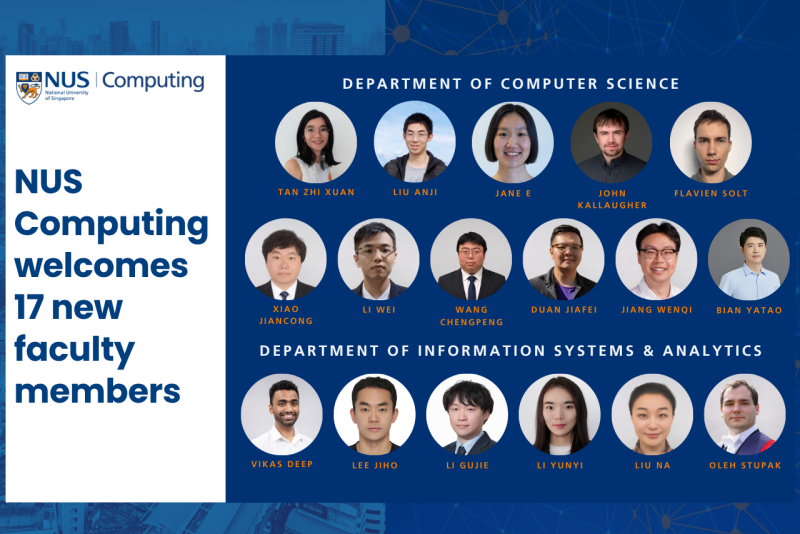
Jiafei, a Singaporean, joined the Department of Computer Science in July 2026 as NUS Presidential Young Professor (Assistant Professor). He has since been awarded a multimillion-dollar grant under Singapore’s National Robotics Programme to develop a Singapore dataset and benchmark for embodied AI.
The dataset will gather robot data from real-world tasks, and the benchmark will give researchers a standard test for comparing how well different robots perform. The project is supported by NUS Deputy President (Research and Technology) Professor Liu Bin’s team, and is a collaboration with NUS Vice President (Ecosystem Building) Professor Benjamin Tee’s team at NUSX, the University’s venture-building and research commercialisation platform.
“The goal is to move robot learning beyond controlled laboratory setups and capture the diversity and complexity of tasks that robots will actually encounter in the real world,” Jiafei says.
The project is working with FrodoBots, a robot data company that has collected large-scale humanoid data in real homes across Southeast Asia. Wet-lab robotics, where robots take on hands-on work such as handling liquids and samples in biology and chemistry labs, is high on his list, given Singapore’s strengths in biomedical innovation and drug discovery, and his earlier model, MolmoAct2, was already tested on lab work such as preparing a pipette. He is also looking at manufacturing and other industry settings.
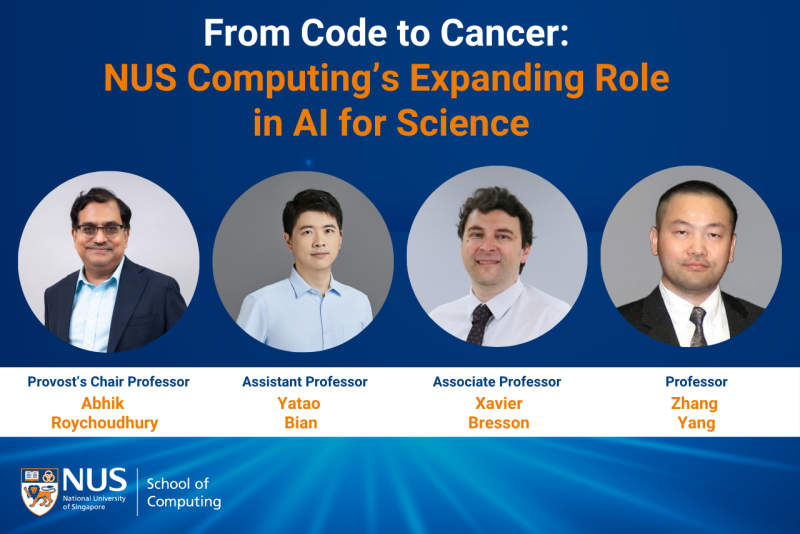
Earlier in the year, Jiafei and collaborators at the Allen Institute for AI (Ai2) and the University of Washington (UW) released MolmoAct2, a robot foundation model designed to control different kinds of robots across many tasks. He led the project, including its core method design and the design of its evaluations.
The team released the model openly, along with all of its training data and code. In their paper, the model’s reasoning backbone records the highest overall average across 13 standard embodied-reasoning benchmarks, ahead of OpenAI’s GPT-5 and Google’s Gemini Robotics-ER 1.5. The paper also puts the robot rig used to collect its main training dataset at under US$6,000, built entirely from off-the-shelf parts. Its released models and datasets have been downloaded more than one million times since May, according to the team.
Asked what MolmoAct2 taught him, he points to the team: “Above all, this project taught me that research achieves far more through collective effort than any individual can accomplish alone.”
“People often assume that robotics becomes easy once AI is smart enough,” Jiafei says. “But physical intelligence requires a deep understanding of the fundamentals of robotics.” A robot that works reliably outside the lab draws on mechanical design, control, learning, materials science and electronics at once.
From a mind-controlled robot to embodied AI
At Ngee Ann Polytechnic, well before his PhD, he and a fellow student built a mind-controlled robot for their final-year project, inspired by the Jedi of Star Wars. Designed as a mobile robotic manipulator for bomb disposal, with a fully teleoperated dexterous hand, it won the Tan Kah Kee Yong Inventors’ Award.
His way into embodied AI was a literature review. As an undergraduate on an A*STAR National Science Fellowship, he heard a talk at CVPR, one of the field’s major computer vision conferences, by Dieter Fox, a leading roboticist at UW in Seattle, and went on to write “A Survey of Embodied AI: From Simulators to Research Tasks” with colleagues at A*STAR. It was first released in 2021 and published in IEEE Transactions on Emerging Topics in Computational Intelligence in 2022. Google Scholar now lists more than 800 citations.
Fox later supervised his PhD at UW, alongside Ranjay Krishna.
Back to Singapore
Jiafei completed his PhD in May 2026. “I wanted to return home and contribute to Singapore’s growing embodied AI and robotics ecosystem,” he says. “In particular, I hope to help build the research community here and train the next generation of researchers and roboticists.”
At MAGIC Lab, much of the work centres on dexterous manipulation and on whole-body loco-manipulation, where a robot moves and handles objects at the same time. One line of research looks for models that learn from less data. Another tackles safety, with robots that understand their own physical limits and respond to human guidance. Longer tasks that need memory and reasoning are on the agenda too.
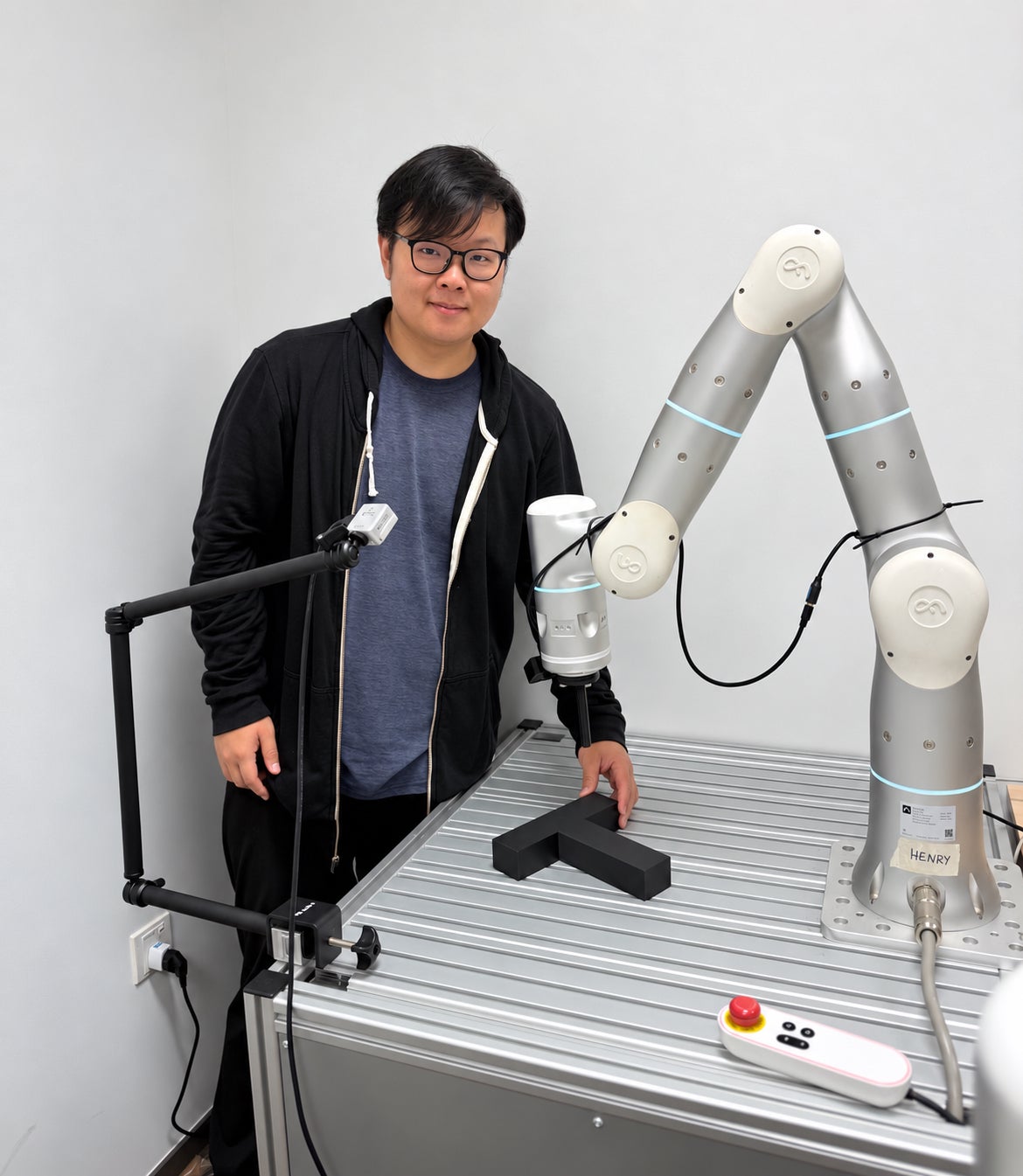
He wants his students to leave as “full-stack roboticists”, comfortable with research and with building complete robotic systems.
Over the next five years to 10 years, he would like to see robots supporting older adults at home and taking on physically demanding work in industry.
“Ultimately, I hope we measure progress by how much these systems improve people’s quality of life,” he says.