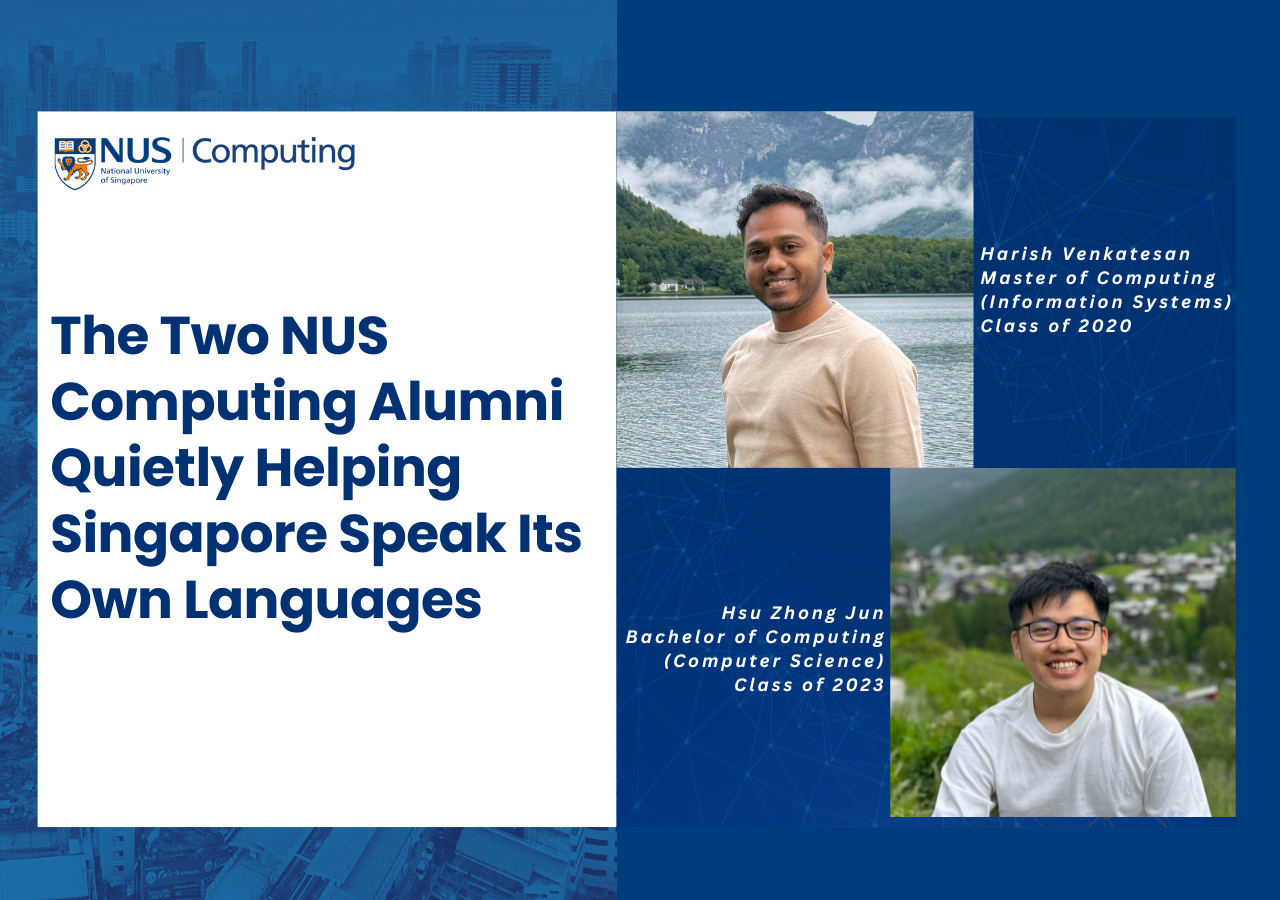
The Two NUS Computing Alumni Quietly Helping Singapore Speak Its Own Languages

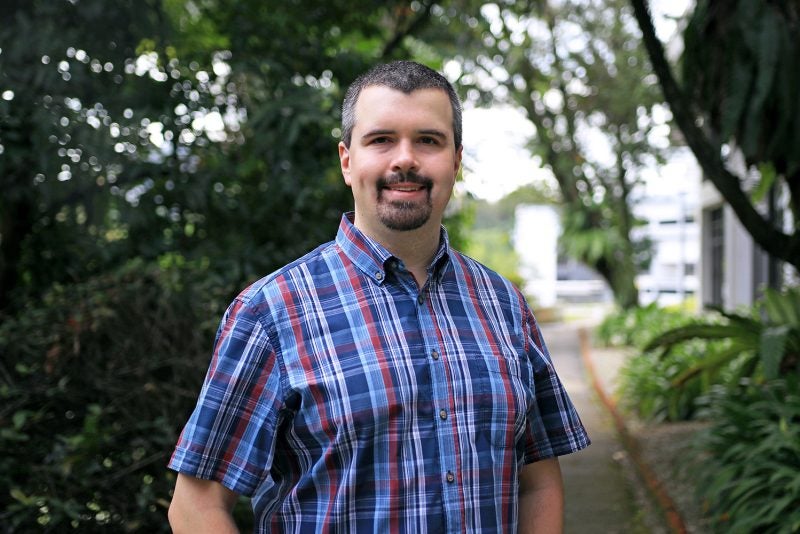
Harish Venkatesan has spent his career asking the same question in different rooms. At Visa’s Innovation Lab, it was about payments. At Grab, it was about pricing. At the startup he co-founded, it was about retail. The question itself never really changed: who does this help, and how much does it matter?
At Open Government Products (OGP), where he is now Engineering Manager and Tech Lead, the answer is unusually legible. The people the products are built for are not a customer segment or a user persona. They are, as Harish puts it, “a friend, a neighbour, a parent or a grandparent.”
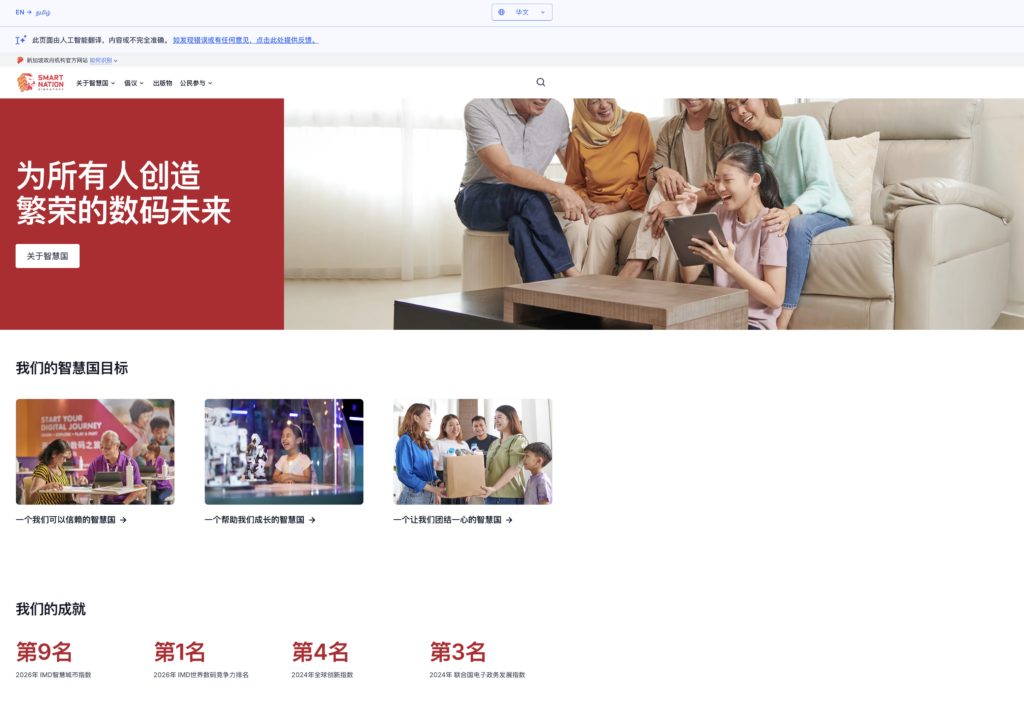
Polyglot, the translation widget that recently went live on the Ministry of Digital Development and Information’s (MDDI) website and Smart Nations’s website, is one of those products. It lets Singaporeans read government content in Chinese, Malay, and Tamil through a dropdown at the top-right corner of each page. It is part of a pilot running until October, with the longer-term goal of making multilingual translations a standard feature across all government websites if the pilot succeeds.
“Over time, I realised that the question I cared most about was not just, ‘Can we build this?‘ or even, ‘Can we scale this?‘ It was, ‘Who does this help, and how much does it matter?‘”
Two Alumni, One Product
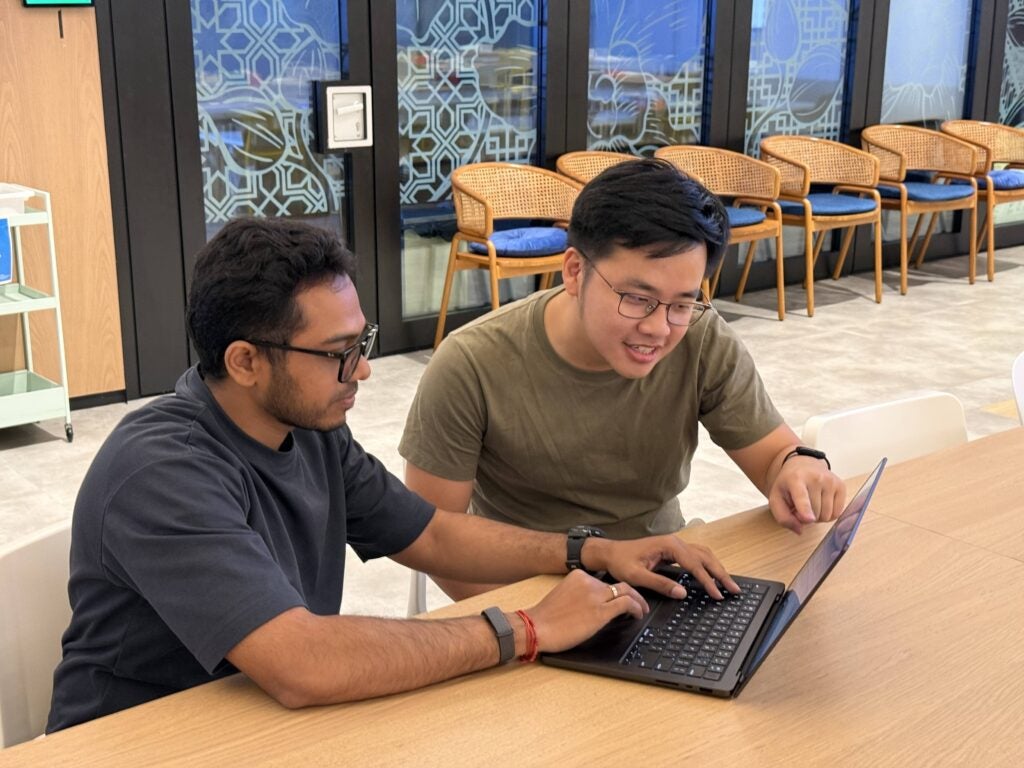
Harish is not the only NUS Computing alumnus on the Polyglot team. Hsu Zhong Jun, a Senior Software Engineer at OGP, graduated from NUS in 2023 with a double degree – a BComp in Computer Science specialising in Database Systems, and a BBA in Supply Chain Management. He had interned at OGP while still at NUS and came back full-time after graduating.
People always ask about the Supply Chain degree. His answer is usually something about logistics – the way a product travels from factory to doorstep, how a restaurant moves food from kitchen to table without any one part of the system seizing up. What drew him in was the coordination required, and what happened when it failed.
“Supply Chain ended up being where I first learnt to think seriously about failure – not just ‘this function returns the wrong value’ but rather the whole chain of things has to go right, and what breaks when one doesn’t.”
That instinct followed him into Polyglot. Every page on a government website carries a hash of its English source. When the English content changes, the hash changes. Translations linked to the old hash are automatically flagged as stale. The officer managing the site gets a prompt to review.
“I wouldn’t say database systems taught me how to build Polyglot. But it gave me the instinct to ask: where does the data live, who owns it, and what happens when it gets out of sync? Those turn out to be the right questions.”
Why Public Service
Harish graduated from NUS with a Bachelor of Engineering in Computer Engineering in 2018, then returned for a Master of Computing in Information Systems at NUS Computing in 2020. The years that followed took him through Visa, Grab, and a startup he co-founded before he arrived at OGP.
He is careful not to frame that journey as a repudiation of what came before. The startup taught him what ownership looks like when there is nobody else to handle the hard parts. Grab showed him what operating at scale actually requires. Visa gave him early experience with innovation inside a large institution.
What changed was the proximity to the people being served.
“When we improve how someone accesses government information or services, the person benefiting from it could be a friend, a neighbour, a parent or a grandparent. That proximity to the people we build for makes the work especially meaningful to me.”
At OGP, he now oversees a portfolio that includes Isomer, AskGov, GoGovSG, and Polyglot – products that collectively shape how Singaporeans find and use government information every day. Managing that breadth, he says, comes down to building teams that can make good decisions without him in the room.
“A big part of the role is building strong teams, giving people the context and ownership to make good decisions, and knowing where my own attention can add the most value.”
Getting the Words Right
The problem Polyglot addresses is not primarily a technical one. Most government websites are only available in English, and manual translation is time-consuming enough that it often does not happen. Polyglot is designed to change that threshold – giving agencies a strong first draft quickly, while keeping humans in the loop.
The translation engine, built jointly by MDDI and GovTech, pairs large language models with the Government Terms Translated database, a structured layer of Singapore-specific terminology. Every translated page carries a banner telling users AI was involved. Officers can review, edit, and override translations directly.
This matters because the errors that generic translation tools make are specifically Singaporean ones. “Chinatown” comes out as 唐人街 – the term used internationally – when Singaporeans know the area as 牛车水, named for the bullock carts that once carried water through Kreta Ayer. “Government” in Malay becomes “Kerajaan,” which implies a monarchy; Singapore uses “Pemerintah.”
Zhong Jun spent time thinking about what sits underneath these errors – not just the words, but the expectations readers bring.
“Phrases that read fine to someone who learned the language in school but land strangely to someone who grew up speaking it at home. These are things you only discover by putting it in front of real people.”
Harish frames the same challenge from a different angle. What sounds like a translation problem is often a process problem – getting the right people involved, at the right moments, with enough control to fix what the model missed.
“What sounds simple from the outside – ‘just translate the website’ – often involves a lot of coordination, time and repeated effort. That changed how I saw the problem.”
The decision to flag AI use on every page was deliberate. “That’s not a disclaimer to bury in the footer,” Zhong Jun says. “It changes how you read what’s in front of you.”
What a Prototype Becomes
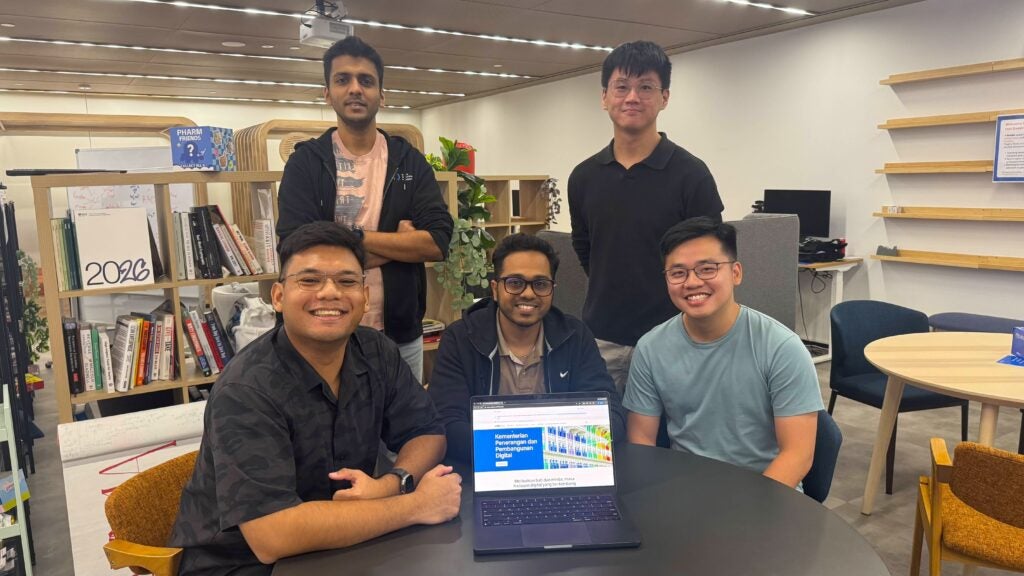
Polyglot started at Hack for Public Good 2026, OGP’s annual January hackathon where around 200 officers spend a weekend building solutions to real public problems. At the end of that weekend, the team had a working widget. Getting from there to something agencies could actually manage took considerably more work – an admin portal, stale-translation detection, and an architecture that could work at scale.
For Zhong Jun, the path to Polyglot ran through Isomer, OGP’s website builder platform. He was part of the team that launched moh.gov.sg and over 300 other government sites. Polyglot runs on the same infrastructure, which meant his job was making sure the widget loaded cleanly, broke nothing on existing pages, and could scale without incident.
“Most of what I worked on isn’t something a user would ever see. The goal was just to make sure they never had to think about it.”
Harish watched the pilot take shape with a longer view. The question he kept returning to was not whether the translations were accurate enough, but whether the whole process around them was easy enough for agencies to sustain.
“Sometimes the most impactful technology is not the technology that does something completely new, but the technology that removes enough friction for something valuable to happen much more often.”
What NUS Built in Them
Something about building for people they would never meet has been consistent across both their careers. For Harish, it goes back to NUS Hackers, the student group he was part of during his time at NUS Computing. He helped organise Hack&Roll, Singapore’s largest student-run hackathon, and taught at Hackerschool, where anyone could walk in, learn a technology, and leave having built something with it.
“Code stopped being just an academic exercise or a technical skill. It became a way to turn an idea into something real that another person could actually use.”
His Master of Computing at NUS Computing deepened that in a different way – not just how to build, but how to understand the organisations and people technology is built for.
“I had the opportunity to learn alongside people from very different industries and stages of their careers, each bringing their own experiences and perspectives into the classroom. That diversity made the learning much richer.”
Zhong Jun found his version of this through open-source work during his undergraduate years – contributing to Wikipedia and the Internet Archive, and getting involved in NUS-OSS through Associate Professor Damith Chatura Rajapakse‘s CS3281/2 module.
“Nobody asked me to, but working on things that other people actually used felt different from anything I built for a grade. I didn’t fully understand why until I joined OGP and felt the same thing again.”
Just the Website in a Language They Can Read
The pilot runs until October. The team is watching whether agencies find it genuinely easier to manage translated content, and whether the translations are useful to the people reading them. This will determine whether Polyglot will be rolled out to more government websites.
Zhong Jun thinks about who that person is – older residents more comfortable in Malay, Mandarin, or Tamil than in English, for whom an English-only government website is not just inconvenient.
“Will they know Polyglot exists? Probably not. They’ll just notice the website is in a language they can read. And that’s fine by us.”
For Harish, that is exactly what good technology looks like.
“The best technology is the kind you never notice you’re using.”
Harish Venkatesan holds a Master of Computing (Information Systems) from NUS School of Computing (2020) and a Bachelor of Engineering in Computer Engineering from NUS College of Design and Engineering (2018). He is Engineering Manager and Tech Lead at Open Government Products.
Hsu Zhong Jun holds a Bachelor of Computing (Computer Science, specialising in Database Systems) and a Bachelor of Business Administration (Supply Chain Management) from NUS (2023). He is Senior Software Engineer at Open Government Products.